
10 Family Adventures for Those Last Two Weeks of Summer
The clock feels like it’s ticking with summer winding down and preparing for a new school year to begin again. But not all is lost! You still have a couple of weeks. Here are some ideas for summertime, close-to-home things to do to soak up that last bit of summer together.
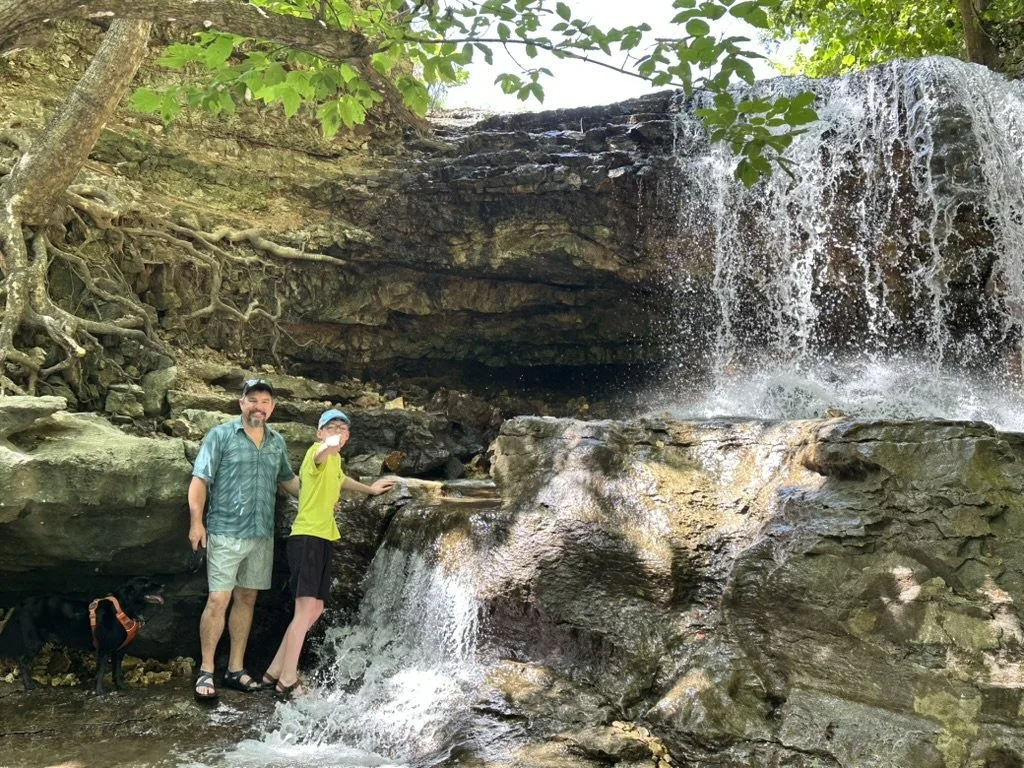
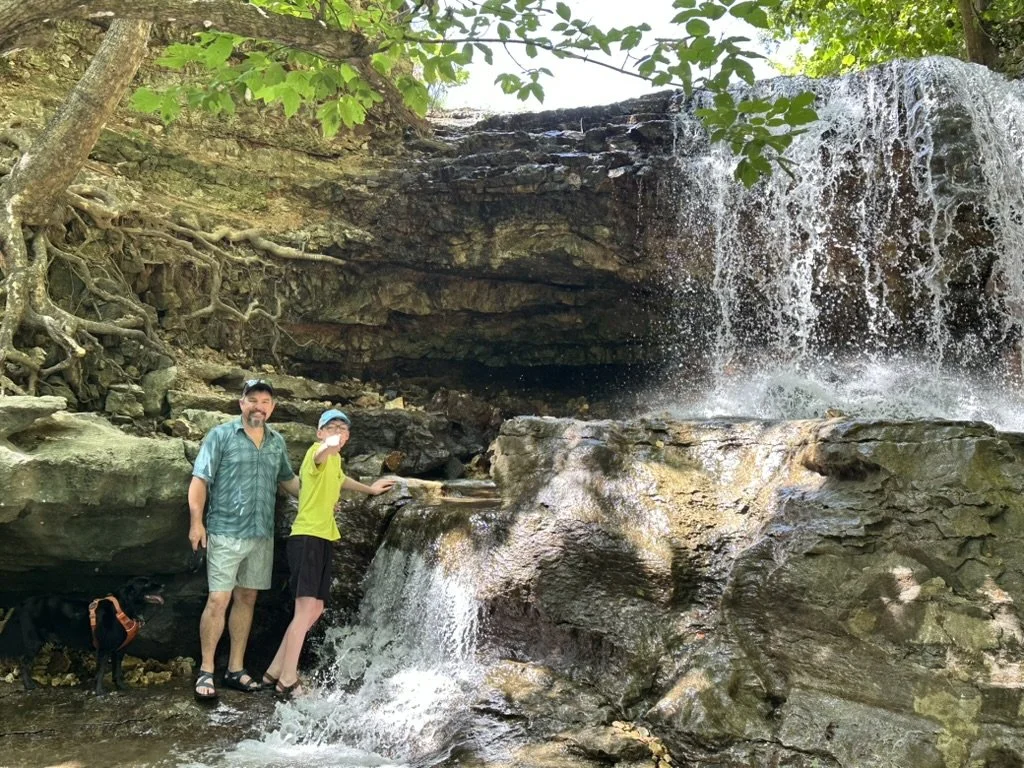
We’ve spent a lot of time in Northwest Arkansas - years! - only to JUST discover the beautiful Tanyard Creek Trail in Bella Vista.
We’re in that late summer vacation window. The hot, lazy days that drag on but we know are so short-lived. School's coming, boredom exists but the time feels short, and a big trip isn't really on the table anymore. This is exactly the window where "adventure is up to the person participating" is important to see. It’s that final hurrah of time when you want to squeeze the last drops of fun that can fit - the ice cream, swimming, memories, and outings - before earlier mornings, tighter schedules, and different responsibilities settle back in.
We put together some ideas for some local-focused fun. None of these require more than a couple hours from home or much of a budget, and every one of them is a real adventure if you or the kids have never done them before.
1. Find a local "first" hike. Not the trail you always do, but a new (even short) one, within about 30-60 minutes of home. New terrain, even nearby, resets a kid's sense of exploration. Bonus points if it has water accessibility along the way for a cool break along the way.
2. Build a backyard or local-park campout. Tent, headlamps, one "camp meal" cooked outside, and if you can swing it, actually sleeping out there. This is a genuinely great trial run before a real camping trip, the preamble to some cooler fall camping trips, and low-stakes with amenities easily reachable.
3. Do a sunrise or sunset outing. Pick a local high point, lake, or open field and go watch the sky do its thing. Kids remember these more than you'd expect, and it costs nothing but a slightly rough wake-up. See if some friends would like to join!
4. Water day, however you can get it. A local river, lake, splash pad, or even a sprinkler-and-water-balloon backyard setup. Late summer heat makes this an easy win. Parents, let this include you.
5. Geocaching or a scavenger hunt hike. Turn a regular trail into a hunt with a free geocaching app, or make your own list of things to find - a certain leaf shape, a bug, a specific color in nature. Purpose changes how kids experience the same trail. We also have the 30-page Keyword Adventure Trail Guide that includes a pre-made scavenger hunt list (among other lightweight games) and other fun intro-to-adventure education for the whole family.
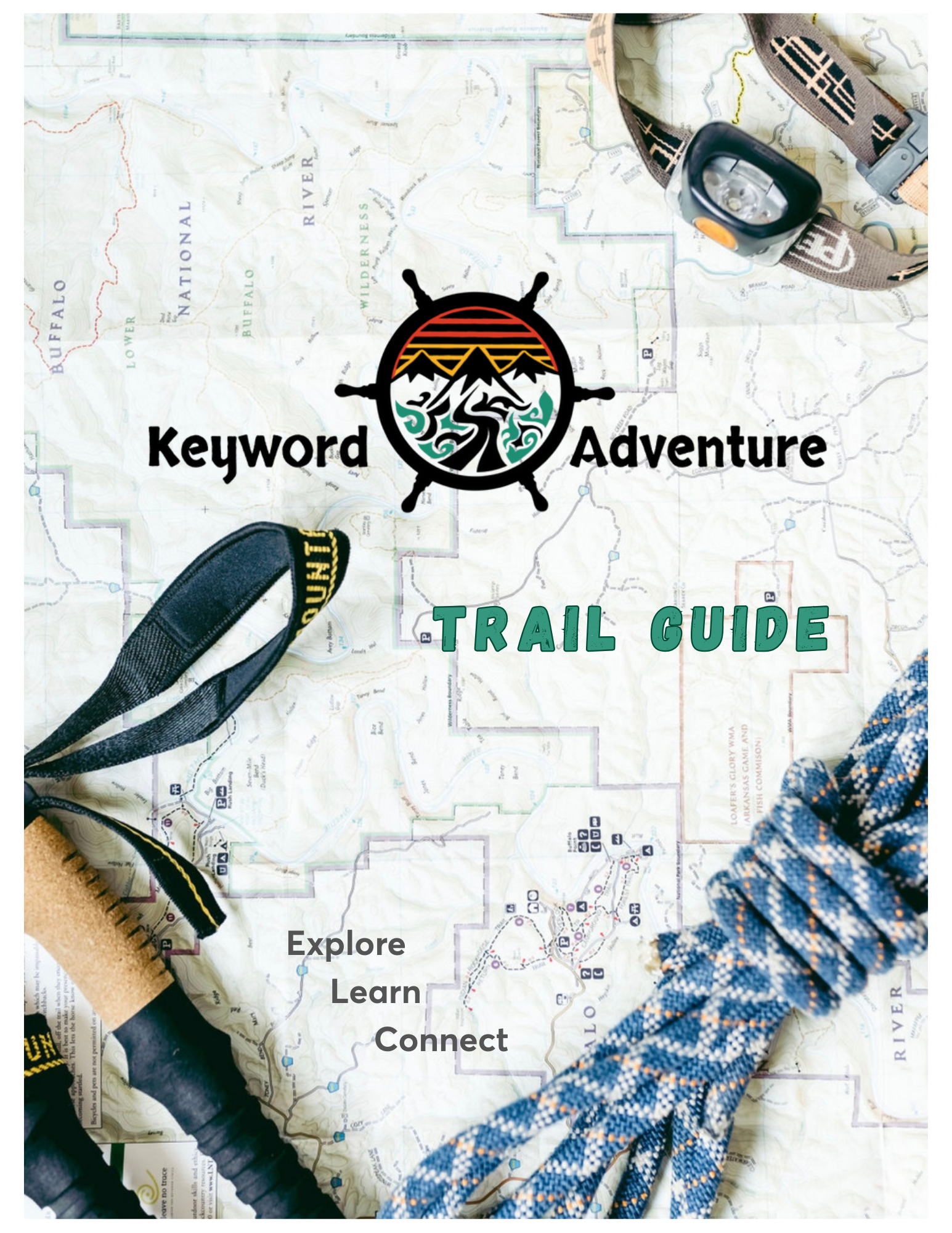
This is our Keyword Adventure Trail Guide ebook! 30 Pages of fun information and facts about adventure activities, terminology, games, knots, and more.
6. Visit a local nature center or small museum you've been meaning to get to. These are chronically underrated by families who live nearby and "can go anytime" which usually means it’s always put off (for us locally, it’s the Missouri Institute of Natural Science with real dinosaur skeletons!). Two weeks left of summer is the perfect deadline that gets it on the calendar.
7. Bike a new-to-you trail or greenway. Even a familiar town looks different from a bike, and a new stretch of trail is an easy half-day adventure. Check out the AllTrails or TrailForks apps if you need trail finders and resources in one place.
8. Plant something and make it a project. Not glamorous, but genuinely great for connecting kids to the idea that nature is something you tend, not just visit. A late-summer planting, a small garden bed, even a pot on the porch. By now, some of our spring-sewn plants have run their course and it frees up space for something new.
9. Do a "no phones" outdoor evening. Fire pit, flashlight tag, stargazing, whatever fits your space. The magic here is less about the activity and more about the uninterrupted attention.
10. Let your kid plan the last adventure of summer themselves. Hand them a map, a short list of nearby options, or just the question "what do you want our last summer adventure to be?" Kids engage differently with a plan they had a hand in building, and it's a nice way to close out the season on their terms. We know we always craved for time on rivers as kids!
Why the "last two weeks" window matters:
There's something about a deadline that makes people actually do the things they meant to do all summer, or maybe reflect on how fast the time passed. No regrets if you didn’t get to the things you had in mind at the beginning of the summer: that’s just life. We treat these last two weeks less like an obligation to cram in fun and more like a chance to slow down and spend good time together… the exact opposite instinct of a packed vacation. Some of our best family memories have come from a random Tuesday afternoon thirty minutes from home. Plus, appreciating that adventures that are close to home gives us the ability and experience to return to them throughout the year.
Happy summer, everyone, and we wish you a great return to the school year and routine!
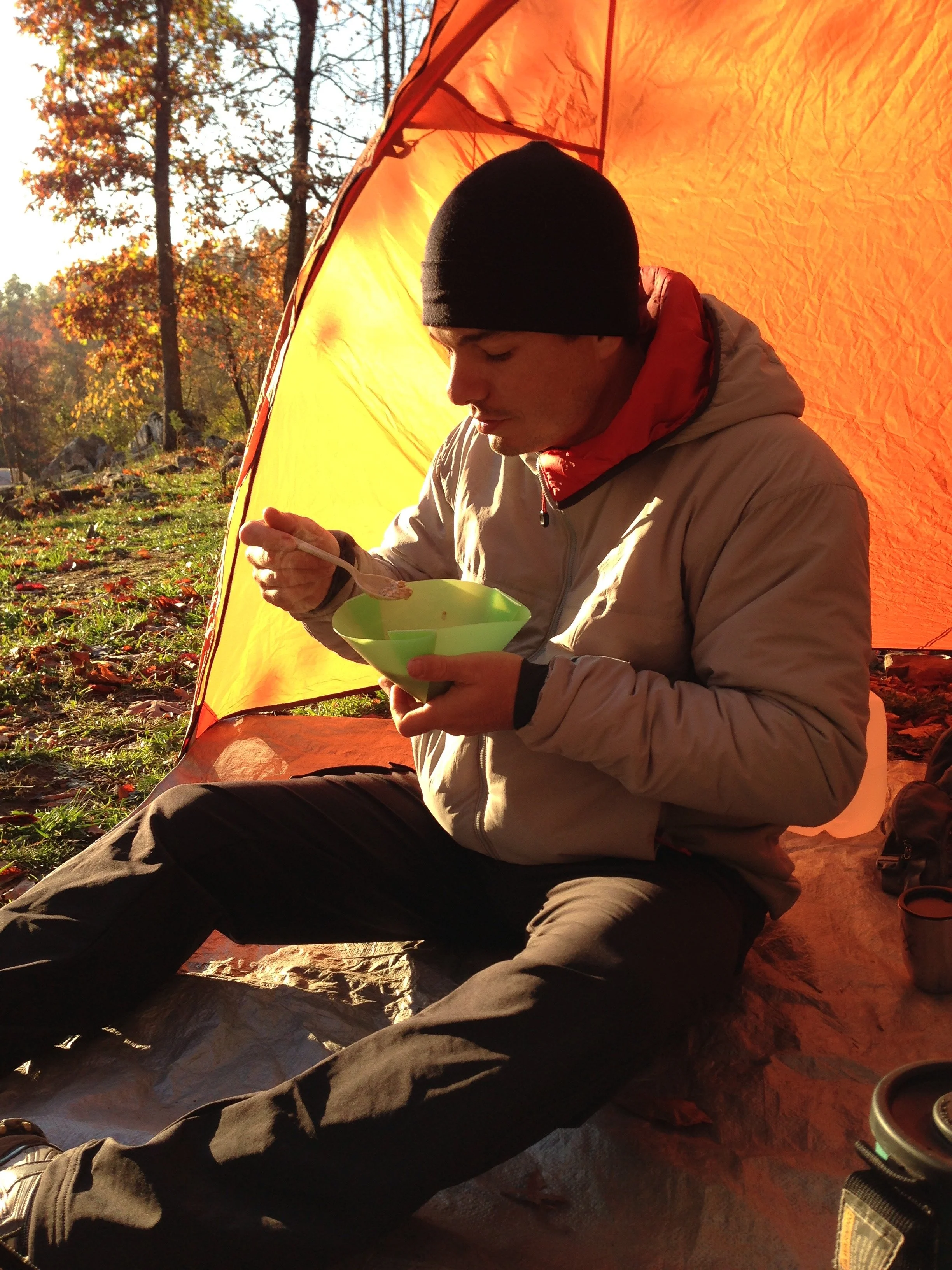
(Recipe) Campfire Stew: Simple, Quick Comfort Food
A super-simple, one-pot camp meal (green beans, new potatoes, smoked sausage, a little Cavender’s) that warms you up after a long day out — plus why we keep hot cocoa in our kayak kit for cold-water days.
A favorite meal in the wild warms your body and your soul!
A camping recipe made easy — warm on cool nights, fast after a long day out, with easy ingredients that travel well and plenty for everyone.
Yes, this is an adventure recipe blog. Aren’t all the senses involved in exploration and delight? If you’ve listened to our podcast, you’ve probably noticed that we love finding interesting places to enchant our sense of taste — sometimes we seem to eat our way through new places (like Key West, Florida).
Today’s post, though, is meant to bring a little culinary comfort whether you’re camping out or just needing some easy satisfaction at home. The whole “chicken soup for the soul” idea definitely applies when someone talks about their favorite food to cook while camping.
For me, this campfire stew brings to mind camping along a cold river as a nine- or ten-year-old boy with my family. After a day of paddling on chilly spring-fed water, we’d light a fire and cook this super-simple, one-pot meal — warm and filling at the end of the day. Since then, I’ve shared it with others, and they’ve shared their own campfire stew recipes with me. What’s most consistent is this: the ingredients matter less than the warm feeling served up at the end of the day while camping under the stars. Felt as both a reward and a comfort, it’s these small things that create good memories when we’re young.
My campfire stew has lasted a lifetime and will outlast me, because my son delights in cooking it too. The ingredients are purposely simple: a can of cut green beans (not French-cut), a can of diced new potatoes, a sliced smoked sausage, and a little Cavender’s Greek Seasoning. Once everything’s in the pot, add water and bring it to a boil — the boil draws the oils out of the sausage and gives the stew most of its flavor.
Like any food cooked outdoors, I think it always tastes better over a campfire. But it’s become a favorite cold-weather recipe for our family, giving us that little taste of the outdoors even when we feel trapped inside. We usually have the canned items in the pantry anyway and keep some sausage in the freezer.
Campfire Stew
1 can cut green beans
1 can diced new potatoes
1 smoked sausage, sliced
About 2 cups water
Season to taste (I like 3 tsp Cavender’s Greek Seasoning)
Bring to a boil for 5 minutes, then serve it up. Add your favorite crusty bread or crescent rolls to round it out.
Classic campfire comfort food might even include those Americana favorites: s’mores and hot cocoa. Would you believe I keep packets of hot cocoa in my kayaking gear? I’ve done it as a day-saver, or in the case of a really cold swim for myself or anyone with me. It helps warm the body’s core, the chocolate helps release endorphins, and the sugar gives a little extra carb kick to recover from the cold. With a Jet Boil or another micro-cooking system, it’s an easy, packable part of my emergency kit.
It’s just another example of how the right food at the right time makes a difference. It helps on three fronts. First, warmth — one of the hardest things for your body to regulate outdoors, and in the case of an unexpected cold-water swim, it can literally be a lifesaver. Second, the chocolate releases endorphins for that “feel good” lift while your body temperature climbs back up. Third, it gives your body some sugar to burn, for a much-needed energy boost to finish recovering.
The great thing is you don’t have to have a cold swim or a brush with hypothermia to get that boost. It can rescue a kid’s day, too, when they’re cold, tired, or irritable after a lot of sledding or hiking. Sometimes children get down or feisty when they’ve burned through their energy reserves and are getting “hangry” (hungry + angry). I won’t say adults get that way too, but we all know the truth. Lift the vibe quickly — and look like a seasoned superhero — by whipping up a little hot cocoa. Not only does it create another good memory, you might just start a new tradition.

Leave No Trace Principles for Your Family
Leave No Trace is a set of 7 principles of outdoor stewardship and ethics for your enjoyment in nature and for future generations’ continued appreciation of natural places. Here’s a quick overview for your family to learn the basics!

Leave No Trace for your enjoyment and for future generations.
I'm a Leave No Trace Trainer, and this ethic shows up in nearly everything we write here, usually in passing, or just as a given. Maybe we mention “packing it out,” staying on trail, or camping on intended, established sites. I've never actually given a formal overview, so here it is: the seven principles as I would tell them to a family new to this!
1. Plan Ahead and Prepare
This is the strategy and logistics that help us build a solid foundation to avoid or prevent most of the other problems. Know the regulations and special concerns for the location you’re visiting, check weather, pack appropriately, and travel in small groups when possible. A well-prepared trip creates less impact almost automatically, because prepared people make fewer panicked, high-impact decisions.
2. Travel and Camp on Durable Surfaces
Stick to established trails and designated campsites. Walking around a mud puddle instead of through it seems considerate, but it widens the trail over time and damages surrounding vegetation. In truly pristine backcountry areas (bushwhacking), spread out to avoid creating new social trails. In popular areas, concentrate use on already-established paths. The rule flips depending on how developed the area already is, which surprises people the first time they hear it. Remember: your boots were made to be muddy and they’ll recover if that’s the trail condition that day.
3. Dispose of Waste Properly
Pack it in, pack it out… including things like fruit peels, which are not native compostables everywhere and take much longer to break down than people assume. Seriously. That orange peel will be there for months. For human waste in the backcountry, that means either using a cathole dug 6-8 inches deep and at least 200 feet from water, trails, and campsites, or packing it out entirely where required (yes, this is a real requirement in some heavily used areas, and it's not as bad as it sounds with the right kit). Plan to pack out toilet paper regardless: a Ziploc bag in a non-see-through dry-bag, sealed up and clipped on the outside of a backpack is the way to go. Throw away the Ziploc when you get back to civilization.
4. Leave What You Find
Rocks, plants, artifacts, antlers: it can be hard, but leave them where they are. This one carries extra weight in places like Bears Ears, Mesa Verde, and Grand Staircase-Escalante, where "what you find" can include genuinely irreplaceable cultural artifacts and rock art that belong to the ongoing story of Indigenous nations, not to whoever picks them up first. And because of the Migratory Bird Act, you’re better off leaving those feathers alone, too - it’s a federal offense if the feather comes from a bird that’s protected.
5. Minimize Campfire Impact
Use existing fire rings rather than building new ones, keep fires small, burn only small sticks that can be broken by hand, and make sure a fire is completely, coldly out before leaving it (drown it). Check fire restriction and burn bans everywhere you go. In many increasingly fire-prone regions, a camp stove is simply the better choice over an open fire, and it's worth checking current fire restrictions before assuming a campfire is even an option. Anymore, so many places across the US are experiencing drought conditions, we forego any fire if we’re not in an established campground and, even then, we’re going to use something like a Solo Stove.
6. Respect Wildlife
Observe from a distance, never feed wild animals, store food securely, and control pets at all times. Feeding wildlife, even accidentally through careless food storage, changes animal behavior in ways that often end badly for the animal, not just the person. This is the principle we lean on most in our injured wildlife guide: distance and restraint protect animals better than direct interaction almost every time.
7. Be Considerate of Other Visitors
Yield appropriately on trail, keep noise levels reasonable, and let nature's sounds be the soundtrack rather than a speaker. This one seems minor compared to the others, but it's a huge part of why shared public land actually stays enjoyable and welcoming for everyone using it.
Why this matters more than a rulebook
None of these principles are really about rules for their own sake. They're about a mindset: that the outdoors isn't a resource to consume, it's a shared space to move through gently, whether you're there once or every weekend. Teaching kids these seven principles early (even in simplified form, even just in a backyard) builds the instinct before it ever needs to be a rule they're told to follow.
If you only remember one thing from this whole list: leave a place as good as or better than you found it, and you'll naturally be doing most of this right already.
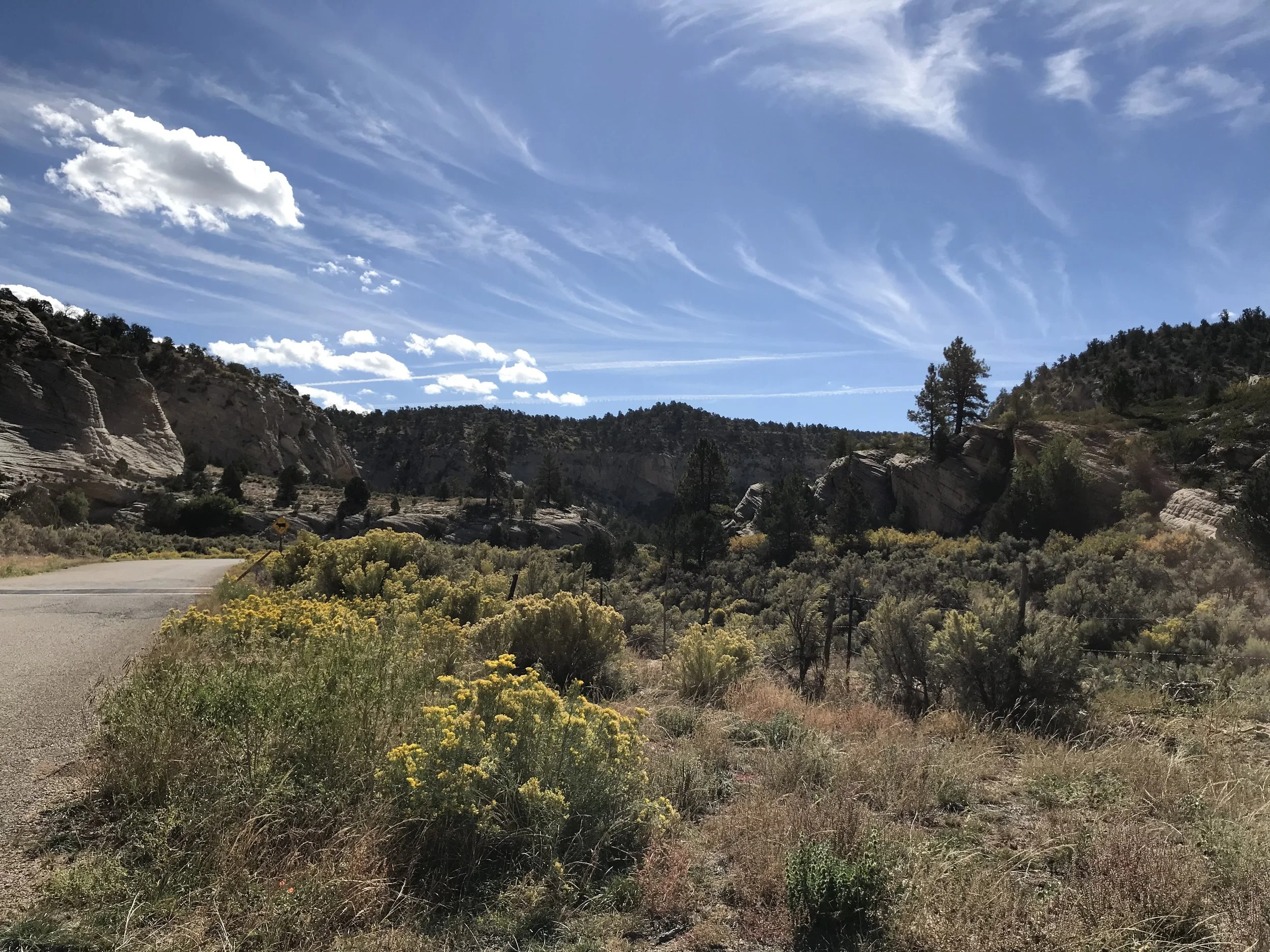
Riding Johnson Canyon Road (Utah) on a Gravel Bike
A solo dawn ride up Glendale Bench and Johnson Canyon Road near Kanab, Utah — a brutal 1,500-foot gravel climb rewarded with the backside of Bryce, Grand Staircase-Escalante, white canyon bluffs, and a Gunsmoke ghost town.
This post contains affiliate links. If you buy through our links, we earn a small commission at no extra cost to you. Thank you!
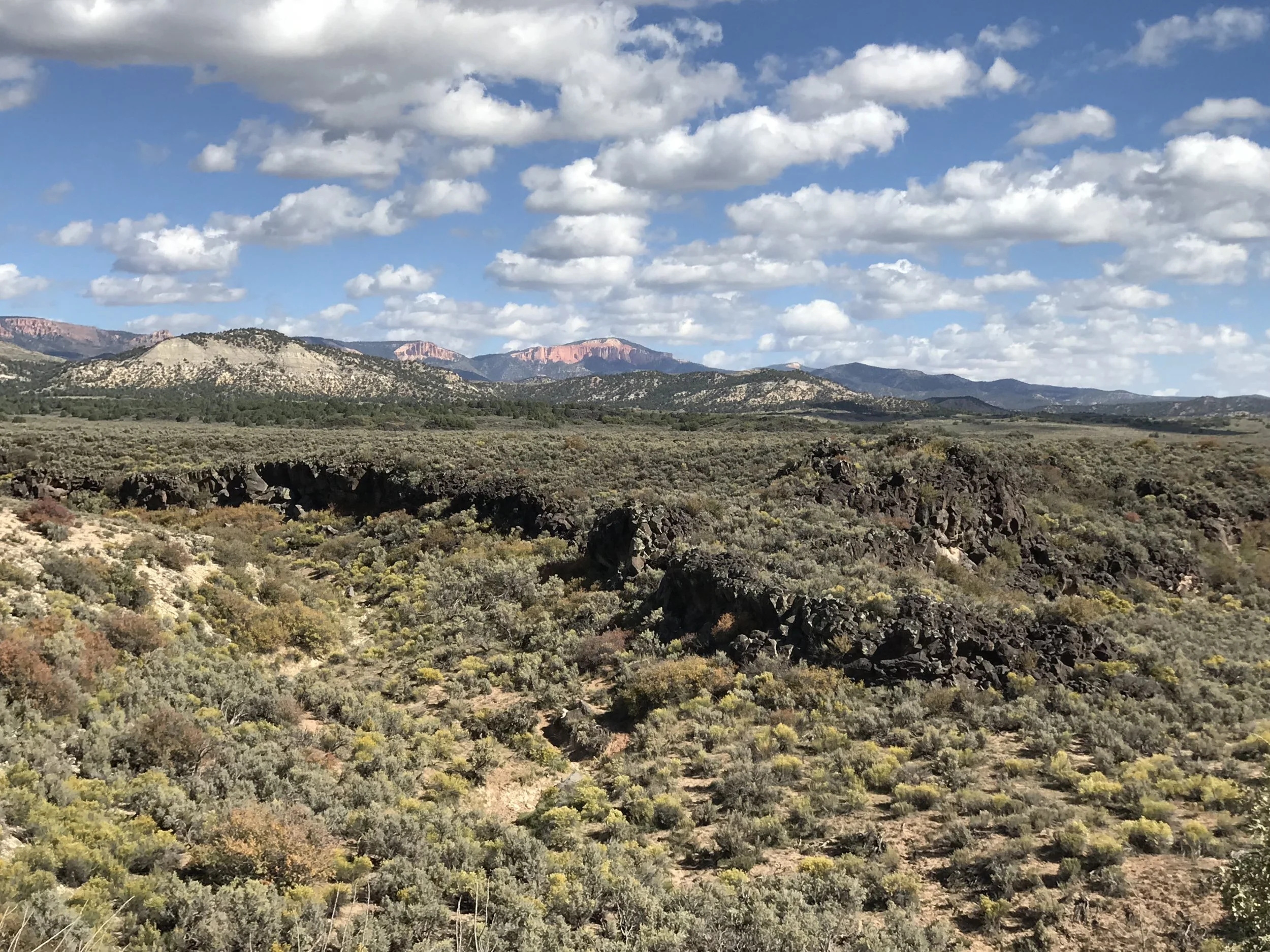
A brutal climb on chunky gravel led to expansive views.
When I was a kid, I used to look out at the odd road or random trail disappearing into the countryside as our family car passed on the highway and wonder… “where does that go?” As I got older and found myself with my own car, backpack, and bike, I realized I could finally explore some of those whims. With that delight, I also quickly learned that a little bit of a plan goes a long way — and that learning a route ahead of time, to plan food, water, and supplies, could keep the adventure going.
When Matt, our Dude, the pets, and I pulled into a campsite at Bauer’s Canyon Ranch RV Park in Glendale, Utah — north of Kanab — we delighted in the apple trees dropping fruit all around us in the old orchard. While walking the dogs morning and evening, one road kept grabbing my attention. On its west end it’s called Glendale Bench Road, and by the time it winds east, then south, it ends about 34 miles later on Highway 89, just east of Kanab.
It’s an unsuspecting-looking road, starting with nearly fist-sized gravel and heading straight up the “bench” from the town of Glendale. There wasn’t much written about it at the time, but I couldn’t resist — so I started googling it, looking at maps and satellite images, and decided I needed to ride this stretch on my bike.
I had no idea what I was in for.
On the day I departed, I left just as the sky was lightening. I packed my normal riding kit — water, food, energy chews, tools, and a flat-repair kit — but because it was remote, I also took a walkie-talkie (we didn’t have the Garmin inReach yet, and I definitely would have brought it on this ride), a headlamp, an external battery charger, an extra layer, and offline maps downloaded so I could access them without signal.
Matt and I made our plan: I’d head out and ride for a few hours, and he and Eric would have an easy morning and then take the truck up the same route to see when and where they’d catch me. I’m really glad we planned it this way, for two reasons. First, once I got a few miles out, I lost all cell signal and the walkie-talkies wouldn’t connect unless he was getting close. The second reason would come at the end of my ride.
Those first few miles were enough to make me question what in the world I was doing. In less than three miles, I climbed nearly 1,500 feet. I think I walked my bike as much as I rode it — the inclines were steep, followed by flatter sections, with plenty of “teaser” peaks: hills you climb hard thinking you’re almost there, only to reach a flat and see the next climb waiting. Ugh.
Once I finally reached the peak of the peak of the peak, the views opened up and I realized I was looking at the backside of Bryce Canyon National Park. The gravel at the start was brutal — huge chunky rocks that bounced everything and made it nearly impossible to ride in a straight line. But what I didn’t realize until I saw the sign was that I was about to ride straight into Grand Staircase–Escalante National Monument.
Almost instantly, the gravel got smaller, completely bearable, and a whole lot more fun. This section was beautiful, with vast stretches of views and small canyons starting to open up. At this point I was texting Matt to tell him to leave plenty of time to enjoy the drive — hoping the message would send if I picked up a whiff of cell signal.
This is clearly a popular area for off-road enthusiasts, too; many were packing up their ATVs, RVs, and campsites from the weekend and heading home as I rode past. But the beauty of this road wasn’t over.
The brownish-red colors began to morph into chalky white rock outcroppings: I was entering Johnson Canyon. It’s an underrated drive — well, maybe not underrated, but definitely not talked about enough. Not only are the swirling white craggy bluffs easy on the eyes, but as I wound through farmland farther down the canyon, I stopped the moment I saw the wooden sticks of a ghost town. By then I had cell signal, and while I still hadn’t heard from Matt, I knew they’d have started by now. I googled where I was to learn the ghost town’s name — only to find it was the old movie set for Gunsmoke. It’s on private land, off-limits to curious tourists, but easy enough to see and photograph from the road.
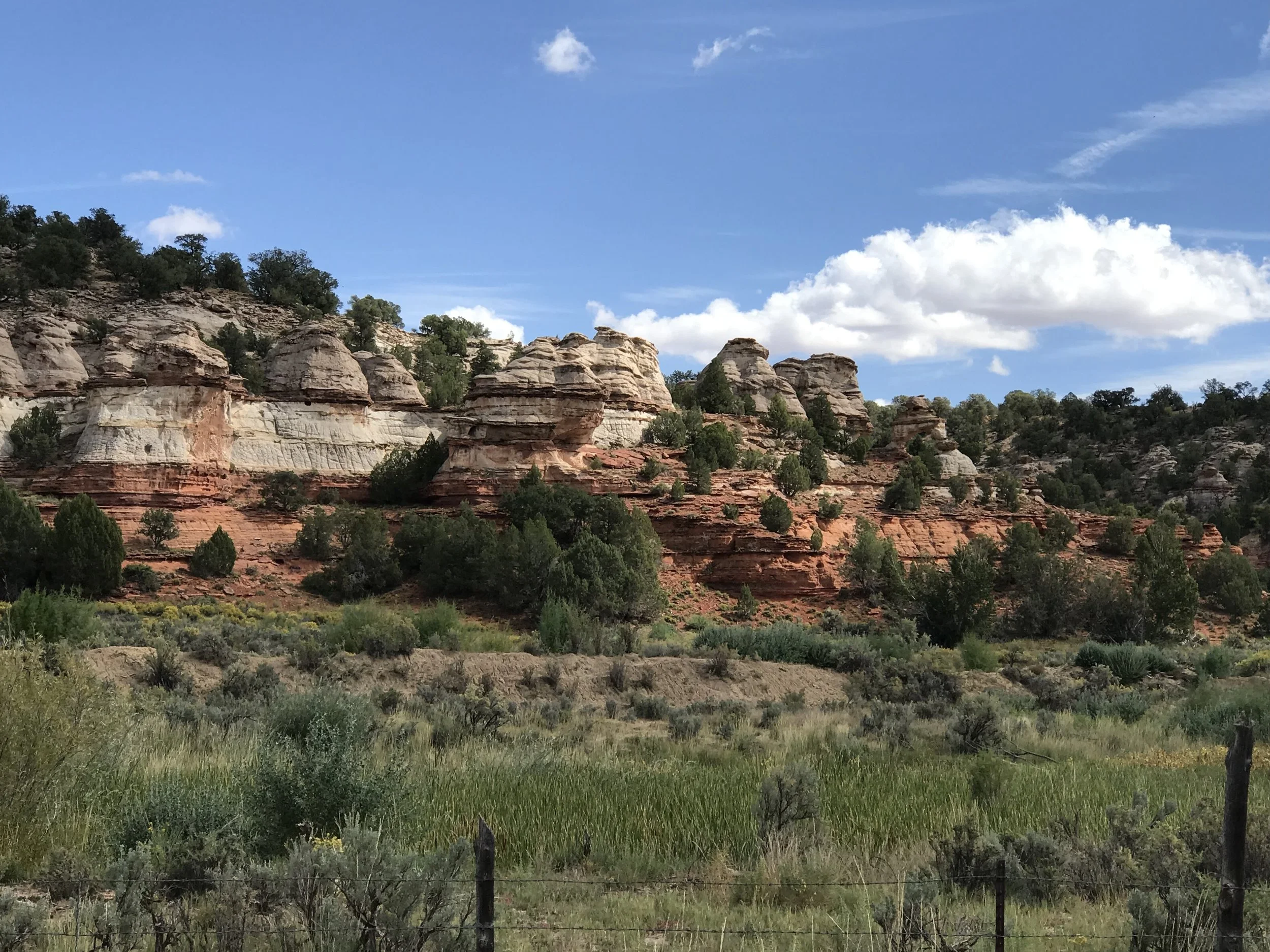
Now came the hot stretch. Officially out of the rocky canyon and committed to a hot, straight, flat run of pavement through farmland, I sweat through my shirt while soaking up the colors, cows, and speed. This was when I caught sight of Matt and Eric, and we planned where to meet at the end of my ride.
Here’s where my second reason for appreciating a plan — and being willing to change it — comes in. From where Johnson Canyon Road empties onto Highway 89, it’s only about four miles into town. I figured I’d just ride the highway shoulder in and meet them at Willow Canyon Outdoor (a gear shop AND a coffee shop — can it get any better?). But once I rode out into the open, away from the canyon and valley, the wind picked up dramatically. I didn’t even mind the building rain, but as I entered the highway shoulder that strong wind became a crosswind. Add semis passing at 80 mph, with the push and suction of their wind currents, and riding the shoulder got sketchy fast.
Fortunately, Matt read the situation from the truck and stopped about a mile up the highway on a pullout to wait for me. I was happy to call it a day rather than get beat up by wind and traffic after an already epic — and tough — ride.
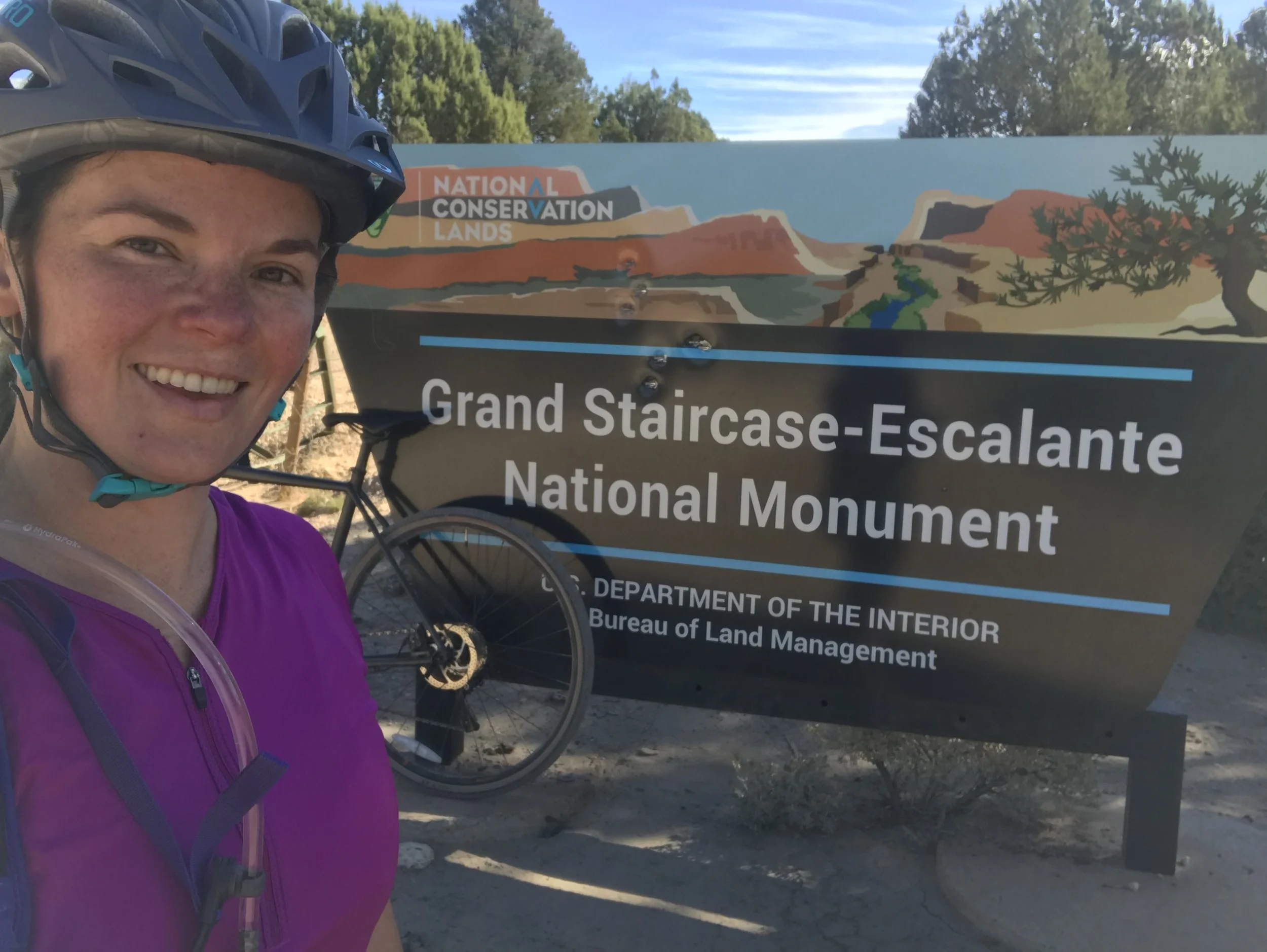
Would I do it again? If someone could drop me off after that first 1,400-plus-foot climb, you bet. Truly, though, this was a memorable, gorgeous backdrop for a gravel ride close to Kanab, with plenty of neat geology, public-land appreciation, wildlife, and history.
Taking Kids Paddling: Gear and Tips
How to get your kids on the water safely and happily — the PFDs, sun protection, and footwear that matter, how to pick paddleboards or kayaks, and the safety tips (hypothermia, snacks, and one big don’t) that keep the day fun.
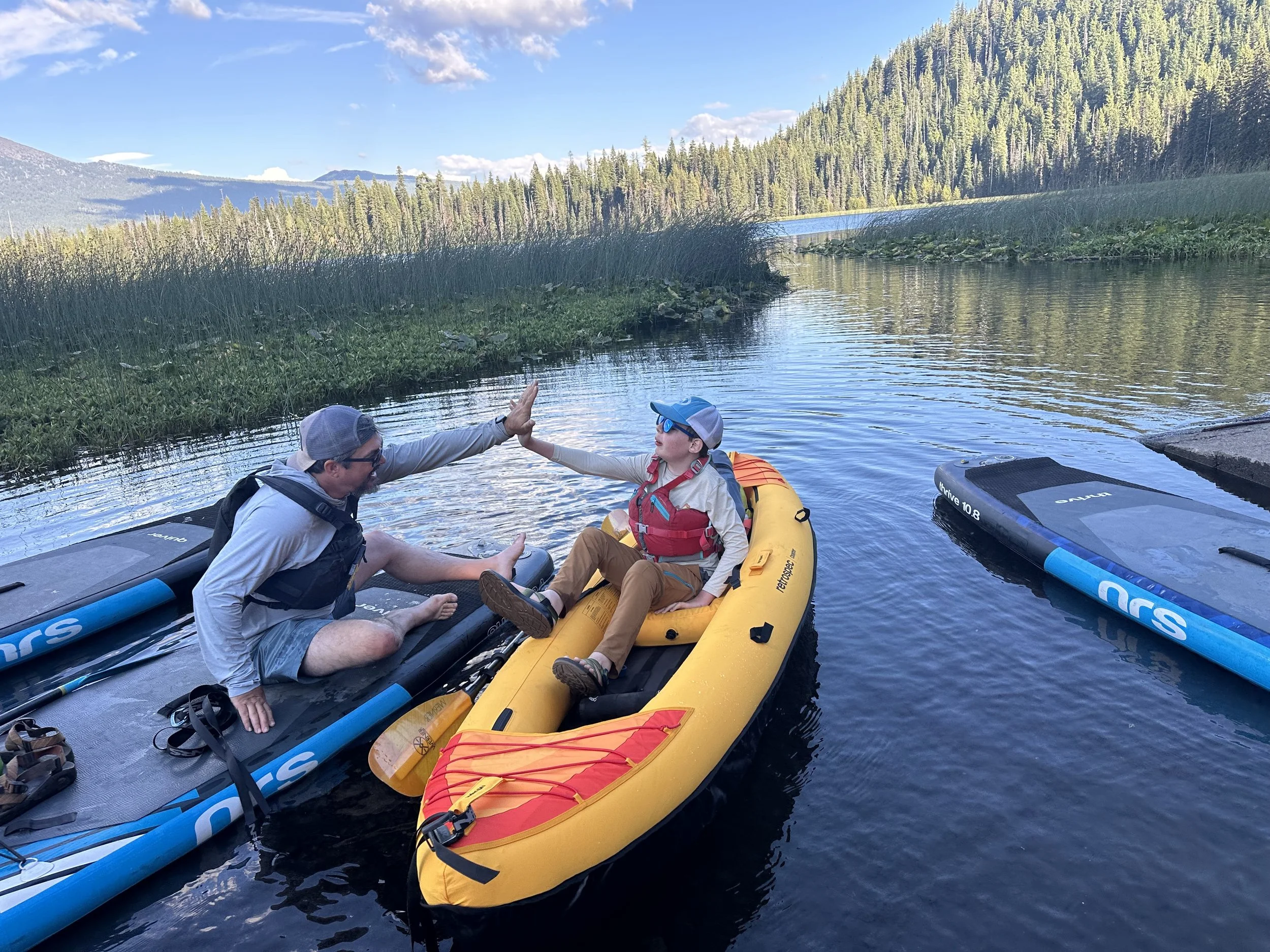
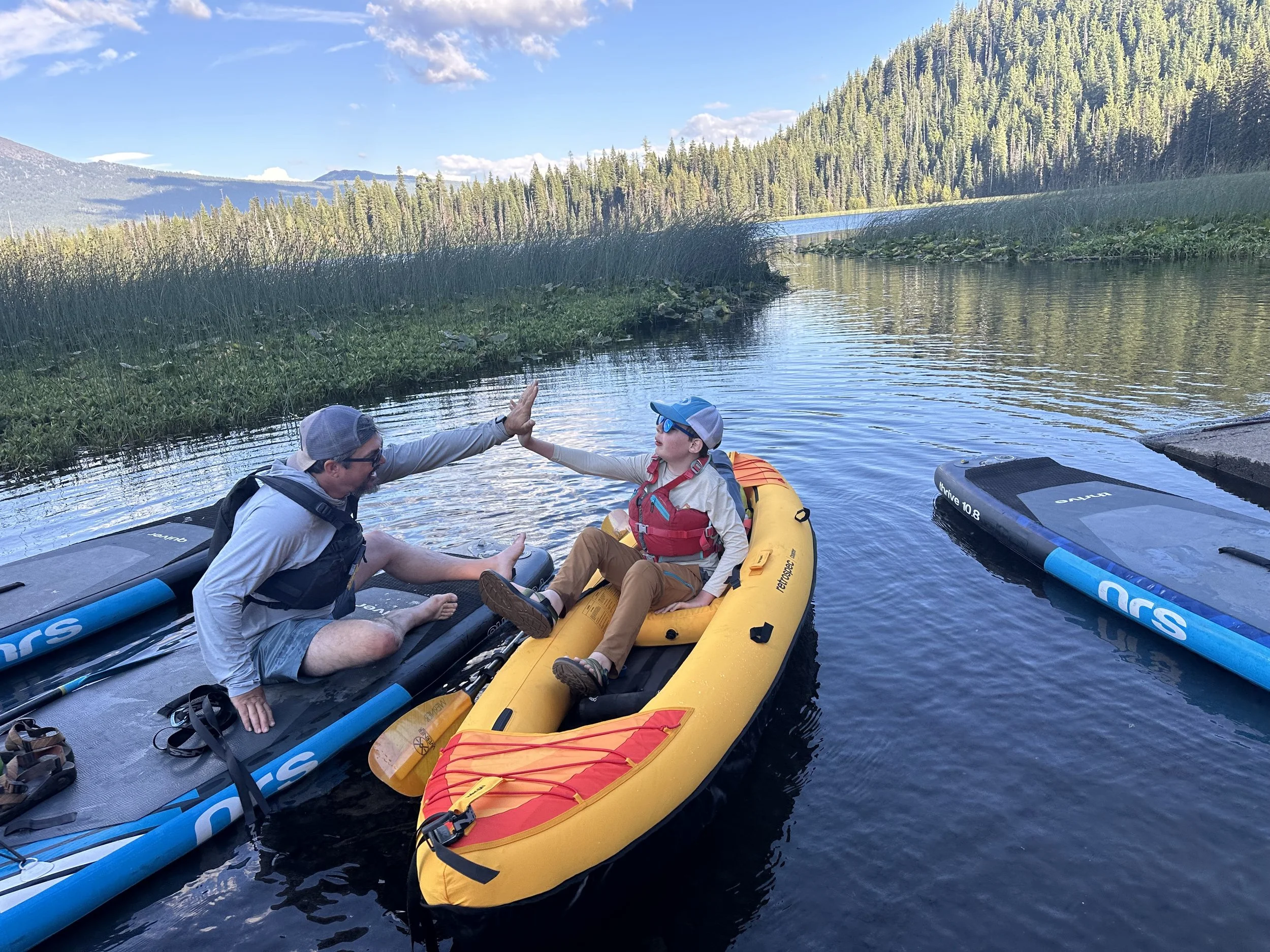
Taking our kids paddling at a young age is a ton of fun, and it takes a little planning to make sure everyone has a good time. The first time you take your kiddo out on the water can feel a bit overwhelming — for them and for you. But you can do it! Here’s some advice to make it a fun, safe time outdoors that builds a foundation for a lifetime of playing on the river.
Personal flotation devices (PFDs). As the saying goes, safety first. On your first trip out, start with a PFD. They’re required by law: everyone in a watercraft must have a PFD available, and kids must be wearing theirs. A well-fitting PFD helps keep a child floating face-up even before they know how to maneuver their body in the water. A good fit includes a recommended weight range for the intended user and a rating from the U.S. Coast Guard — infant vests carry a Type II rating, for example, while most others are Type III or IV. Be sure whatever you buy meets or exceeds these requirements, and once they’re more mobile and comfortable in the water, update their PFD to match their changing needs.
Sun protection. Sun protection around water is as easy as sunscreen or a long-sleeve sun shirt, hat, and sunglasses. Sunscreen should be waterproof and applied 20 minutes before going in so it doesn’t wash off, and reef-friendly formulas help protect our rivers, lakes, and reefs (they’re often better for your skin, too). If you’d rather not smear yourself or your kid with sunscreen, there’s a great second option: swim clothing with a sun-protection (SPF) rating. It should be reasonably close-fitting, and it’ll keep you cooler out of the water and warmer in it. Avoid cotton and loose-fitting clothing. A bonus: most of these double as a rash guard, protecting sensitive skin from the chafing that can happen when a PFD is worn for long stretches and things get wet, sweaty, and rubby during play.
Foot protection. Good-fitting foot protection is a key safety item on the water. If your little adventurer is still an infant, this matters less — but for the mobile, tadpole-chasing, rock-skipping, splashing bundle of energy, they’ll need something on their feet to keep the fun going all day. Water shoes come in all shapes, sizes, and price points. I could write a whole article on this one topic, but I’ll keep it simple: they have to fit and stay in place. Flip-flops are fine for the pool or maybe the beach, but on rivers, streams, or any rocky, uneven terrain with moving water and unsure footing, nothing is more useless than something that floats away or rolls your ankle. Sandals that actually stay on are great — Chaco, Keen, Columbia, and plenty of others make good ones that stay put and protect. A pair of river shoes that keep out gravel and fit well will also do the job. Keep those tootsies protected: too often the easiest water-access points have broken glass, metal, and fishing hooks lying around that can ruin an otherwise fun day.
Let the floating begin! You’ve checked the safety boxes, so now you’re ready to get moving on the water. It can feel like a lot to manage, but the best advice I can give is: make the trip about the kids, keep it short, bring lots of snacks, and if they’re having fun, you will too. We love our paddleboards for their versatility — you can sit, stand, or kneel depending on the situation, and SUPs make great swimming platforms when you need to cool off. Ours are inflatable and roll down to about the size of a suitcase, fitting in the trunk of the car. If you go that route, look for one that includes a pump and is made with durable drop-stitch construction. Kayaks and canoes are also great tools for getting on the water, each with their own challenges and benefits (I can go on about this for hours — fair warning).
A few safety tips to close.
Practice paddling before you take your kid out. You’ll be more confident, and that translates to a better experience for everyone.
Watch for hypothermia. It happens when exposure to cold is prolonged — in the water, or just from cold wind when someone is wet. A rain jacket or a towel can go a long way toward keeping someone warm. (Reminder: cotton is not your friend when it’s wet.)
Tie down your cooler — but never tie your child to anything. In a tip-over, you don’t want your kid tied to something they could get entangled in. Yes, that includes being tied to you.
Don’t forget the snacks. Snacks and water while floating keep energy up and hold off the Hangry Monster.
Save the party for another time. Alcohol is a leading contributor to deaths on our rivers. Save it for later.
(Podcast) Season 3, Episode 7 - Adult Weekend Adventures (The Kids Will Be Ok)
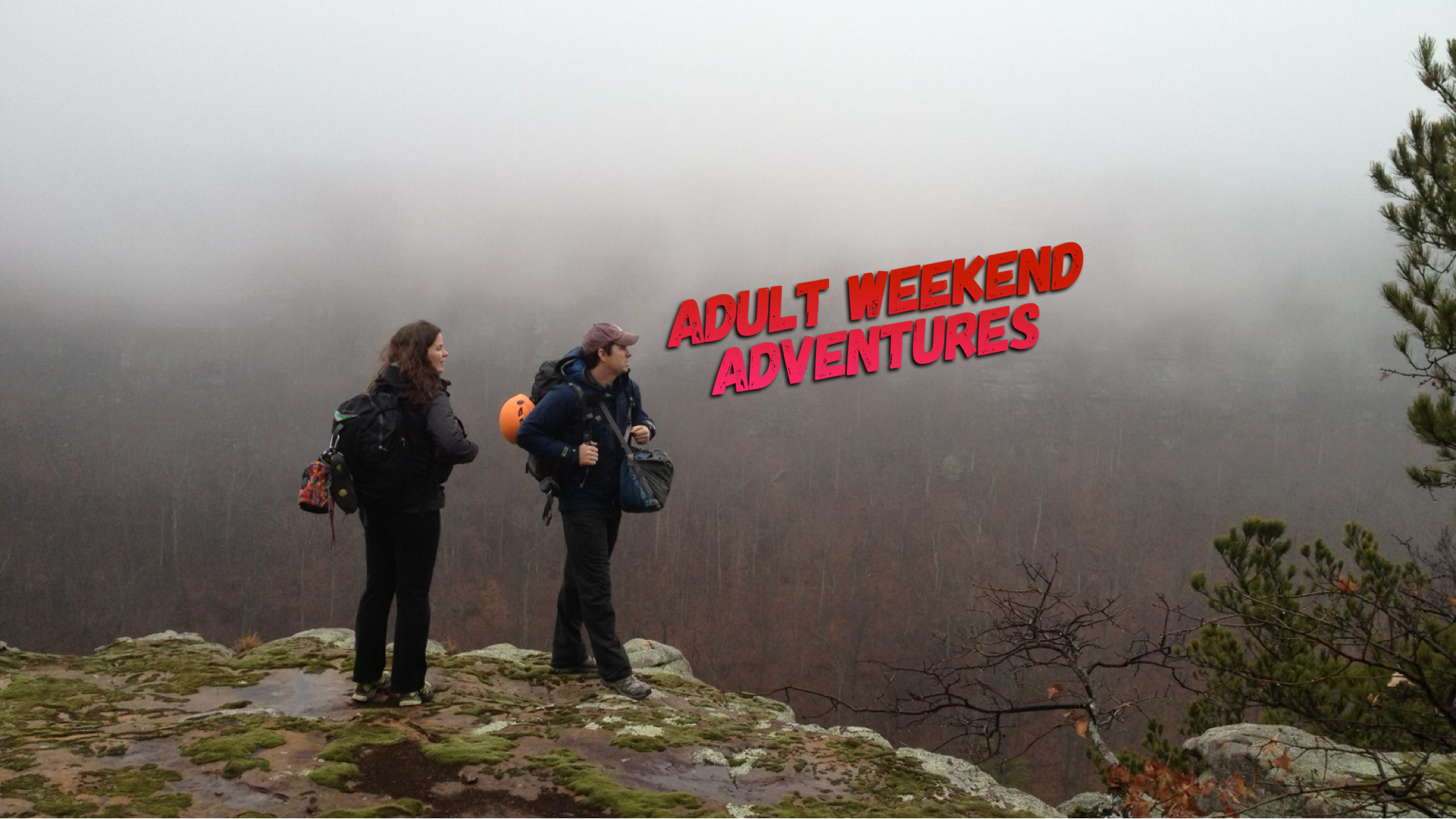
Sometimes the adults need to get away and play, too. Kids, it’s time to stay with the grandparents or buddy-sitter… Mom and Dad need to have some reconnection time - it’s healthy for everyone.
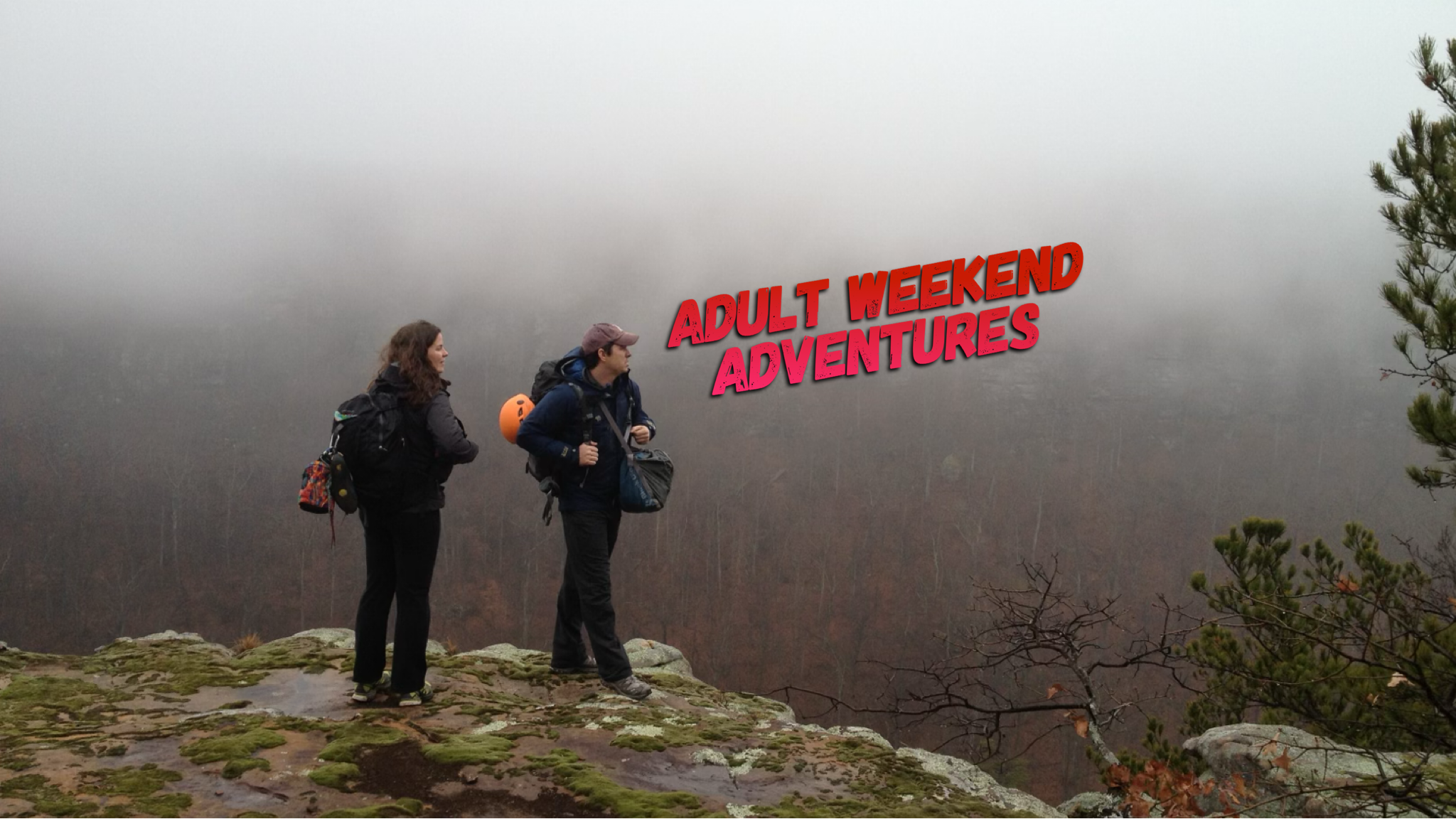
Season 3, Episode 7. Okay parents — this one's for you. We're talking about getting outside without the kiddos. Solo trips, couples getaways, weekends with friends — all of it. Cristen and I dive into why it's so important to carve out that adult time in the outdoors, even when it feels impossible to step away. Turns out, absence really does make the heart grow fonder — you come back recharged, more patient, and honestly a better partner and parent for it. We share some of our own experiences sneaking away for a night or two, and we talk about how to make it happen without the guilt. We also mention Eddie Bauer's gear rental program — a great option if you want to try something new (kayaking, backpacking, whatever) without dropping a fortune on gear you're not sure about yet.
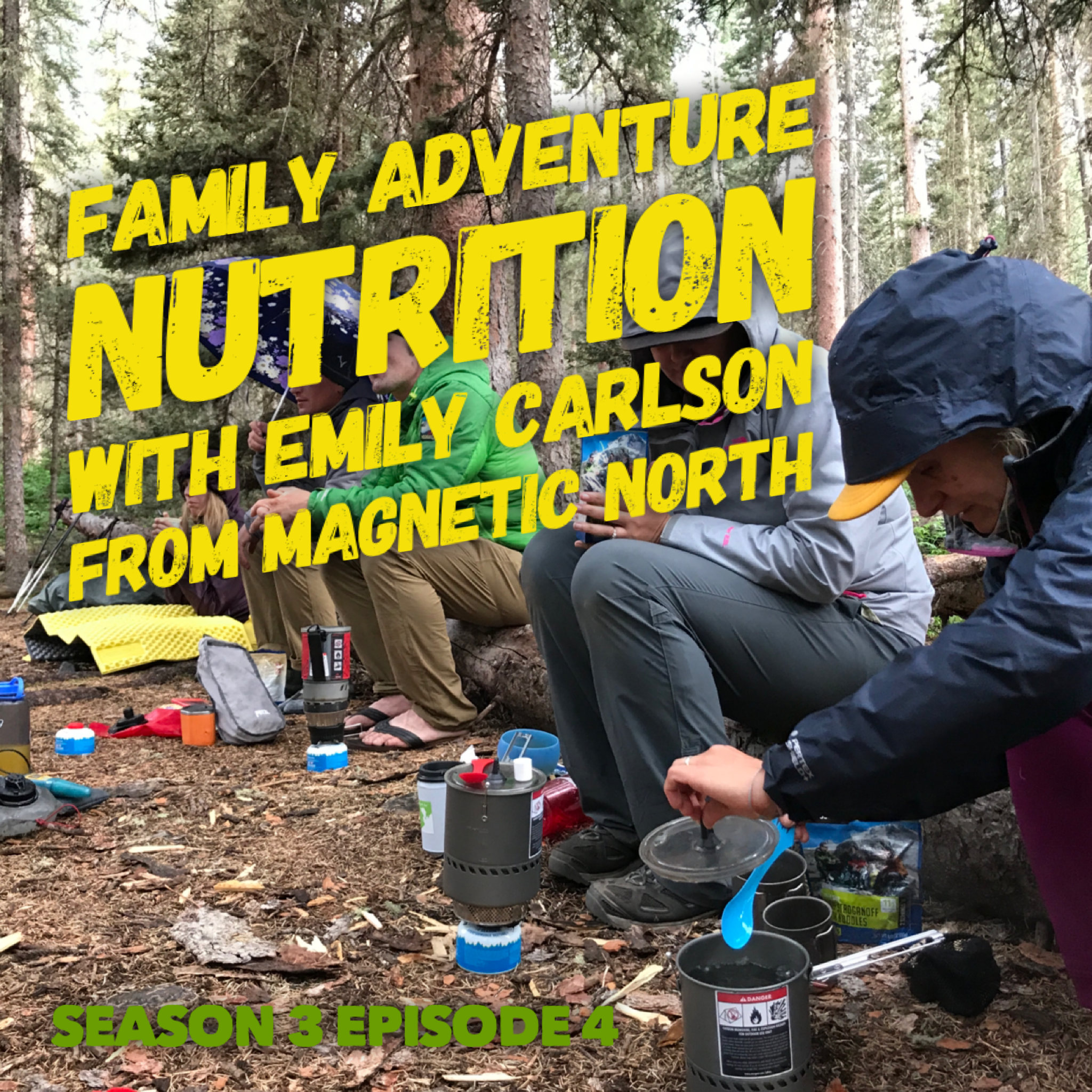
(Podcast) Family Adventure Nutrition with Emily Carlson (Magnetic North)
How do you best feed your family well when you’re outside and active? In this episode, we interview Emily Carlson from Magnetic North.
Season 3 Episode 4.
In this episode, we talk with Emily Carlson of Magnetic North (magneticnorth.us) about family nutrition across a variety of outdoor activities and ages of participants! Magnetic North focuses on durability training — continuing to do the things you love for as long as you want to do them.
Covered in this episode: the best foods to pack for outdoor adventures; whether packaged foods are necessary; choosing foods that power you best for the activity you’re doing; including kids in food packing; grab-and-go vs. full-on cooking; carbohydrates, proteins, and fats and what they do for us; short trips vs. long trips; how elevation affects the way your body burns fuel (and water); the other necessities of sleep and hydration; how to avoid spikes and crashes; how elevation changes the macros your body burns; things you can do to help your body prepare in the weeks leading up to a longer trip; supplements and shakes; why taking your time with meals matters; how stress affects digestion; fads and fasting; and a super-special secret s’mores technique!
We loved creating this episode — there are so many wonderful nibbles about nutrition and fueling yourself and your family for any adventure. If you’d like to learn more about Magnetic North, their new Durability School, or one-on-one coaching with Emily (she’s awesome, and so is her cohort Brittany), find them at magneticnorth.us and on Instagram @magneticnorth___. Thanks for listening and sharing our podcast!
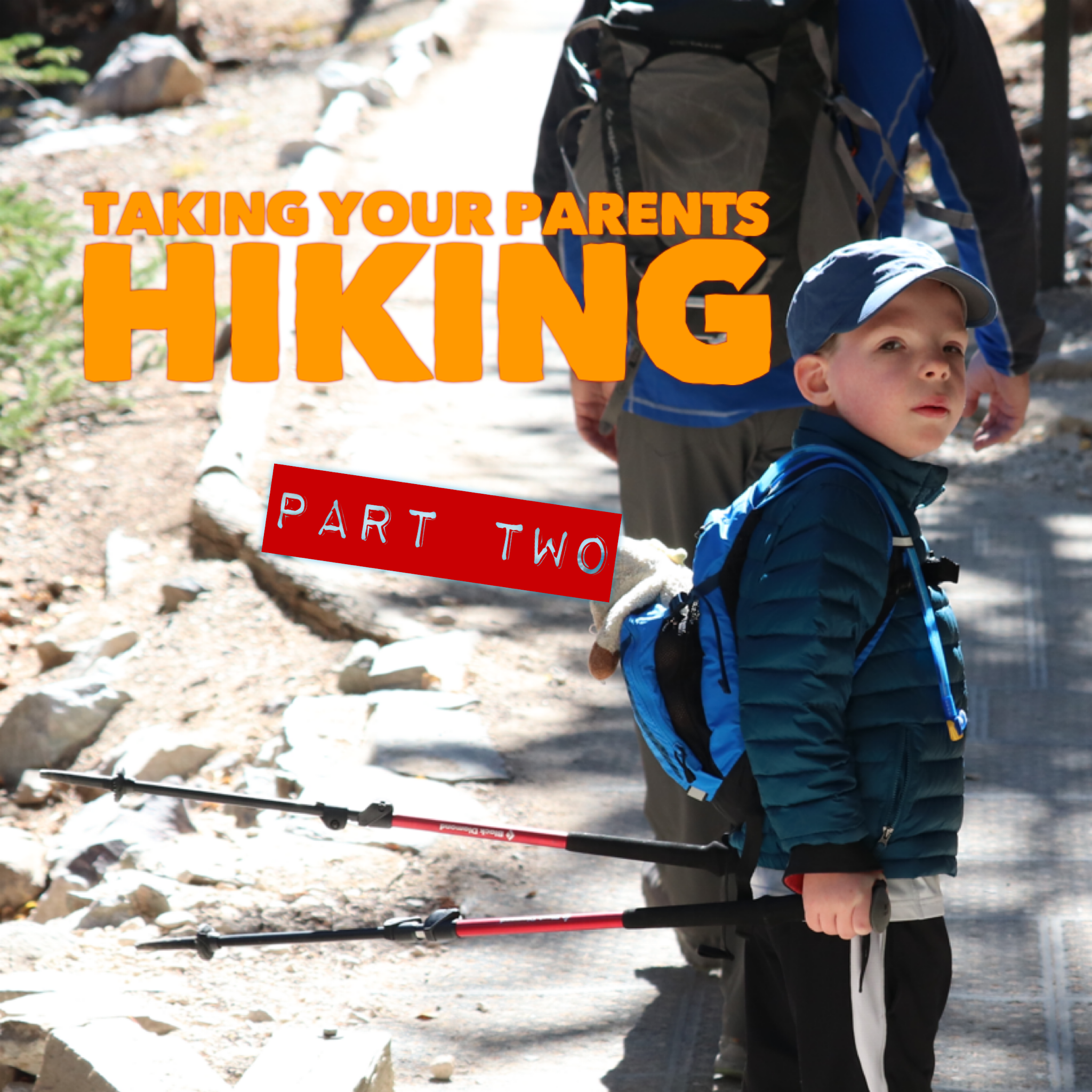
(Podcast) Taking Your Parents Hiking: Part 2. Going Farther & Bryce Canyon Adventures
Season 3, Episode 3: taking your parents hiking, Part 2 — going farther, from short walks to all-day hikes, plus clothing and layering, gear, first aid, and Bryce Canyon adventures.
Season 3 Episode 3.
In this episode, we help you go farther. Beginning with short 1–3 hour walks, we move into the realm of hiking all day and building up distance. We talk about clothing — including rain gear, base layers, and why to avoid cotton. The right gear can really make the difference: we go into depth about what to wear and how to outfit your family so everyone can focus on the fun and not on being miserable. We also share some basic first aid tips — always seek expert advice when you get the chance. This is all in an effort to give you the skills and knowledge you need to feel comfortable pushing farther into the outdoors with your adventures.
Apps we use: AllTrails and Trailforks.
Adventure clothing and gear we mention: Backcountry.com, Eddie Bauer, Title Nine, REI merino wool socks, a hiker’s first aid guide and first aid kits (My Medic), a moleskin blister kit, and our favorite Black Diamond trekking poles.
(Podcast) A Kid’s Guide to Taking Your Parents Hiking: Part 1
Season 3, Episode 2: a kid’s guide to taking your parents hiking — motivation, tips, and tricks to get the whole family outside, from nature walks to all-day epics (Part 1).
Season 3 Episode 2.
Kids, are you tired of being indoors? Do you have a thirst for adventure that YouTube is just not satisfying? We here at Keyword Adventure are here to help! In this episode, we share ways to teach them how to get outdoors and start soaking up some fun. From nature walks to all-day epics, we give you tips, tricks, and fun advice for getting outside. Remember to take those pictures!
We help you find the motivation to get outside and explore the world around you!
(Podcast) Tent Camping Starter: From Living Room to the Backyard
Season 3, Episode 1: tent camping starter — laying the foundation for a great family camping experience, from the living room to the backyard, so the kids are comfortable and the pressure’s off you.
Welcome to Season 3 Episode 1! We’re so glad you’re here.
The Season 2 wrap is complete, and we’re excited to embark on a new season geared more toward helpful steps to get you into your adventures. Season 3 Episode 1 is all about starting out.
Perhaps you’ve wanted to try camping and never had the know-how. Maybe you have experience camping, but not with kids. Or maybe your kids are even asking to try it out, and now you’re doing your best to figure out just how to make that happen.
This episode is all about laying the foundation for a good experience camping in tents with your family — particularly how to set it up so your kids are comfortable, have fun, and it takes the pressure off you. Our goal is to give you tips and tricks to get started in the comfort of your own home. Visit our website and sign up for our newsletter to be one of the first to access gear, discounts, checklists, and more.
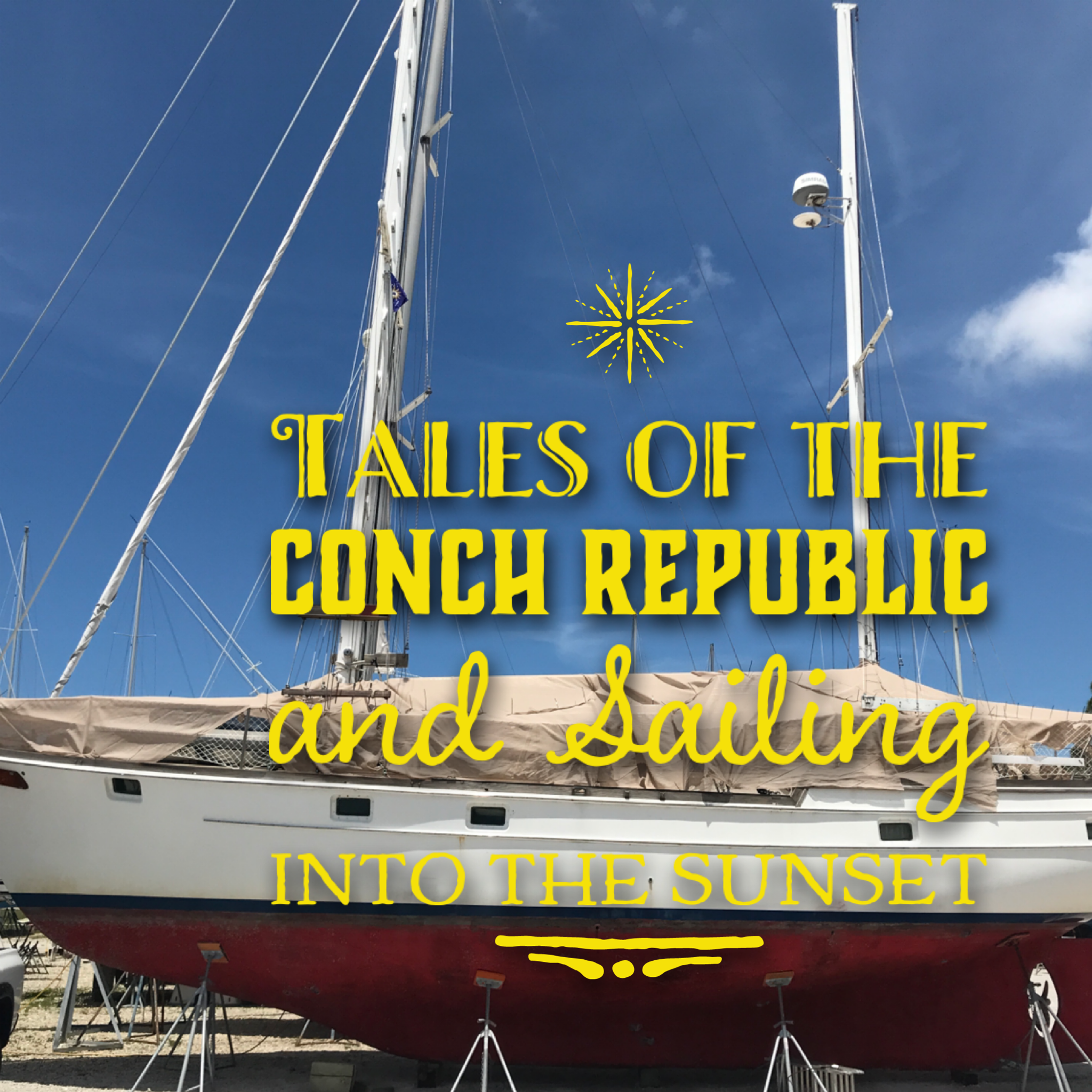
(Podcast) Key West’s Wacky History: Tales of the Conch Republic and Sailing into the Sunset
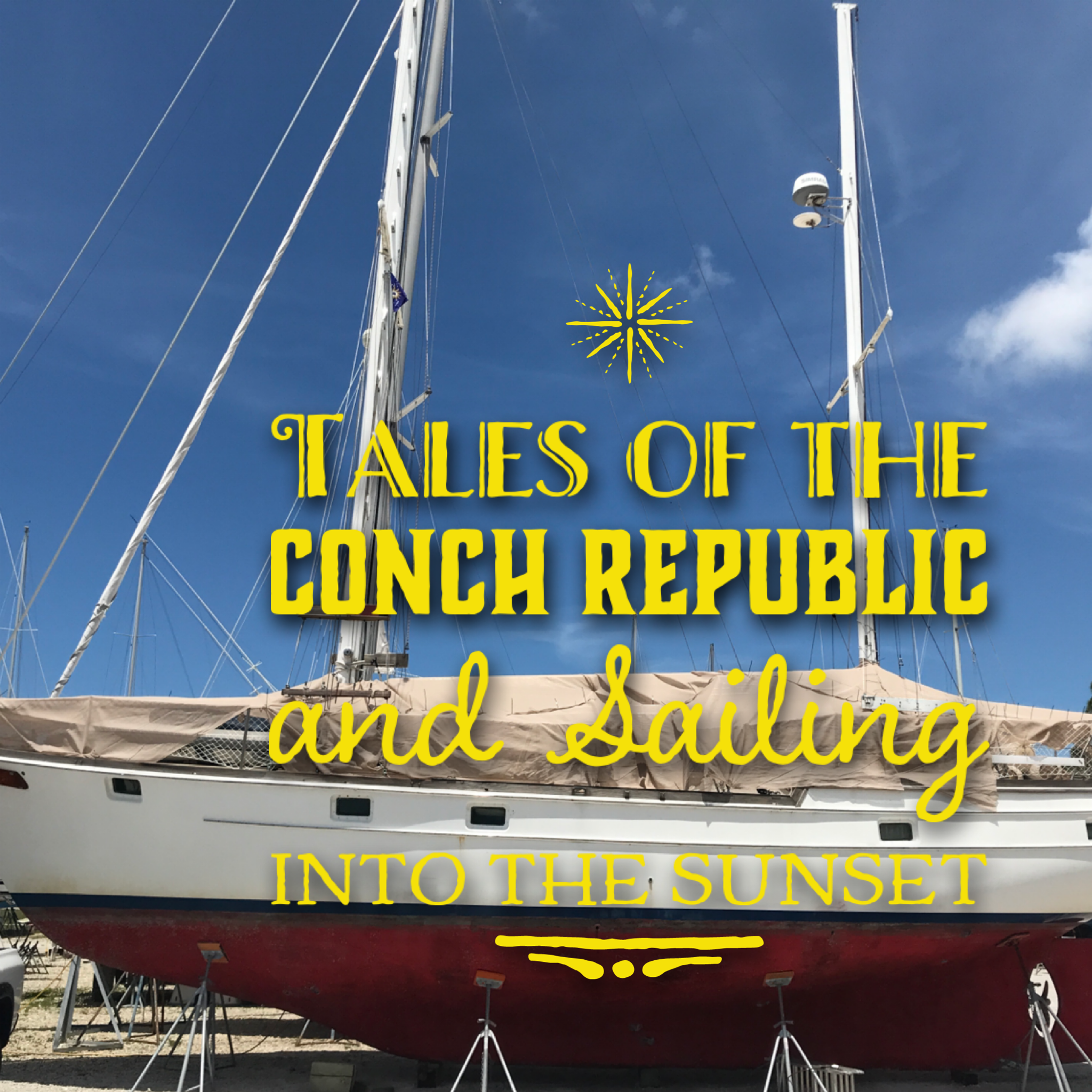
Season 2, Episode 11: the wacky tale of the Conch Republic’s 1982 “war,” then our final overnight passage of the season — sailing home to Punta Gorda and hauling Moon Dragon out for hurricane season.
Season 2, Episode 11.
From a modern-day naval battle to setting sail on our final voyage of the season — and figuring out what to do when hurricane season comes — we couldn’t help but enjoy every minute of this adventure.
Have you heard of the Conch Republic? There’s a great story there. On April 23, 1982, after a series of denials and rejections in the courts, the city of Key West took matters into its own hands. A Border Patrol checkpoint had been set up on the main route into the Keys, leading to long backups and hours of waiting while everything in your vehicle was searched. The city reasoned that if they were going to be treated like a separate country, they would just happily become one. And so the Conch Republic was born.
Spying a target of opportunity in the USCG Cutter Diligence, the wooden schooner Western Union, under the command of Captain John Kraus, attacked with water balloons, conch fritters, and stale Cuban bread. The Coast Guard responded with fire hoses, Prime Minister (Mayor) Wardlow surrendered — and then demanded foreign aid, which has not been paid to this day. A quiet victory was won, though: the checkpoint came down and the traffic jam was gone.
Our Key West story isn’t quite over, but it’s time to head back north and prepare for hurricane season (June 1 – October 31). That means sailing north overnight to our home port of Punta Gorda, in Charlotte Harbor, on Florida’s west coast.
This would be only our second blue-water overnight passage, and we felt much better prepared — even though we’d been hanging in the straps at the work yard just a week before. A full safety inspection, including the mast and rigging, a little provisioning, and all we needed was perfect weather.
When passage planning, we rely on a few different forecasts — Predict Wind, Weather Underground — and double-check against the National Weather Service. Lucky for us, the weather was spectacular: winds out of the SSE at 12 knots and a gentle following sea. We made great time on what was by far our most comfortable passage to date. This is why people sail — smooth seas, a good breeze, and the open-water experience. It was perfect: sailing into the sunset and arriving the next afternoon, happy and confident in our skills and in our beloved Moon Dragon.
Hurricane season — and preparing Moon Dragon to be on the hard (stored on land, strapped down on stands in a hurricane-approved marina) — was our next challenge, and I’m so grateful I had the help of my brother and father to get her all set up. We cleaned her out of food (donating everything they’d accept), stripped the sails, cleared the decks of gear and lines, and rigged a sunshade across the entire deck. We did a lot of work in a very short time!
Cristen took on the challenge of driving north with Eric and the dogs (who were super gassy) and all of our stuff, while Eric had a couple of yearly doctor checkups back in Missouri that we really didn’t want to miss. Needless to say, she’s amazing and really stepped up. (Matt is the author of this blog and her biggest fan.) I was able to join them back in Missouri a couple of weeks later… but that’s another story.
Now that we’re back in Missouri, we’re all set to take on new challenges — and, as always, we keep in mind that when facing the unknown, the keyword is ADVENTURE!
(Podcast) Hanging in the Wind on Stock Island, Key West, Florida
Season 2, Episode 10: while leak repairs keep us dockside on Stock Island near Key West, we dig into local food, botanical gardens, a zoo, and the Dude’s first snorkel.
Season 2, Episode 10.
We’re hanging out in Key West — well, Stock Island, to be exact. There’s a natural tendency to focus all your attention on Key West itself, but Stock Island offers a great island experience of its own: fantastic local food at the Hogfish Bar and Grill, breakfast at the Dolphin Deli, botanical gardens, a zoo, and lots of local art.
We keep exploring on both land and in the water, including the Dude’s first snorkeling experience. All of this is happening around the leak repairs that are keeping us from island-hopping like we’d planned — but adventurers adapt and overcome. Who knows what we’ll get into next!
Referenced in this episode: the Hogfish Bar and Grill; the Dolphin Deli; 3D Boat Yard; and Diver’s Direct Key West.
(Podcast) Sink into Key West: Highlights in Paradise
Season 2, Episode 9: we find paradise at Ocean’s Edge on Stock Island — then the boat starts (slowly) sinking. Repairs, Key West history, and exploring the Key West Aquarium with the Dude.
Season 2, Episode 9.
While searching for a quiet place to go, we found PARADISE! Ocean’s Edge Resort and Marina on Stock Island is just the place — beautiful, full of amenities, and just right for relaxing and really enjoying Key West.
That is, until the boat started sinking! Okay, only very slowly sinking — but still. As the saying goes, “owning a boat is just boat work in exotic places,” so hey, this is just something else to learn. With repair facilities close by and fantastic customer service from Ocean’s Edge Marina, we’re able to get a repair time set, which lets us start really enjoying Key West.
And there is so much history! Key West has been the subject of books, movies, and songs, and its wild and wacky past provides plenty of fodder. We just scratched the surface in this episode, but don’t worry — we’ll tell more tall island tales in the next one. One of the most fun parts of Key West for us is getting to explore it with the Dude (our son), and one of our favorite places is the Key West Aquarium. What a ridiculously cool spot!
As always, be sure to subscribe to our podcast so you don’t miss any episodes. Thanks for listening.
Referenced in this episode: the Key West Annual Calendar of Events; Ocean’s Edge Resort and Marina; 3D Boat Yard Key West; the Key West Aquarium; Mattheeson’s Ice Cream; Only Wood Pizzeria; Red Buoy Coffee; and the Funky Rooster Coffee House.
(Podcast) Sailing Overnight from Fort Myers to Key West, Florida
Season 2, Episode 8: an offshore overnight passage from Fort Myers to Key West — our full voyage-planning process, from weather and routing to standing watch and seasickness, plus a little pirate history.
Season 2, Episode 8.
Have you ever wanted to sail at night? Offshore? Okay — maybe that’s not for you, but how about a trip to Key West? This episode covers that and a little more.
Key West has been a major sailing hub for hundreds of years, and to some it’s a country unto itself — yes, that would be the Conch Republic. We also get into our voyage-planning process, with links to the resources we mention in the list below. Safety, weather, route planning, standing watch, seasickness — we touch on all of it and much more.
Join our family as we discover some of the history of these famous pirate waters!
Referenced in this episode: Navionics; PredictWind; Windy; the American Sailing Association; Garmin inReach; the Astral kids’ PFD; and “A Brief History of Key West.”
(Podcast) Fun Sailing with Family in Florida: St. James, Pine Island, Fort Myers Beach
Season 2, Episode 7: family sailing down Florida’s west coast — interviews with family, a boat-up restaurant with a pup menu on Pine Island, and Cristen’s birthday spa day at the Pink Shell on Fort Myers Beach.
Season 2, Episode 7.
Sailing is fun — and sailing with family is even more fun. We’re having a great time doing all these interviews with family and friends, and this episode is a double-header.
Not only do we interview Jennifer (Cristen’s sister), we also get to interview Matt’s mom, Marilyn, and his stepfather, Ron, who came and spent a week with us aboard Moon Dragon as we sailed down the west coast of Florida.
Join us as we cruise down the ICW (Intracoastal Waterway) from Burnt Store Marina, across Charlotte Harbor, and down the west coast of Pine Island.
We explore the super cool town of St. James on Pine Island, where we luck into a boat-up restaurant that even has a pup menu. The Waterfront is a fantastic place to go, especially if you love good food and your pets. The dogs may have had their doubts about this whole sailing thing, but this adventure won them over for sure.
In this episode we also celebrate Cristen’s birthday with a spa day at the Pink Shell Resort and Marina on Fort Myers Beach. But to get there, we had to pass under our first bridge — a real test for Matt’s nerves. Once we arrive, we discover the Pink Shell has not only a fantastic spa but a huge pool area, with waterfalls and pools for the kids to play in. It’s right up the little Dude’s alley — he even got to check out his first video game arcade on a rainy afternoon.
Sailors, even if you skip the massage and the pool, you’ll love the bathroom and shower accommodations — they double as spa facilities, some of the best we’ve ever had the pleasure of using in our travels. Well done, Pink Shell!
Once the birthday celebrations wind down, we bid a fond farewell to Ron and Marilyn and prepare for our first-ever overnight offshore trip — to Key West. That is, until the weather and seas turn out to be not quite as forecasted.
Referenced in this episode: Burnt Store Marina; Pine Island, Florida; The Waterfront Restaurant; the Pink Shell Resort and Marina; and Euro World Design.
(Podcast) Misadventures in Florida Sailing: When the Boat Bumps its Way to Anna Maria Island, Venice, and Boca Grande Pass
Season 2, Episode 6: we bump the bottom off Egmont Key, anchor at Anna Maria Island, dine in Venice, and pick our way into Cayo Costa — plus a fussy forward head at the worst possible moment.
Season 2, Episode 6.
Wow — well, here we are, bouncing on the bottom near the coast of Egmont Key in Tampa Bay. Yikes!
Then we “camp” — anchor out — in a very pleasant spot at Anna Maria Island before heading back south for another visit to the wonderful coastal town of Venice, Florida, where we treat our adventurous guest (Lisa, from Episode 5) to a fantastic dinner at The Crow’s Nest. We keep the trip going the next morning, setting sail for the island of Cayo Costa and a bit of beach time on this remote barrier island of Charlotte Harbor — it can only be reached by boat or helicopter.
This uninhabited island is a state park and wildlife sanctuary with some of the best camping and shell hunting on the Florida coast. Boaters beware, though! The popular channel entrance to the Pelican Bay area on the east side of Cayo Costa, leading into a protected anchorage, is tricky, shallow, and not well-marked. We watched a few boats fail to find the right line and find the ground instead. The trick is to stay on the west side of the channel, very close to the island and the sandbar that runs along that side of the inlet. If you’re not feeling that brave — or, as in our case, it’s a very busy weekend — you can anchor on the east side of the northern end of the island. Just be sure to stay out of the Intracoastal Waterway and clear of Boca Grande Pass.
Once you’re safely anchored, you’re free to explore the island. They even have a tram that will take you to the Gulf side, saving you the walk across.
As much as we’ve enjoyed having Lisa onboard, her vacation time is coming to a close and we have to get her to an airport. Luckily, we know just the place: Burnt Store Marina (not sponsored) is only a short sail away. That works out in our favor, too, because on the recent leg our forward head (toilet) decided to become fussy — non-functional. And of course I picked the perfect time to do the repairs… you’ll have to listen to find out.
Jennifer (Cristen’s sister) arrives, and we set out on another day of sailing — which turns into a night of sailing…
Referenced in this episode: Cayo Costa State Park; Leave No Trace; Burnt Store Marina; and Mote Marine Lab.
(Podcast) Exploring St Pete Beach & Tampa Bay, FL, on a Sailboat
Season 2, Episode 5: sailing the big city of St. Pete Beach and Tampa Bay — pirates, Treasure Beach, the Gasparilla festival, coastal cruising with friend Lisa, and a nervy run to Egmont Key.
Season 2 Episode 5.
Sailing in a big city, just like traveling with an RV, has its challenges! Some are really familiar — crazy traffic and busy intersections, where to park or walk the dogs, and getting into and out of gas stations.
Join us as we figure out life in super-busy St. Petersburg Beach during its peak tourist season and have fun exploring the history of the area. What is the Gasparilla Pirate Festival? Where is Treasure Beach? Pirates, treasure, and some wild seas are just the beginning of this fantastic journey!
We also welcome our first “sailing” friend, Lisa, on board and go out for some coastal cruising while we explore around Tampa Bay. But an afternoon excursion to Egmont Key has us testing the nerves of the crew of SV Moon Dragon! Every time things don’t go as planned, that’s when the adventure begins… right?
Referenced in this episode: Lisa Ziebell (shamanic practitioner), the Gasparilla Pirate Festival, and Sweetwater Kayaks’ Kayak Symposium.
(Podcast) Florida Gulf Coast Sailing: Gasparilla, Cayo Costa, Charlotte Harbor, Egmont Key
Season 2, Episode 4: sails up on Florida’s Gulf Coast — out of Charlotte Harbor past Gasparilla and Cayo Costa, dinner at Venice’s Crow’s Nest, and anchoring behind historic Egmont Key.
Season 2 Episode 4. Things have been fixed, sails are raised, and off we go! Come along with us as we explore the heart of Florida’s Gulf Coast and check out some of the great sailing destinations along the west coast of Florida.
Having discovered what that crazy noise was (and the solution!), we’re starting to really get into the swing of cruising life as we head out of Charlotte Harbor after exploring some of the beautiful barrier islands like Gasparilla and Cayo Costa.
Then we head north to Venice, Florida, where we indulge our stomachs with a wonderful dining experience at the Crow’s Nest Restaurant and Marina. If you find yourself in this particular area of Florida, you really should stop in for dinner — you never know, you might spot Moon Dragon as we pass through!
From there we go north to Tampa Bay and drop anchor behind historic Egmont Key. Lastly, it’s north a little farther to explore along St. Petersburg Beach. There’s bound to be booty along the famed Treasure Coast, right? The adventure is just getting started as this new sailing crew explores the coast of Florida!
Referenced in this episode: Venice, Florida; the Crow’s Nest Restaurant and Marina; and Egmont Key.
(Podcast) Launching a Sailboat, a Woman, and an Adventure: Look Out Florida!
Cristen goes into the drink at the dock, dolphins save the day, and Moon Dragon spends her first nights at Burnt Store Marina and anchored on Florida’s Gulf Coast — plus guest Rachael Dunville.
Well, that didn’t start out the way we had planned! Cristen went into the drink just as we were pushing off the dock. Sometimes things don’t go exactly as planned — and sometimes they really don’t! That said, everyone came out okay (maybe a little wet), and at least there were dolphins. Dolphins make every day better and remind us why we’re doing this.
Come join us in this cascade of firsts as we set off on day one and knock out a bunch of last-minute — but very necessary — jobs on our sailboat, named Moon Dragon. We finally get to spend the first night on our sailboat and learn about life in a marina (Burnt Store Marina).
We even welcome our first overnight guest, Rachael Dunville, who gives her perspective of life on Moon Dragon in her own voice! We interview her about her experiences coming and staying with us, including her impressions of Moon Dragon and boat life. There will be more to come from Rachael (who is fabulous) in our Adventurer Series, where we interview fellow adventurers and see travel through their eyes.
Now we break out of the marina and spend our first night anchored out on the Gulf Coast of Florida — but a mystery sound keeps us up before we’ve even gotten into bed, and we wonder how to pinpoint the odd ticking in the middle of the night.
If you’ve ever thought you might like to take your family sailing, here’s your chance to learn from our experiences — and, as always, feel free to reach out and ask questions!
Find Rachael at Aerosha.com and Rachael-Dunville.com.
(Podcast) Going Overboard: Boat Projects, Leaving Dock, & Cristen Loses It!
Season 2, Episode 2: life after buying a boat — upgrade lists, assessing sails, going up the mast, and the boat projects that never end, with shout-outs to Sail Life, SailRite, and Highfield.
Season 2 Episode 2.
So what do you do after buying a boat? Well, we hope this episode gives you a place to start — from making lists of upgrades, assessing your sails, and dealing with contractors, to realizing there’s always more work than you thought there would be.
Have you been to the top of your mast? We have! Getting to know your new floating home inside and out is important not only for safety but also for when you want to make upgrades or new purchases — it’s good to have your own set of measurements when ordering new items for your boat.
We’d like to emphasize once again that this process would not have been possible without help from family, friends, and Rodney and Cheri, who really worked with us to make this sailing dream happen. Also a shout-out to Mads from Sail Life over in the land of YouTube — without him and his cheerful approach to “Oh Glorious Sanding,” Cristen might have lost the battle with the amount of work she had to do.
Cristen would also like to give a special shout-out to SailRite and their fantastic videos and equipment, which literally put the wind back in our sails; and to Highfield, where we got our new dinghy — you made the decision easy, and we’ve loved exploring in our new ride. We hope this episode leaves you feeling that you too can take on a big, challenging project and overcome the obstacles that come up on your next adventure.
Oh, and one last thing… sometimes when you think everything is set and you’ve got it all figured out, the thing you least expect is just waiting for you. Listen to the end, have a laugh with us, and see why Cristen always latches the safety-line gates now before pushing off the dock (heheheh…).