Taking Kids Paddling: Gear and Tips
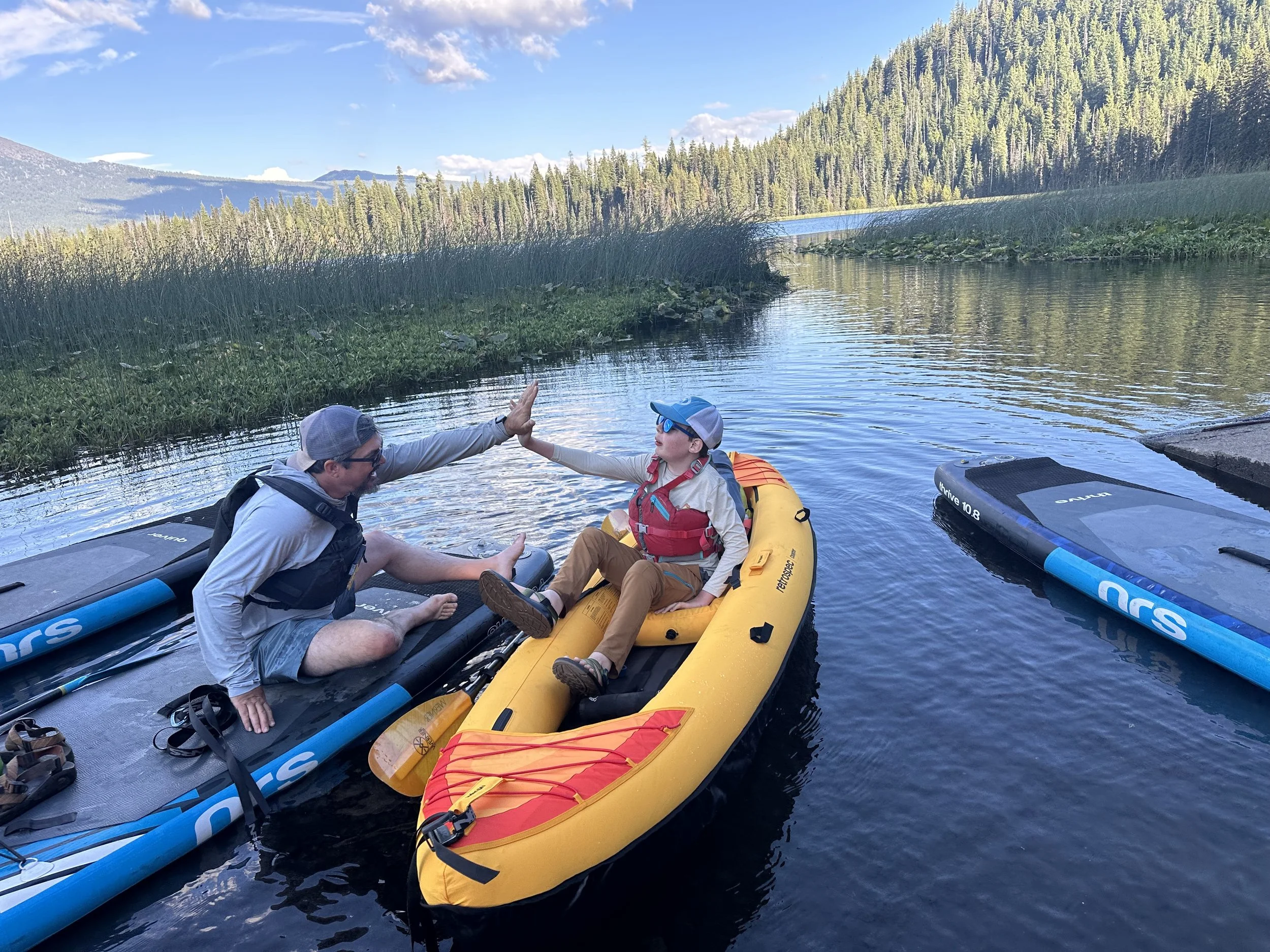
Taking our kids paddling at a young age is a ton of fun, and it takes a little planning to make sure everyone has a good time. The first time you take your kiddo out on the water can feel a bit overwhelming — for them and for you. But you can do it! Here’s some advice to make it a fun, safe time outdoors that builds a foundation for a lifetime of playing on the river.
Personal flotation devices (PFDs). As the saying goes, safety first. On your first trip out, start with a PFD. They’re required by law: everyone in a watercraft must have a PFD available, and kids must be wearing theirs. A well-fitting PFD helps keep a child floating face-up even before they know how to maneuver their body in the water. A good fit includes a recommended weight range for the intended user and a rating from the U.S. Coast Guard — infant vests carry a Type II rating, for example, while most others are Type III or IV. Be sure whatever you buy meets or exceeds these requirements, and once they’re more mobile and comfortable in the water, update their PFD to match their changing needs.
Sun protection. Sun protection around water is as easy as sunscreen or a long-sleeve sun shirt, hat, and sunglasses. Sunscreen should be waterproof and applied 20 minutes before going in so it doesn’t wash off, and reef-friendly formulas help protect our rivers, lakes, and reefs (they’re often better for your skin, too). If you’d rather not smear yourself or your kid with sunscreen, there’s a great second option: swim clothing with a sun-protection (SPF) rating. It should be reasonably close-fitting, and it’ll keep you cooler out of the water and warmer in it. Avoid cotton and loose-fitting clothing. A bonus: most of these double as a rash guard, protecting sensitive skin from the chafing that can happen when a PFD is worn for long stretches and things get wet, sweaty, and rubby during play.
Foot protection. Good-fitting foot protection is a key safety item on the water. If your little adventurer is still an infant, this matters less — but for the mobile, tadpole-chasing, rock-skipping, splashing bundle of energy, they’ll need something on their feet to keep the fun going all day. Water shoes come in all shapes, sizes, and price points. I could write a whole article on this one topic, but I’ll keep it simple: they have to fit and stay in place. Flip-flops are fine for the pool or maybe the beach, but on rivers, streams, or any rocky, uneven terrain with moving water and unsure footing, nothing is more useless than something that floats away or rolls your ankle. Sandals that actually stay on are great — Chaco, Keen, Columbia, and plenty of others make good ones that stay put and protect. A pair of river shoes that keep out gravel and fit well will also do the job. Keep those tootsies protected: too often the easiest water-access points have broken glass, metal, and fishing hooks lying around that can ruin an otherwise fun day.
Let the floating begin! You’ve checked the safety boxes, so now you’re ready to get moving on the water. It can feel like a lot to manage, but the best advice I can give is: make the trip about the kids, keep it short, bring lots of snacks, and if they’re having fun, you will too. We love our paddleboards for their versatility — you can sit, stand, or kneel depending on the situation, and SUPs make great swimming platforms when you need to cool off. Ours are inflatable and roll down to about the size of a suitcase, fitting in the trunk of the car. If you go that route, look for one that includes a pump and is made with durable drop-stitch construction. Kayaks and canoes are also great tools for getting on the water, each with their own challenges and benefits (I can go on about this for hours — fair warning).
A few safety tips to close.
Practice paddling before you take your kid out. You’ll be more confident, and that translates to a better experience for everyone.
Watch for hypothermia. It happens when exposure to cold is prolonged — in the water, or just from cold wind when someone is wet. A rain jacket or a towel can go a long way toward keeping someone warm. (Reminder: cotton is not your friend when it’s wet.)
Tie down your cooler — but never tie your child to anything. In a tip-over, you don’t want your kid tied to something they could get entangled in. Yes, that includes being tied to you.
Don’t forget the snacks. Snacks and water while floating keep energy up and hold off the Hangry Monster.
Save the party for another time. Alcohol is a leading contributor to deaths on our rivers. Save it for later.