
10 Family Adventures for Those Last Two Weeks of Summer
The clock feels like it’s ticking with summer winding down and preparing for a new school year to begin again. But not all is lost! You still have a couple of weeks. Here are some ideas for summertime, close-to-home things to do to soak up that last bit of summer together.
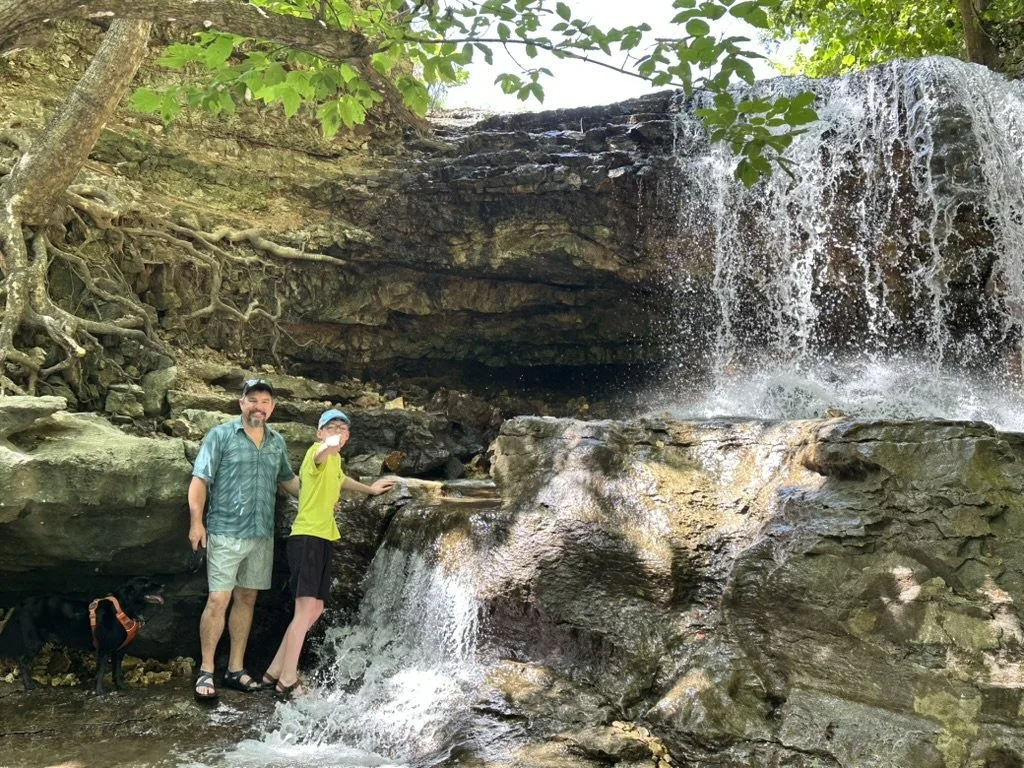
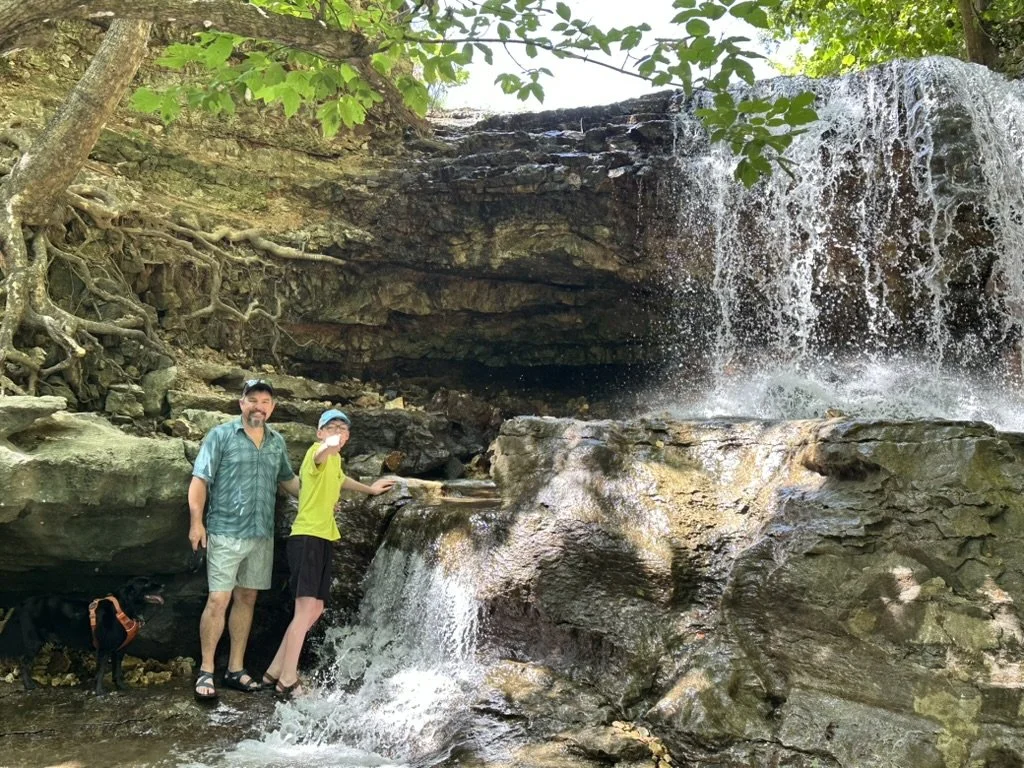
We’ve spent a lot of time in Northwest Arkansas - years! - only to JUST discover the beautiful Tanyard Creek Trail in Bella Vista.
We’re in that late summer vacation window. The hot, lazy days that drag on but we know are so short-lived. School's coming, boredom exists but the time feels short, and a big trip isn't really on the table anymore. This is exactly the window where "adventure is up to the person participating" is important to see. It’s that final hurrah of time when you want to squeeze the last drops of fun that can fit - the ice cream, swimming, memories, and outings - before earlier mornings, tighter schedules, and different responsibilities settle back in.
We put together some ideas for some local-focused fun. None of these require more than a couple hours from home or much of a budget, and every one of them is a real adventure if you or the kids have never done them before.
1. Find a local "first" hike. Not the trail you always do, but a new (even short) one, within about 30-60 minutes of home. New terrain, even nearby, resets a kid's sense of exploration. Bonus points if it has water accessibility along the way for a cool break along the way.
2. Build a backyard or local-park campout. Tent, headlamps, one "camp meal" cooked outside, and if you can swing it, actually sleeping out there. This is a genuinely great trial run before a real camping trip, the preamble to some cooler fall camping trips, and low-stakes with amenities easily reachable.
3. Do a sunrise or sunset outing. Pick a local high point, lake, or open field and go watch the sky do its thing. Kids remember these more than you'd expect, and it costs nothing but a slightly rough wake-up. See if some friends would like to join!
4. Water day, however you can get it. A local river, lake, splash pad, or even a sprinkler-and-water-balloon backyard setup. Late summer heat makes this an easy win. Parents, let this include you.
5. Geocaching or a scavenger hunt hike. Turn a regular trail into a hunt with a free geocaching app, or make your own list of things to find - a certain leaf shape, a bug, a specific color in nature. Purpose changes how kids experience the same trail. We also have the 30-page Keyword Adventure Trail Guide that includes a pre-made scavenger hunt list (among other lightweight games) and other fun intro-to-adventure education for the whole family.
This is our Keyword Adventure Trail Guide ebook! 30 Pages of fun information and facts about adventure activities, terminology, games, knots, and more.
6. Visit a local nature center or small museum you've been meaning to get to. These are chronically underrated by families who live nearby and "can go anytime" which usually means it’s always put off (for us locally, it’s the Missouri Institute of Natural Science with real dinosaur skeletons!). Two weeks left of summer is the perfect deadline that gets it on the calendar.
7. Bike a new-to-you trail or greenway. Even a familiar town looks different from a bike, and a new stretch of trail is an easy half-day adventure. Check out the AllTrails or TrailForks apps if you need trail finders and resources in one place.
8. Plant something and make it a project. Not glamorous, but genuinely great for connecting kids to the idea that nature is something you tend, not just visit. A late-summer planting, a small garden bed, even a pot on the porch. By now, some of our spring-sewn plants have run their course and it frees up space for something new.
9. Do a "no phones" outdoor evening. Fire pit, flashlight tag, stargazing, whatever fits your space. The magic here is less about the activity and more about the uninterrupted attention.
10. Let your kid plan the last adventure of summer themselves. Hand them a map, a short list of nearby options, or just the question "what do you want our last summer adventure to be?" Kids engage differently with a plan they had a hand in building, and it's a nice way to close out the season on their terms. We know we always craved for time on rivers as kids!
Why the "last two weeks" window matters:
There's something about a deadline that makes people actually do the things they meant to do all summer, or maybe reflect on how fast the time passed. No regrets if you didn’t get to the things you had in mind at the beginning of the summer: that’s just life. We treat these last two weeks less like an obligation to cram in fun and more like a chance to slow down and spend good time together… the exact opposite instinct of a packed vacation. Some of our best family memories have come from a random Tuesday afternoon thirty minutes from home. Plus, appreciating that adventures that are close to home gives us the ability and experience to return to them throughout the year.
Happy summer, everyone, and we wish you a great return to the school year and routine!
A First Hike on Good Terms: A Quick Guide for Sensory-Sensitive Beginners
Heading out on a hike for the first time can feel like a lot for people who have sensory sensitivities or anxiety. Here are some ways to help your child or family member set up for success on their first hike.
Quick answer: For a sensory-sensitive beginner’s first hike, solve friction and temperature ahead of time with seamless socks and light layers, talk through what to expect before you leave, keep the route short, flat, and close to the car, and treat an early turnaround as a win so they’ll want to go again.
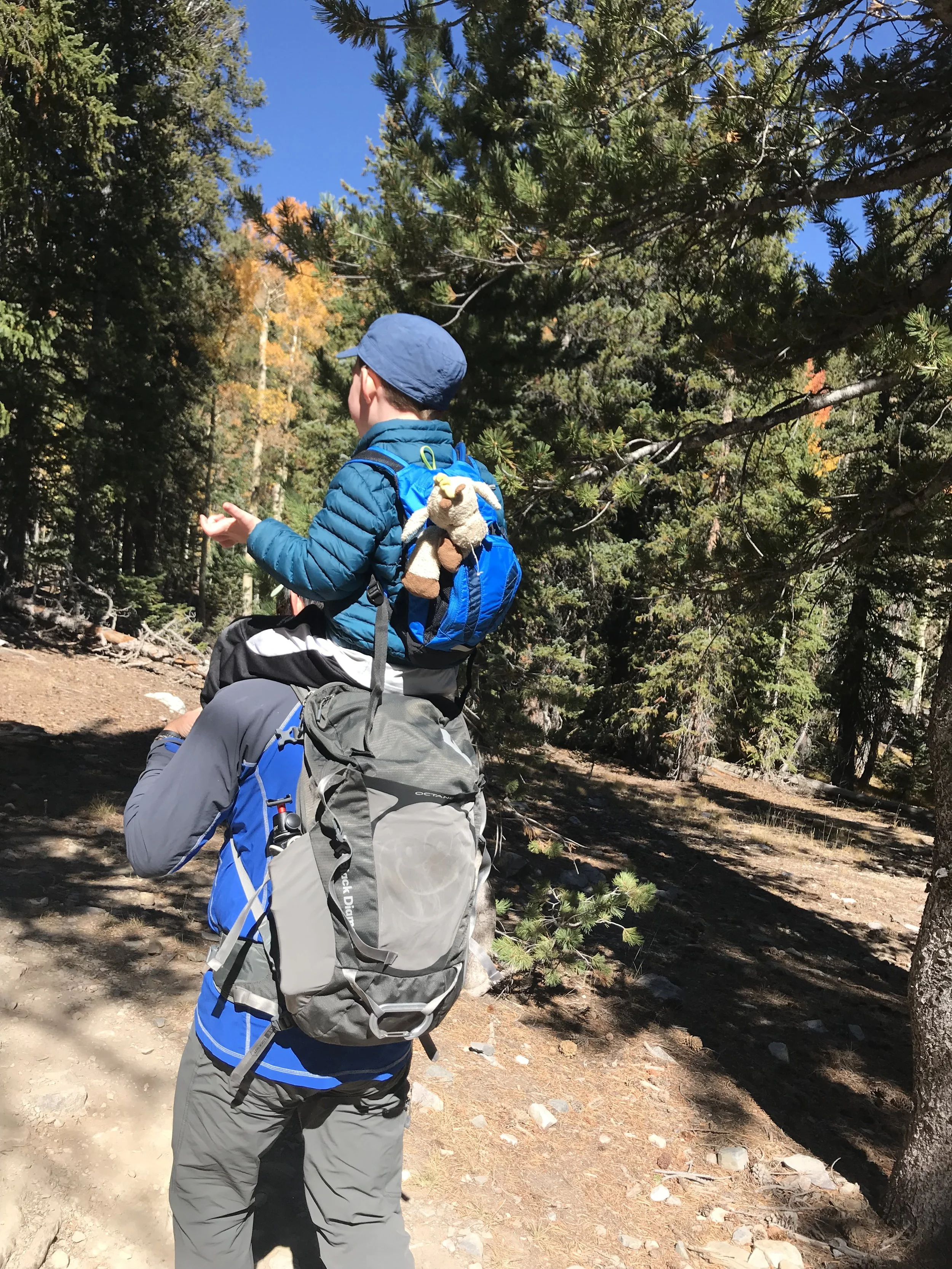
Traveling light is subjective!
Your First Hike, On Your Terms: A Guide for Overwhelm-Prone Beginners
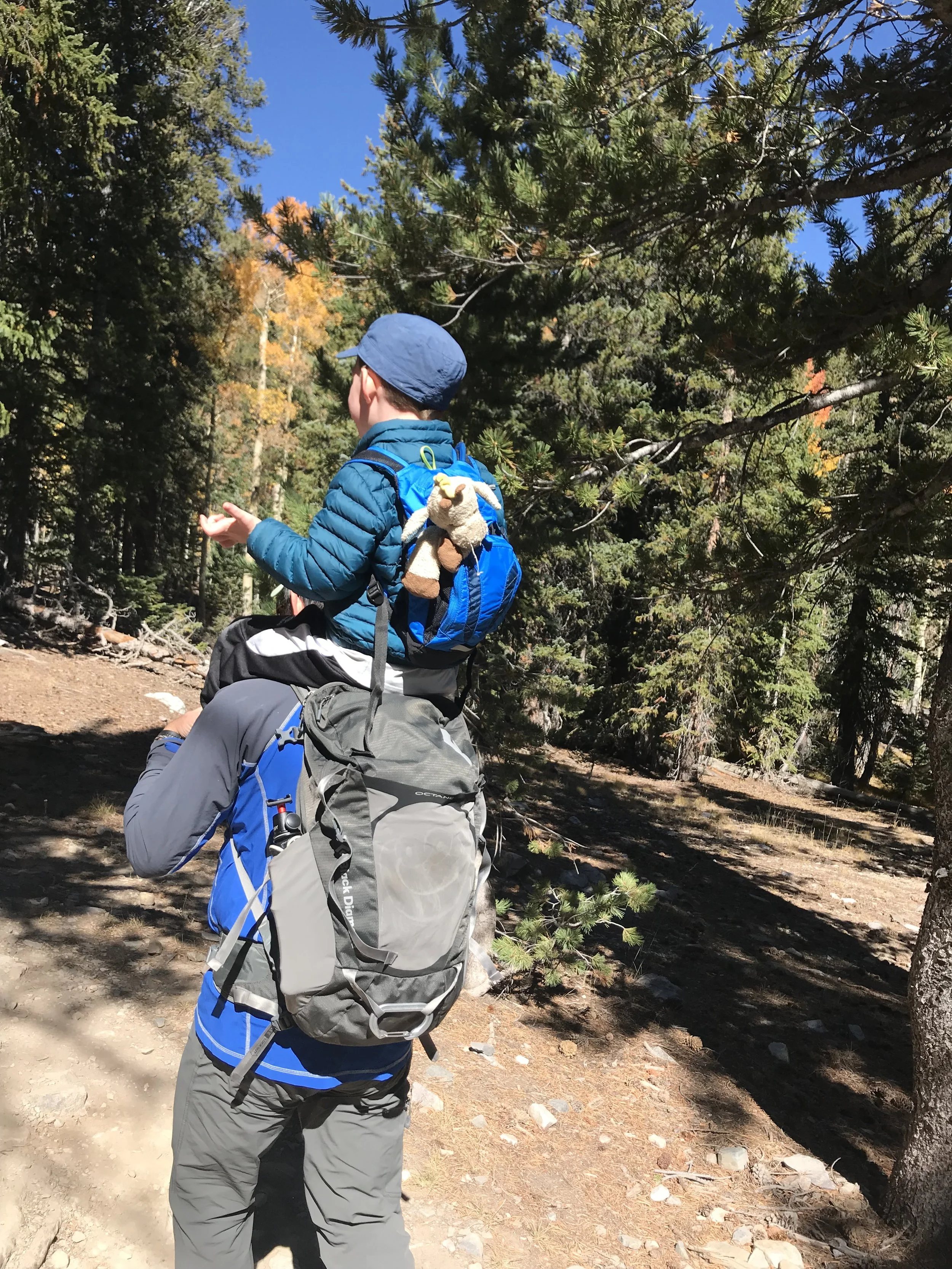
Our first hikes with The Dude started with him either in a baby sling or a kid carrier backpack (like the Osprey or Deuter versions that we reviewed). Starting at a really young age made hiking feel like a natural part of our family’s activity and the carrier backpacks were a cushy way for him to ride through the world in comfort and with snacks.
That said, we also know that many people start hiking later than we did and that brings up a different way of easing in to a new activity. Frankly, even with a now-teenager, we sometimes have to coax the willingness to come along out of him!
Hiking is the gentlest doorway into the outdoors, which is exactly why it’s the best place to start when new experiences feel like a lot. There’s no engine, flexible timing, and no equipment we have to trust with our lives - just us and a trail. But “gentle” isn’t the same as effortless, and a first hike can still go haywire when the sensory load sneaks up on us. Here’s how to make that first hike an enjoyable activity that allows beginners to want to join in again.
This is part of our inclusive first-timer series, and each guide is built on the same five questions: what will this feel like, is the gear comfortable, how do we handle the unknowns, what’s the smallest first outing, and how will we know when to pause? Here’s how those play out on the trail.
What a Hike Actually Feels Like
The trail delivers a steady drip of sensory input rather than any one big cascade. Uneven ground underfoot that keeps changing. Weather we don’t control (sun, wind, temperature). Bugs. The weight and shift of a pack across the shoulders or sitting on hips. Long stretches of very similar input, which can be soothing for some of us and monotonous (bordering on agitating) for others.
The two that catch families off guard are temperature and friction. Many sensory-sensitive kids have a hard time reading their own body temperature. They won’t say “I’m too hot” - they’ll simply melt down once they’re already cooked. And nothing ends a hike faster than a sock seam across the toes or a pack strap sawing at a shoulder.
Get the Gear Comfortable First
Friction and temperature should be solved as best as possible before ever leaving the house.
Seamless socks are the single highest-leverage item in the bag. Toe seams are a top trigger, and moisture-wicking seamless pairs prevent both meltdowns and blisters in one go.
Layers that come off fast matter just as much. Not one thick layer, but several thin ones we can shed the instant someone starts to overheat. This is a regulation tool every bit as much as a warmth one.
A pack that actually fits needs padded, wide straps, and a hip belt can take a lot of the weight off the shoulders and back. It should be worn and adjusted at home first, fully loaded. For younger kids, unless they really want to carry their own smaller backpack, let them be packless.
And if brightness or glare is a sensory factor, test the hat and sunglasses ahead of time for brim and band comfort. (Our sensory-friendly clothing guide has specific brands for all of this.)
Handle the Unknowns Out Loud
Talk through the hike and what to expect before we’re standing at the trailhead. Roughly how long will the hike be (length/time)? Is it a loop or an out-and-back? Do we have break spots in mind already and what is the destination we’re aiming for? For a kid, previewing photos of the trail or even the parking lot removes a whole category of surprise. Name the what-ifs - what if I get tired, what if I don’t like it - and give each one a plan. Predictability is the calming ingredient here.
Design the Smallest Possible First Hike
We’re aiming for a win, not a view. The perfect first hike is short and flat, on a well-maintained, gentle loop or an out-and-back we can cut off anywhere. Skip the payoff vista on day one - a summit someone got dragged to in tears isn’t a win. Choose something nearby and familiar over a destination we’ve built up in our heads, and keep it close to the car with no committing terrain and no point of no return.
Ten happy minutes that end with “that was fun, let’s go home” will beat an hour of misery every single time. We’re building an association, and we want it to be a good one. We used to go on regular “teeny tiny flower walks” on our local greenways trails in the spring and early summer: looking at all the different kinds of flowers that popped up as the weather warmed and seeing how they slowly changed with every hike through the season.
Read the Signs, and Keep the Exit Shame-Free
Learn the early tells of overload. For a lot of kids, that’s well before the full meltdown, when they get quieter, more rigid, or more irritable. A tense body or stumbling, clumsier-than-usual movements are a sign of needing a break, or simply to finish. Treat turning around early as a success rather than a failure. “We can head back any time, no big deal” has to be genuinely true, or the whole trust structure collapses. When we needed to lift the feeling on the return trip (or even get into the action as we started the hike), we would play “touch the tree,” where we would take a moment to touch the trees we liked next to the trail, just to ground the physical feeling of barks under our hands. An adventure that ends on a good note is one we’ll willingly repeat, and repetition is the entire goal.
Hiking asks less of a nervous system than almost anything else outdoors, which is what makes it such a good proving ground. Sort the socks and the layers, keep that first one short and close to the car, narrate what’s coming, and let “we can stop” mean exactly what it says. Do that, and a first hike quietly becomes a second one - and the kid who “doesn’t do hiking” becomes a kid who does.
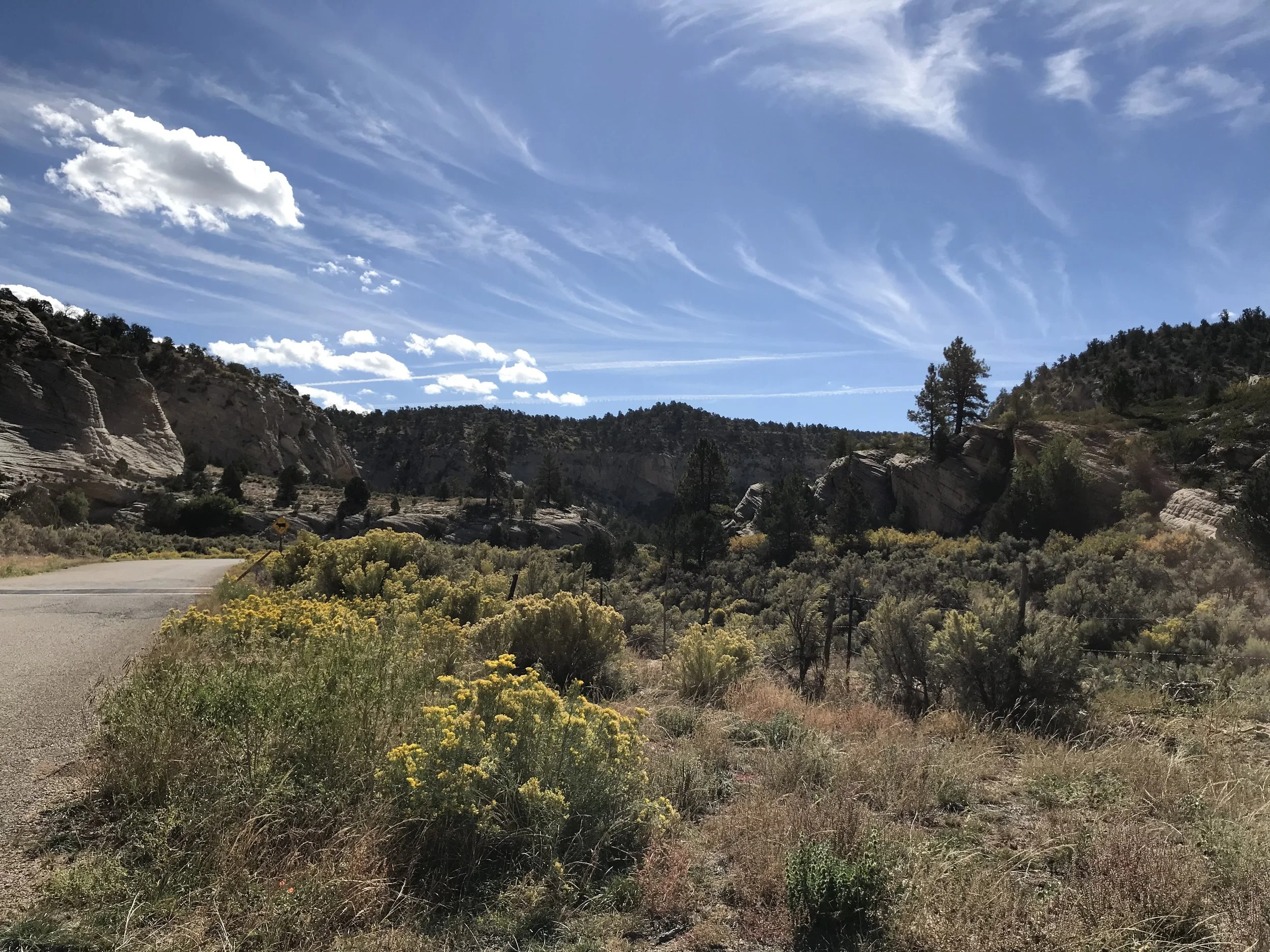
Riding Johnson Canyon Road (Utah) on a Gravel Bike
A solo dawn ride up Glendale Bench and Johnson Canyon Road near Kanab, Utah — a brutal 1,500-foot gravel climb rewarded with the backside of Bryce, Grand Staircase-Escalante, white canyon bluffs, and a Gunsmoke ghost town.
This post contains affiliate links. If you buy through our links, we earn a small commission at no extra cost to you. Thank you!
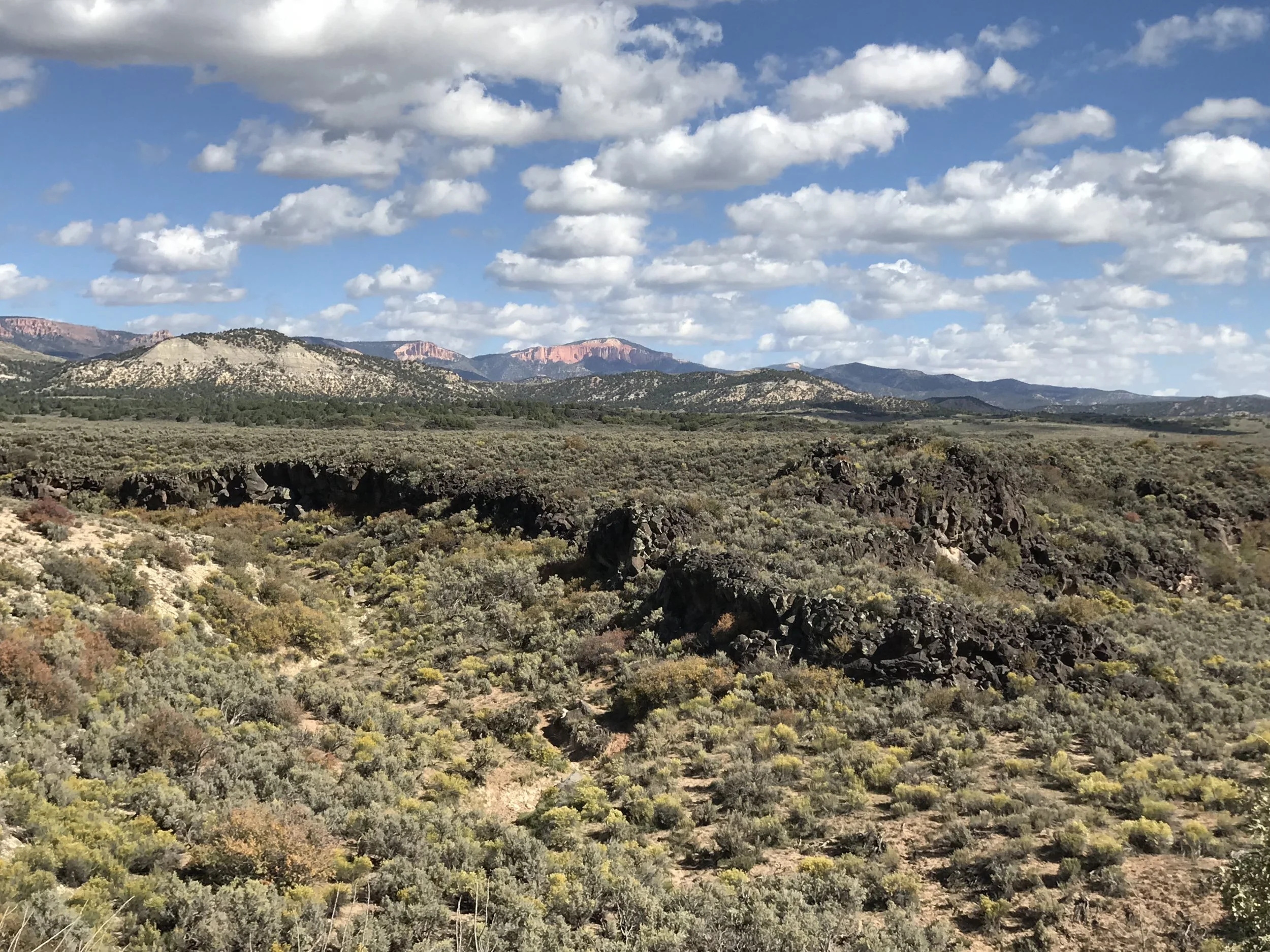
A brutal climb on chunky gravel led to expansive views.
When I was a kid, I used to look out at the odd road or random trail disappearing into the countryside as our family car passed on the highway and wonder… “where does that go?” As I got older and found myself with my own car, backpack, and bike, I realized I could finally explore some of those whims. With that delight, I also quickly learned that a little bit of a plan goes a long way — and that learning a route ahead of time, to plan food, water, and supplies, could keep the adventure going.
When Matt, our Dude, the pets, and I pulled into a campsite at Bauer’s Canyon Ranch RV Park in Glendale, Utah — north of Kanab — we delighted in the apple trees dropping fruit all around us in the old orchard. While walking the dogs morning and evening, one road kept grabbing my attention. On its west end it’s called Glendale Bench Road, and by the time it winds east, then south, it ends about 34 miles later on Highway 89, just east of Kanab.
It’s an unsuspecting-looking road, starting with nearly fist-sized gravel and heading straight up the “bench” from the town of Glendale. There wasn’t much written about it at the time, but I couldn’t resist — so I started googling it, looking at maps and satellite images, and decided I needed to ride this stretch on my bike.
I had no idea what I was in for.
On the day I departed, I left just as the sky was lightening. I packed my normal riding kit — water, food, energy chews, tools, and a flat-repair kit — but because it was remote, I also took a walkie-talkie (we didn’t have the Garmin inReach yet, and I definitely would have brought it on this ride), a headlamp, an external battery charger, an extra layer, and offline maps downloaded so I could access them without signal.
Matt and I made our plan: I’d head out and ride for a few hours, and he and Eric would have an easy morning and then take the truck up the same route to see when and where they’d catch me. I’m really glad we planned it this way, for two reasons. First, once I got a few miles out, I lost all cell signal and the walkie-talkies wouldn’t connect unless he was getting close. The second reason would come at the end of my ride.
Those first few miles were enough to make me question what in the world I was doing. In less than three miles, I climbed nearly 1,500 feet. I think I walked my bike as much as I rode it — the inclines were steep, followed by flatter sections, with plenty of “teaser” peaks: hills you climb hard thinking you’re almost there, only to reach a flat and see the next climb waiting. Ugh.
Once I finally reached the peak of the peak of the peak, the views opened up and I realized I was looking at the backside of Bryce Canyon National Park. The gravel at the start was brutal — huge chunky rocks that bounced everything and made it nearly impossible to ride in a straight line. But what I didn’t realize until I saw the sign was that I was about to ride straight into Grand Staircase–Escalante National Monument.
Almost instantly, the gravel got smaller, completely bearable, and a whole lot more fun. This section was beautiful, with vast stretches of views and small canyons starting to open up. At this point I was texting Matt to tell him to leave plenty of time to enjoy the drive — hoping the message would send if I picked up a whiff of cell signal.
This is clearly a popular area for off-road enthusiasts, too; many were packing up their ATVs, RVs, and campsites from the weekend and heading home as I rode past. But the beauty of this road wasn’t over.
The brownish-red colors began to morph into chalky white rock outcroppings: I was entering Johnson Canyon. It’s an underrated drive — well, maybe not underrated, but definitely not talked about enough. Not only are the swirling white craggy bluffs easy on the eyes, but as I wound through farmland farther down the canyon, I stopped the moment I saw the wooden sticks of a ghost town. By then I had cell signal, and while I still hadn’t heard from Matt, I knew they’d have started by now. I googled where I was to learn the ghost town’s name — only to find it was the old movie set for Gunsmoke. It’s on private land, off-limits to curious tourists, but easy enough to see and photograph from the road.
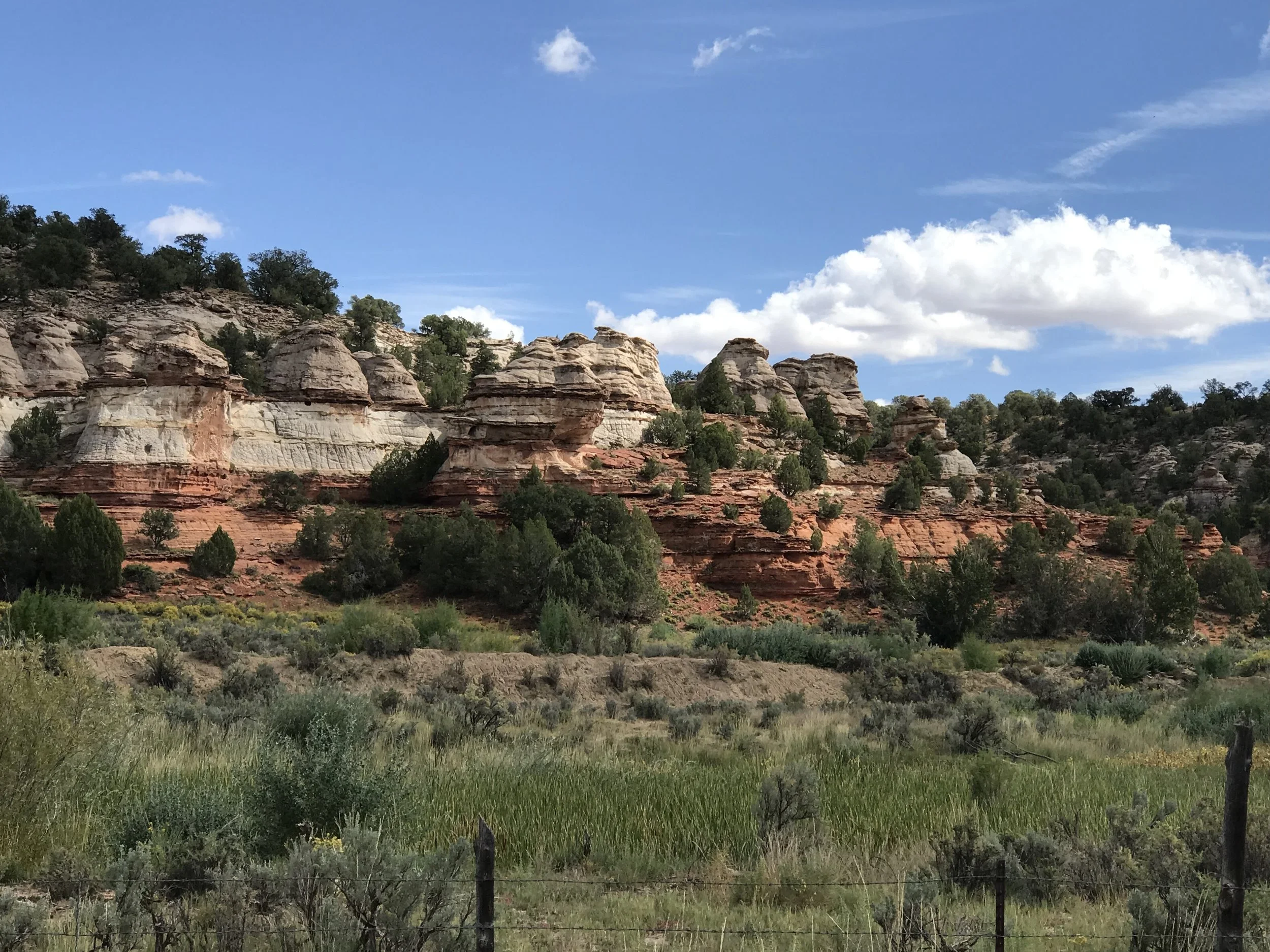
Now came the hot stretch. Officially out of the rocky canyon and committed to a hot, straight, flat run of pavement through farmland, I sweat through my shirt while soaking up the colors, cows, and speed. This was when I caught sight of Matt and Eric, and we planned where to meet at the end of my ride.
Here’s where my second reason for appreciating a plan — and being willing to change it — comes in. From where Johnson Canyon Road empties onto Highway 89, it’s only about four miles into town. I figured I’d just ride the highway shoulder in and meet them at Willow Canyon Outdoor (a gear shop AND a coffee shop — can it get any better?). But once I rode out into the open, away from the canyon and valley, the wind picked up dramatically. I didn’t even mind the building rain, but as I entered the highway shoulder that strong wind became a crosswind. Add semis passing at 80 mph, with the push and suction of their wind currents, and riding the shoulder got sketchy fast.
Fortunately, Matt read the situation from the truck and stopped about a mile up the highway on a pullout to wait for me. I was happy to call it a day rather than get beat up by wind and traffic after an already epic — and tough — ride.
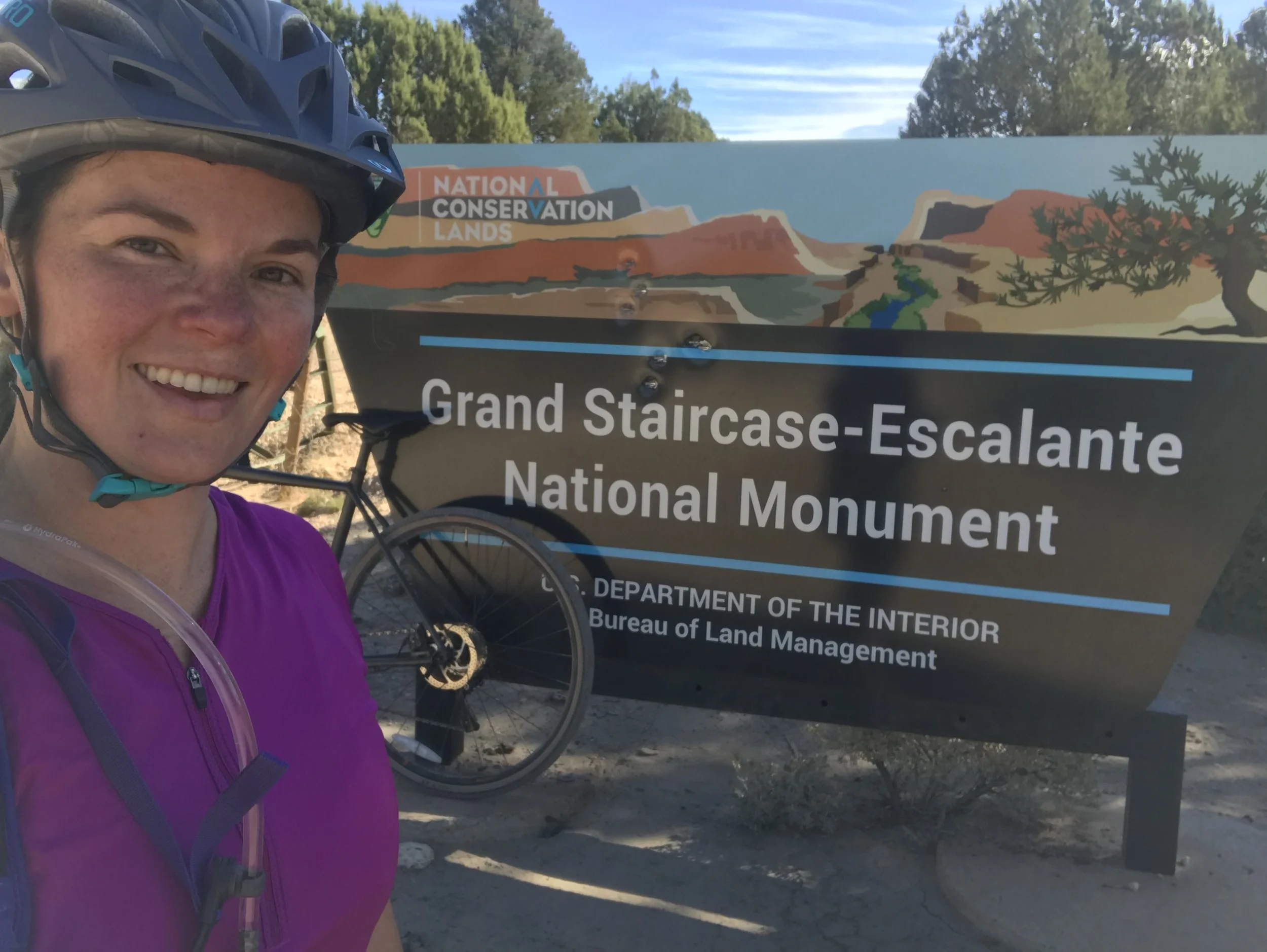
Would I do it again? If someone could drop me off after that first 1,400-plus-foot climb, you bet. Truly, though, this was a memorable, gorgeous backdrop for a gravel ride close to Kanab, with plenty of neat geology, public-land appreciation, wildlife, and history.
(Podcast) Season 3, Episode 7 - Adult Weekend Adventures (The Kids Will Be Ok)
Sometimes the adults need to get away and play, too. Kids, it’s time to stay with the grandparents or buddy-sitter… Mom and Dad need to have some reconnection time - it’s healthy for everyone.
Season 3, Episode 7. Okay parents — this one's for you. We're talking about getting outside without the kiddos. Solo trips, couples getaways, weekends with friends — all of it. Cristen and I dive into why it's so important to carve out that adult time in the outdoors, even when it feels impossible to step away. Turns out, absence really does make the heart grow fonder — you come back recharged, more patient, and honestly a better partner and parent for it. We share some of our own experiences sneaking away for a night or two, and we talk about how to make it happen without the guilt. We also mention Eddie Bauer's gear rental program — a great option if you want to try something new (kayaking, backpacking, whatever) without dropping a fortune on gear you're not sure about yet.
(Podcast) Taking Your Parents Hiking: Part 2. Going Farther & Bryce Canyon Adventures
Season 3, Episode 3: taking your parents hiking, Part 2 — going farther, from short walks to all-day hikes, plus clothing and layering, gear, first aid, and Bryce Canyon adventures.
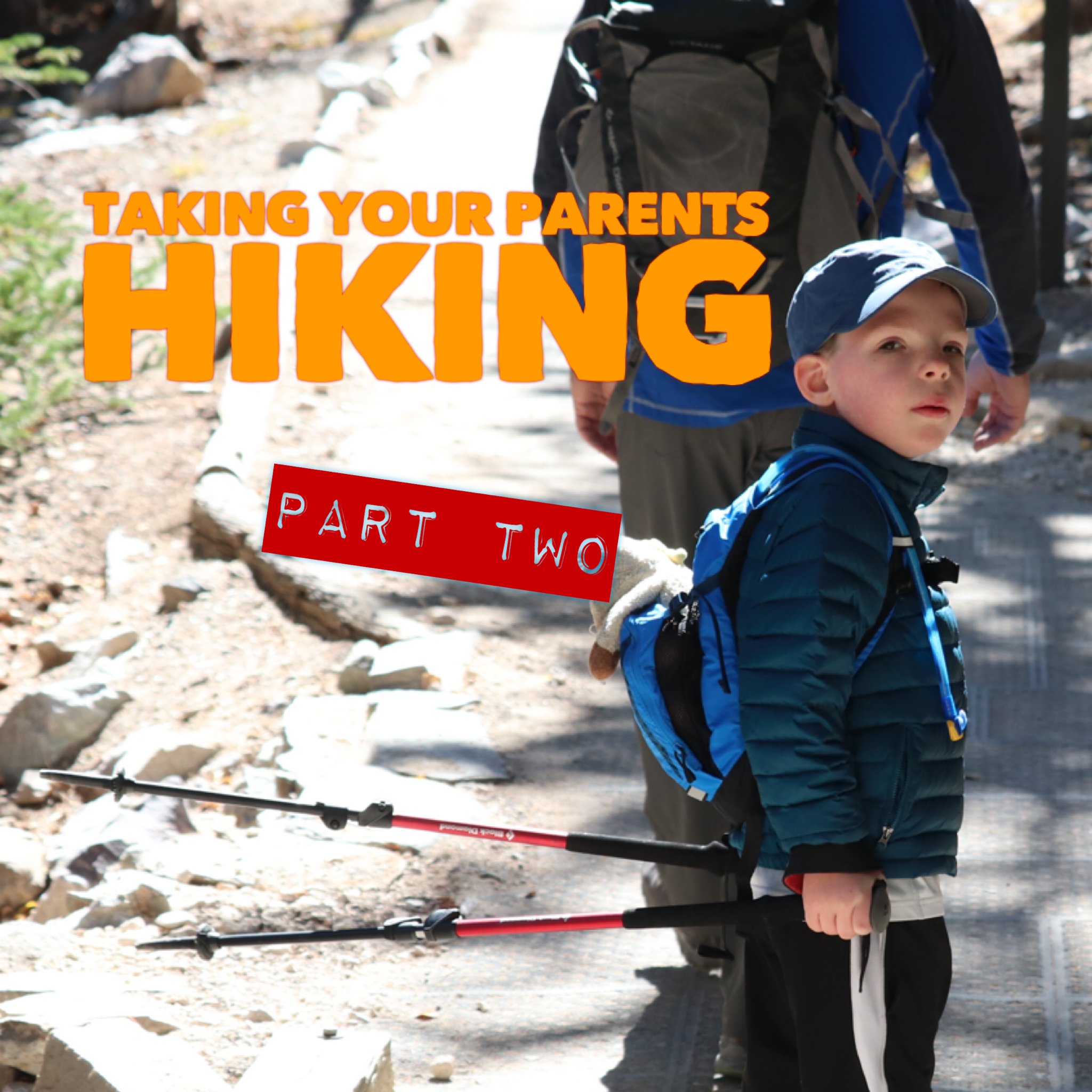
Season 3 Episode 3.
In this episode, we help you go farther. Beginning with short 1–3 hour walks, we move into the realm of hiking all day and building up distance. We talk about clothing — including rain gear, base layers, and why to avoid cotton. The right gear can really make the difference: we go into depth about what to wear and how to outfit your family so everyone can focus on the fun and not on being miserable. We also share some basic first aid tips — always seek expert advice when you get the chance. This is all in an effort to give you the skills and knowledge you need to feel comfortable pushing farther into the outdoors with your adventures.
Apps we use: AllTrails and Trailforks.
Adventure clothing and gear we mention: Backcountry.com, Eddie Bauer, Title Nine, REI merino wool socks, a hiker’s first aid guide and first aid kits (My Medic), a moleskin blister kit, and our favorite Black Diamond trekking poles.
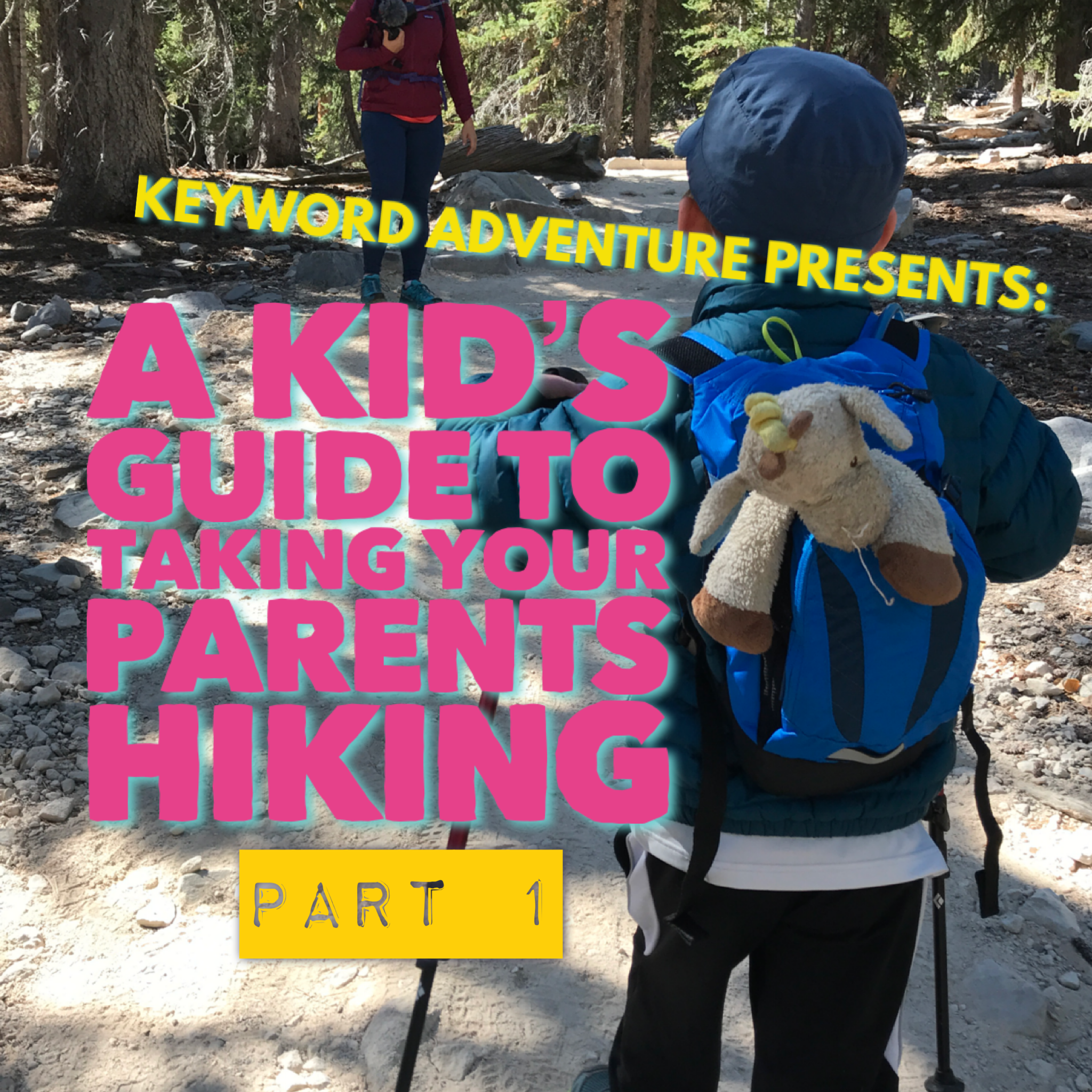
(Podcast) A Kid’s Guide to Taking Your Parents Hiking: Part 1
Season 3, Episode 2: a kid’s guide to taking your parents hiking — motivation, tips, and tricks to get the whole family outside, from nature walks to all-day epics (Part 1).
Season 3 Episode 2.
Kids, are you tired of being indoors? Do you have a thirst for adventure that YouTube is just not satisfying? We here at Keyword Adventure are here to help! In this episode, we share ways to teach them how to get outdoors and start soaking up some fun. From nature walks to all-day epics, we give you tips, tricks, and fun advice for getting outside. Remember to take those pictures!
We help you find the motivation to get outside and explore the world around you!