Self-Care in Small Spaces (Part 1)
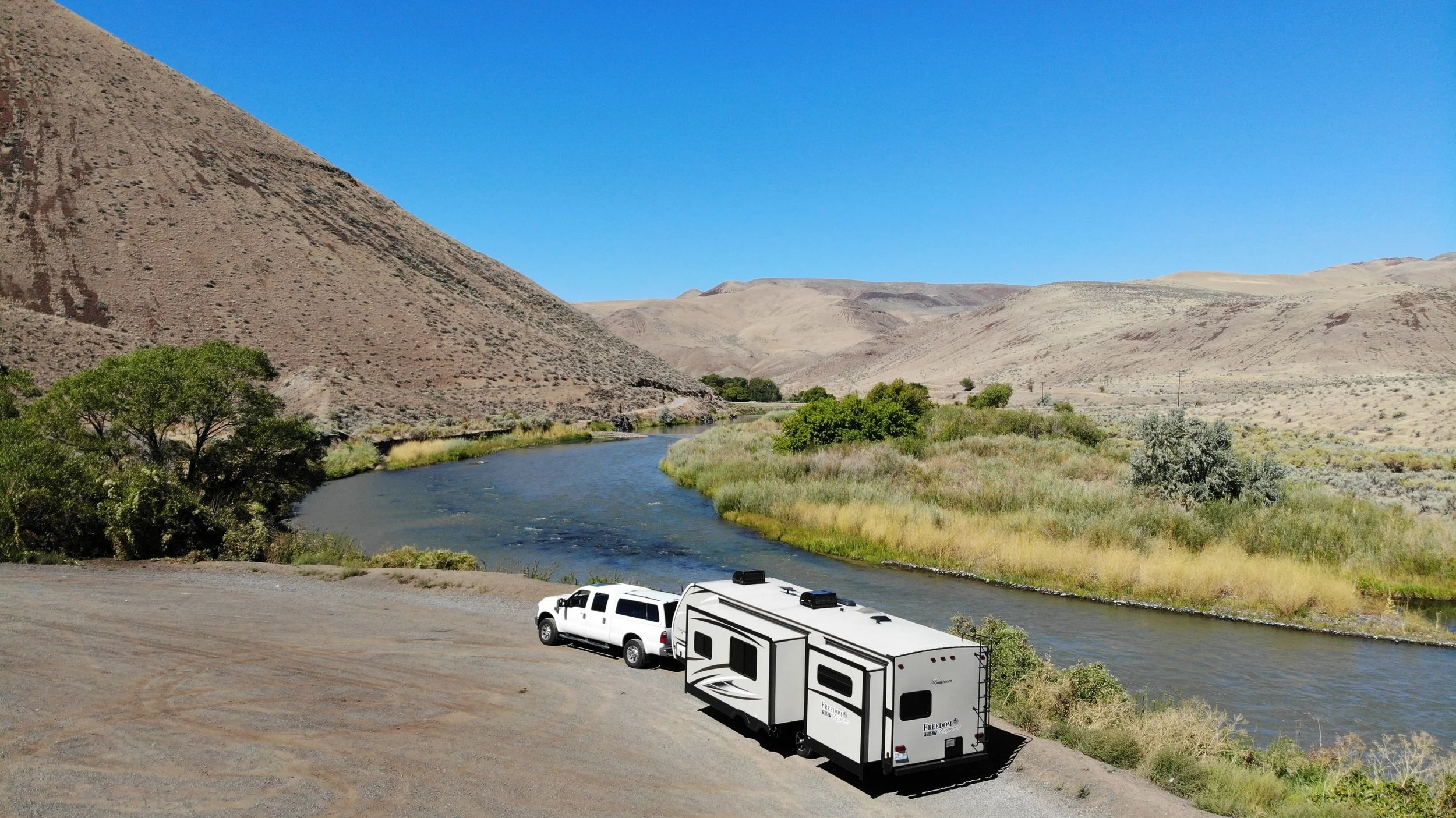
Living with other people in smaller accomodations can be an adjustment.
Living with family, friends, or travel companions of any sort is a dream many are striving toward.
And while full- or part-time travel together in small spaces is full of incredible high points, it has inevitable challenges too. One of those is how a person manages personal, peace-reaching self-care while on the move. It’s not always possible to get away for a day, so here are some ways to tend your patience, peace, and serenity for the long haul. Let’s start outward and move inward.
The environment around us.
Consider the place that surrounds you — everything you see and touch every day. If you live with other people, some of it is yours and some is likely someone else’s. Do you feel relaxed and peaceful in your living and working spaces? If not, try this quick exercise: sit down where you normally do, close your eyes, and take a deep breath. With your eyes shut, picture the space around you and what fills it. First, notice what you really love and what makes you feel good there — objects, people, feelings. Then ask which objects don’t feel like they belong or don’t make you feel good. Get up, gather those objects, and move them outside for the rest of this exercise. Sit back down in the same spot, close your eyes again, and notice how it feels now. Are there feelings in the space that make you feel less than good, and is there a way to change that? Music, a lit candle, a conversation, open windows, or a quick tidy might help. Maybe those objects outside just belong in different places, put away completely, or let go for good. This is a quick way to refresh the environments you spend the most time in — and it can make a huge difference in how you feel, how your relationships connect, how productive or creative you are, and especially how you rest.
Social sprucing-up.
Is there someone you look forward to seeing because you always walk away energized? Or a setting full of people and interactions that inspires you? Take a break — away from the people you live with — to connect with that person. Self-care in the social realm is just this: pick up the phone, buy the ticket, go to the class. Whatever it is for you, taking time to connect with another person is sometimes even more refreshing than a day of meditation. They’re different, and both quite potent. It starts with reserving the time and taking the first step.
Getting physical.
In small spaces like an RV, boat, or tiny home (or, let’s face it, during quarantine, any space can start to feel small), getting exercise can be a challenge unless you go outside. But that’s good! Time in nature has been found to benefit our well-being on every level. A Yale ecopsychology review noted that the body of research on nature’s health effects is approaching a thousand studies, all pointing the same direction: time in nature isn’t just nice to have — it’s essentially a have-to-have for physical health and cognitive functioning. If you have a regular workout, take it outside for fresh air and sunshine. If you don’t, a walk around the neighborhood or a local trail is perfect. When you’re not up for active movement, take a towel or blanket outside for some slow, easy stretching — you’ll be amazed at the difference. Weather doesn’t always cooperate, so if that’s a factor, getting movement in might take creativity: wall off a small corner of your space and declare it a temporary 10-minute fortress, or, if the family is your only option, throw a dance party for a few songs followed by a quick stretch.
Letting the monkey mind out of its cage.
Your mental and emotional health can be complex. Think of all the moments in a day or week that linger in your mind and affect how you feel, not to mention longer-term stress and future what-ifs that swirl. Journal all of it. Write it down so it can sit somewhere besides your brain — you’ll be amazed how good it feels to set that weight on the paper, and it might not feel nearly as burdensome the next day. Reading something, especially fiction or light non-fiction that pulls your mind away from what you’re in the middle of, can be the breath of fresh air your mind needs. And finally, music: turn up some favorite songs, jam out, and dance your way out of your funk. (By the way, “dance” is a very loose term — wiggling, flinging, head-throwing, arm-flailing, fast-footed jumping all count. Move to those tunes until you feel better.)
Lifting your spirit.
I once heard someone say, “prayer is speaking to the Higher Power; meditation is listening.” Have you sat somewhere silently and listened lately? Sacred silence, or meditation, is considered by many to be part of their spiritual hygiene — essential and necessary every day. For those of us who struggle either to commit to meditating or to find a quiet time and place, we have to find alternatives. Again, nature and music are great places to start. Staying up late or waking earlier than the rest of the family can work, though it’s not always sustainable. One quick method I’ve learned is the single-sound meditation: sit somewhere comfortable, close your eyes, take five to ten deep breaths to slow down, and in the hum of life around you, single out one consistent sound and focus only on that — the refrigerator, a wind chime, whatever. When your mind wanders or thoughts appear, come back to that single sound. The point isn’t to catapult into a guru’s empty-mindedness for all of life’s answers; it’s simply to guide a busy mind to focus on one thing for a few minutes and give your soul some relief from all the multitasking.
We hope your travels take you on many new adventures with people you love being around. Taking time to care for yourself will extend your travels, expand your happiness, and feed the longevity of your journey. Do you have any self-care tips to add? What are your challenges around sharing small quarters with other people?
Part 2 of this list — five more “roads” — continues from here.