
Alternative Schooling: The What and Why
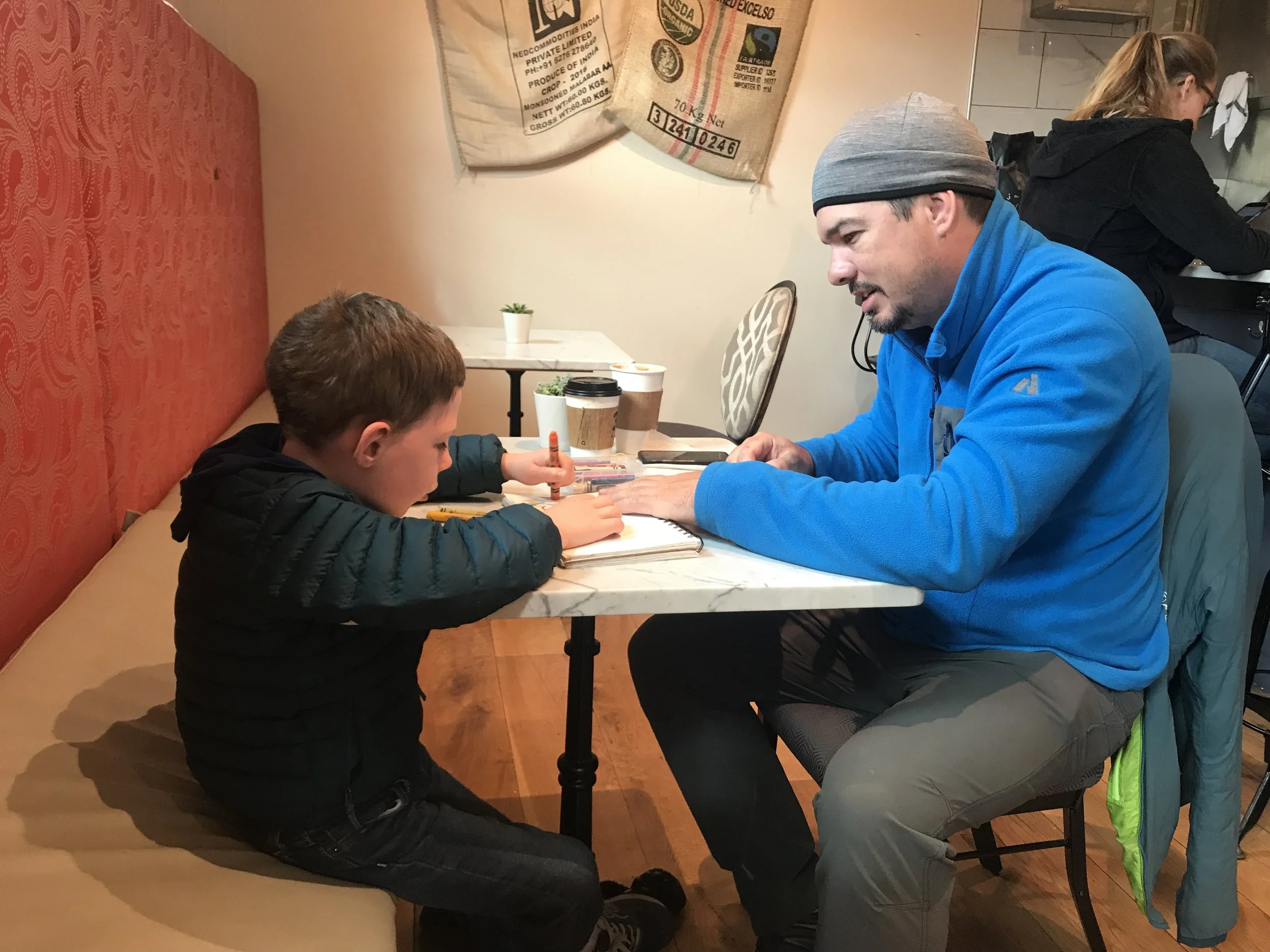
New places can inspire new learning!
We know a lot of people are grappling with decisions about what the school year will look like, and whichever direction you’re leaning, it can feel like a really tough choice. We want to share some of the nontraditional, alternative types of schooling we’ve come across while educating our son over the last few years — options you may have started hearing about as you look into alternatives.
A little background on our situation: Eric has autism and attended our public school district’s wonderful early-education preschool program. We saw great strides with him there educationally, therapeutically, and socially. It wasn’t always easy, but the people on his team were one-of-a-kind and talented.
When he aged out of that program, it was time to make a choice. In some ways, a traditional public-school kindergarten would have been just fine for him, if challenging — he’d have been part of the special-education program while attending a typical classroom, but would have needed a para or teacher’s assistant for much of his day. Eric is an astute, distinctly unique kid who’s highly aware of the people around him and the words, curiosities, and feelings directed his way — and he’s quite sensitive to it. At times that’s made socializing with kids his age hard. (Would you want to go to a birthday party, day camp, or park if you felt like everyone was staring and asking aloud why you do things differently?)
We also felt he was somewhere between preschool and kindergarten, both socially and educationally, so we chose to homeschool him for a couple of years. Now, it seems, we’re homeschooling well beyond that original timeframe.
At the same time (because life rarely hands you one good-sized challenge at a time), we were at a point in our adult lives and business where a change was becoming both needed and wanted. After a lot of late-night conversations and daytime shuffling, we took the plunge into a nontraditional lifestyle that involves Eric’s education, too.
So here’s a “quick guide” to some of the alternative-education styles we’ve personally run across and experimented with, in hopes it shortens your own research while you juggle the bigger parts of managing life right now.
A variety of schooling types
Homeschooling. We all know this one: kids educated at home, usually by a parent. When we were kids there was quite a stigma around it, but times have truly changed. The resources, curriculums, online offerings, and even out-of-the-home classes for homeschoolers at museums, zoos, and science centers are better than ever. If one parent has the gumption to be both parent and teacher while the other’s income can support the family, it might just work. It also depends on how your child does being home more, self-motivating, and learning from Mom or Dad (a big one). Switching hats between parent and teacher — both for you and for how your child sees and interacts with you — is one of the biggest challenges, but it can work, and some kids thrive in it. There are also plenty of extracurricular sports, social opportunities, homeschool group get-togethers, and co-op options (where different parents teach several kids a course in their area of expertise).
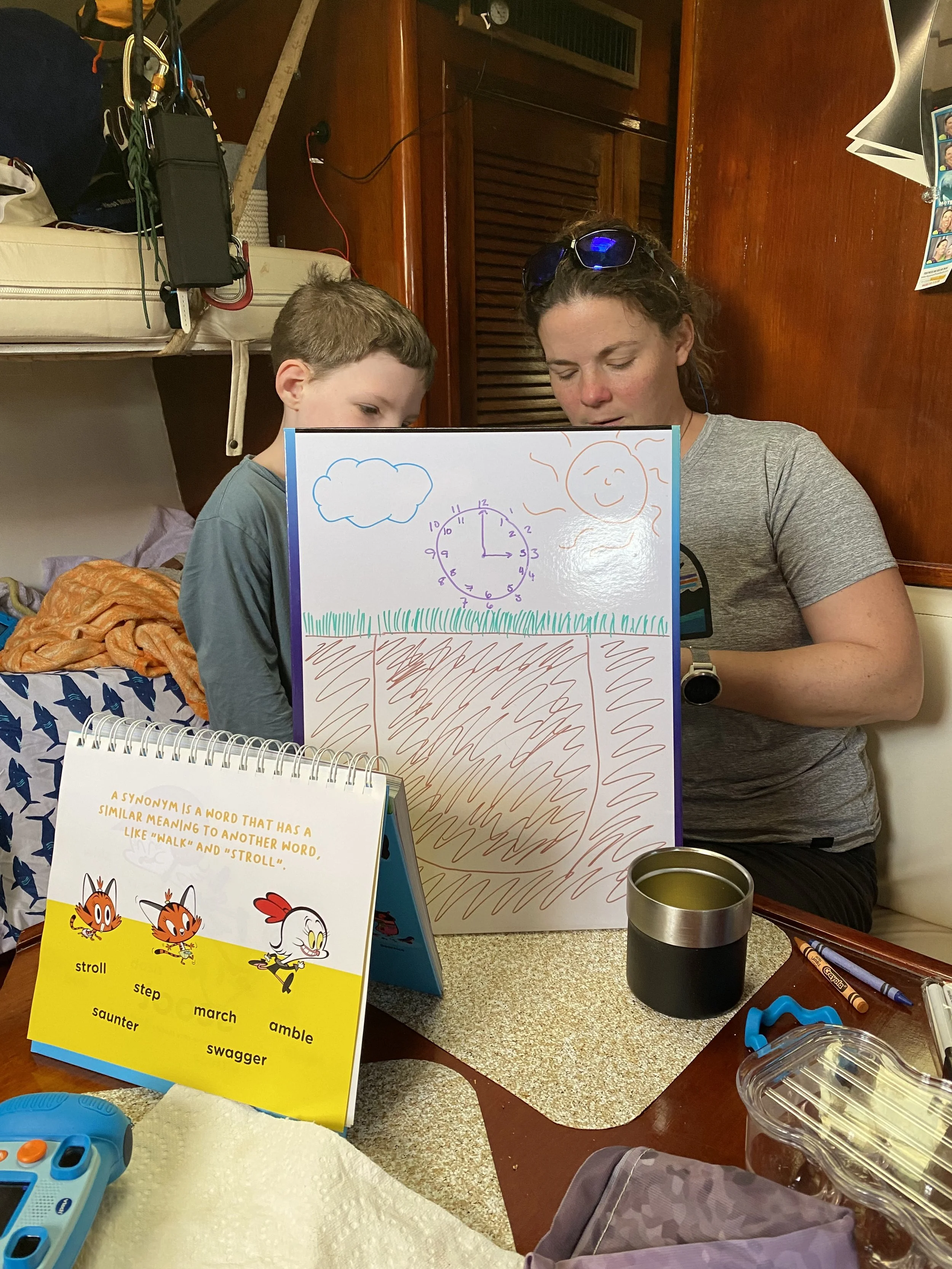
Work with what you have on-hand - sometimes less is more.
We’ll lump hybrid learning (a mix of homeschool and classroom time) and fully online schooling in here too, since a lot of the learning happens at home. Both are woven into traditional school in some way — through setting, time, or curriculum. Special-needs kids can find therapies at private practices or still access them through the public schools. This, and how you report your child’s educational records, depends on your state, so make sure you fully understand what your state requires if you choose to homeschool. A great place to start is with blogs devoted to the art of homeschooling; many also review a variety of curriculums if you’ve decided to homeschool but don’t know where to begin.
Unschooling. You might hear this and think it means going completely hands-off and letting your kid go feral. Nope! Unschooling is actually pretty cool: it lets the student’s interests and curiosities drive the learning. You still cover all the subjects — it just might look different than working problems in a book or following a formal curriculum each day. We do a structured form of unschooling with Eric because, frankly, he learns differently. For a kid who needs motion or activity, we integrate that into the subject. When he got really interested in bees, for example, we learned about bees’ lives (science), turned it into a counting game (math), worked on spelling and reading bee words (English and handwriting), created an imaginative beehive (art), and went out to find bees in the yard (field trip!). He knows a lot about bees and elevators right now because he’s fascinated by them — and he’s still learning a lot, while we’re not losing our minds trying to fit him into a curriculum built for a differently-shaped mind. We still use those great learning books; we just integrate them into activities rather than the other way around.
This won’t work for every kid, truly. Some really need defined structure, and this can be a little too loose. We have to create structure within it, too — kind of like making a box to contain all the scribbles. Before social distancing, our days revolved around field trips, turning everyday errands into chances to learn. Obviously, that changed a lot.
Roadschooling. Imagine homeschooling smashed together with traveling around the United States while you drive and camp in an RV. That’s roadschooling — taking the education with you. It’s a lifestyle in itself, so it requires some big choices and changes. You need a “home state” where you declare your kids are homeschooling and follow its requirements, and supporting your family and making a living are big considerations. Some people follow seasonal work; some have jobs that require travel, so their families move with them (think traveling nurses or railway workers); and many can work from anywhere (graphic designers, writers, media managers, and various tech jobs are common). The lifestyle can be full-time or part-time (we’re part-time throughout the year).
There are serious considerations: do you keep your house, rent it out, or sell it? How do your kids handle this kind of change (age matters a lot)? How is your family at making friends with strangers — believe it or not, there are lots of roadschooling families roaming the country. What’s your travel style, and how adaptable are you (road warrior vs. sit-and-stay)? It’s also a more minimalist lifestyle, since you don’t want to haul everything you own with you. That said, it’s incredible to visit historical sites while your kids learn about them, see the wild animals they just read about, or learn about the people of our country by meeting them.
Worldschooling. Last but not least, worldschooling is like the magical unicorn of education for the adventure-minded family. It takes energy, tenacity, adaptability, and planning ahead around finances, your home and belongings, education, and current events. Honestly, many worldschoolers have had to stay put in foreign countries at times, and some chose to return to the U.S. until things settled because staying in limbo didn’t feel secure — understandably. Worldschooling might happen by airplane, train, sailboat, camper van, or camel; it all depends on where you go. Think of it as roadschooling on the biggest scale we have: global. Some do it full-time, some part-time (that’s us), or for only a set amount of time. It definitely requires a minimalist lifestyle and a lot of adaptability as a visitor to foreign cultures. The idea is that “the world is a classroom.”
You can imagine the pros and cons: high highs and low lows. Making friends can be challenging, but the ones that stick tend to last a lifetime and are wonderfully diverse. Planning ahead and being prepared for a myriad of complications with kids in tow is imperative — money, insurance, homesickness, and more. Before jumping in, really weigh whether you want to worldschool or simply take a good long vacation or sabbatical.
Whichever path calls to you, we hope this shortens your research a little. Every family and every kid is different — the best choice is the one that fits yours.