
New Adventures Personalized: A Beginner’s Guide to the Outdoors for Overwhelm-Prone Adventurers
When our family is heading out for a road trip, a new hike, paddling down the river, or any kind of new adventure, it comes with a lot of questions and a fair amount of anxiety. It sometimes doesn’t help that we’re rushing around to pack things, which doesn’t help the feeling of change that may be flooding into the reality of our most sensitive family member.
Most beginner’s guides to outdoor sports are written for one imaginary person: an able-bodied, reasonably confident newcomer who’s just missing a few facts. But plenty of first-timers aren’t missing facts at all - they’re managing overwhelm. The anxious beginner. The sensory-sensitive kid. The adult who’s been told their whole life that “outdoorsy” isn’t them.
For some, the barrier was never information. It’s the sensory unknowns, the fear of doing it wrong in front of people, and the very reasonable worry that there’s no way out once we’ve started. The anxiety of going.
So this guide works a little differently. Instead of a gear list, it’s a framework; five questions to answer before any new outdoor activity, followed by how those questions play out across the sports we cover around here. Use it as a template.
The Five Questions to Ask Before Starting Anything New
What will this actually feel like? Map the sensory reality before you stand in the middle of it. What are the sounds: rushing water, clipped-in carabiners, wind, crowds? The textures of a wetsuit, a harness, a helmet, chalk, sand? The temperature swings? The unpredictable bits? Knowing what’s coming turns a hundred small surprises into a hundred expected things, and expected things are so much easier for a sensitive nervous system to handle. When it comes to our family, we can walk through this out loud, answer any question as many times as it takes, or watch a video together first.
Is the gear comfortable? A scratchy harness or a helmet that grips wrong will end an outing faster than beginner learning processes. Sort through comfort first: snug-but-not-crushing fits, tagless base layers, seamless socks, softer helmet padding, a PFD that doesn’t dig in. (Our sensory-friendly clothing guide covers the specifics.) Get the gear feeling right at home, sit and moving around, long before it has to work on the water or the wall.
How do we handle the unknowns? Overwhelm often isn’t about the activity itself - it’s about the what-ifs. What if I fall? What if I want to stop? What if I hate it? Let’s answer those out loud in advance. Name the safety systems (“the rope holds you, that’s its whole job”). Rehearse the stop signal. Knowing there’s a plan for the scary parts reduces them considerably and leaves more room to have fun.
What’s the smallest possible first outing? Design for a win, not a summit. The goal of a first time is a good association - that’s it. It’s not about distance, difficulty, performance, or a photo. Ten minutes of something that felt safe and fun beats an hour of white-knuckling it and never wanting to return. Short, low-stakes, easy exit. We can always do more next time, but we can’t un-scare someone.
How will we know when to continue versus pause? Decide the off-ramp before needing it, and make it shame-free. “We can stop any time, no big deal” has to be true, or the trust evaporates. Learn to read the early signs of overload, in ourselves or in our kids, and treat calling it early as a success rather than a failure. An adventure that ends on a good note is one we’ll come back to. Follow with ice cream or hot cocoa.
That’s the whole template. Here’s how it lands, sport by sport.
Hiking
A hike delivers uneven ground, weather we can’t control, bugs, the pack on our backs, and long stretches of the same input. It’s usually the gentlest entry point of them all. For a first outing, pick a short, flat, familiar loop and don’t chase a view - let the goal simply be that we walked, it was fine, and we turned around happy. Watch for overheating (many sensory kids can’t tell they’re too hot until they’re melting) and for pack-strap and sock friction. Layers that come off fast and seamless socks solve most of it.
Biking
With biking, the helmet and the seat are the places to get right - the strap, the pressure, the chin - plus balance, speed, and the fear of falling. The ideal first outing is an empty, quiet parking lot, working on balance before pedaling (a balance bike, or pedals off), with no traffic and no audience. Watch for helmet tolerance especially. Desensitize with gentle massage first, build up wear time gradually, and fine-tune those removable pads for fit and feel before we expect anyone to actually ride in it.
Paddling and Kayaking
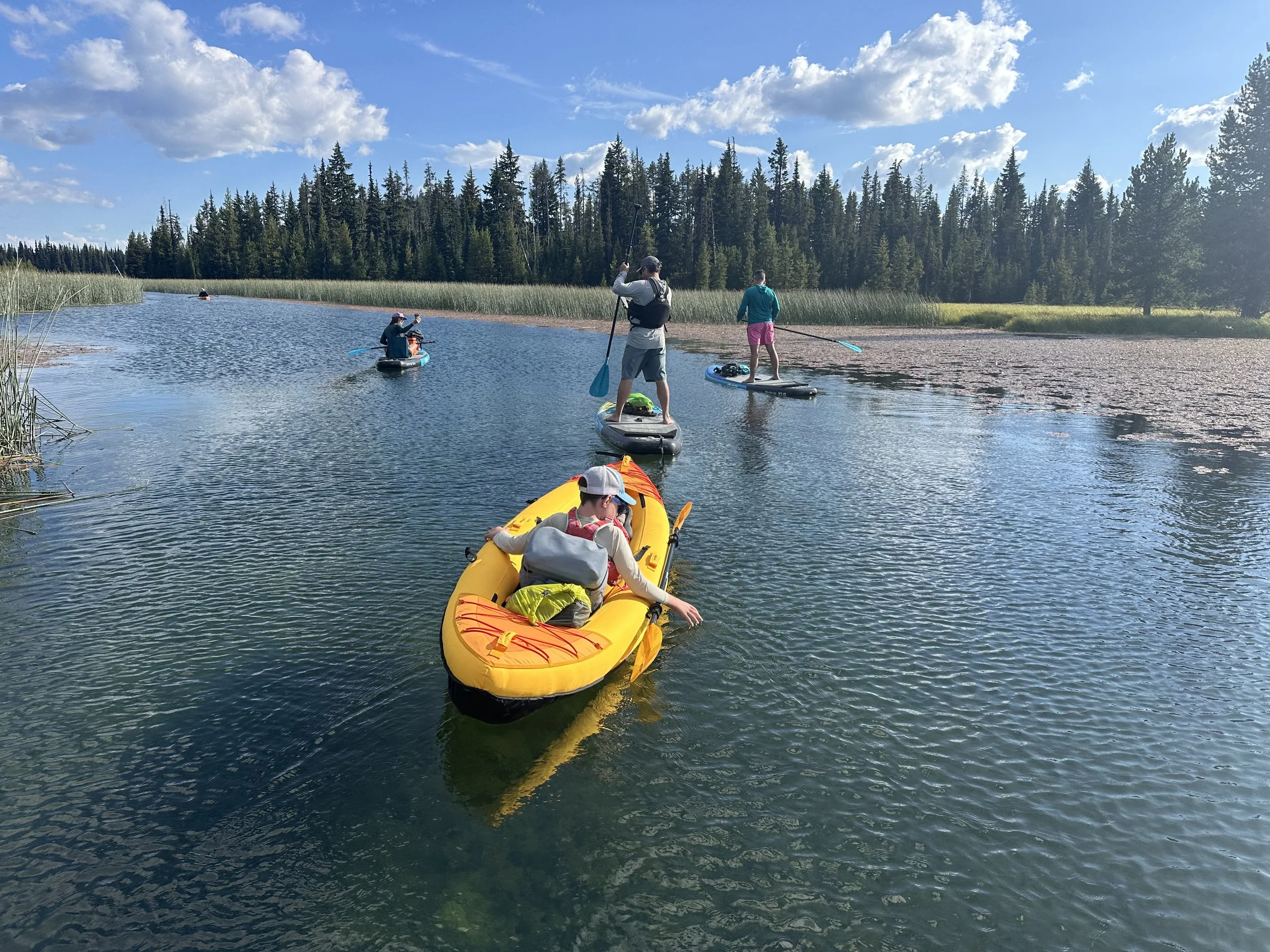
Paddling brings the tippy feeling, the PFD, splashes, wet clothing, and sun/sunscreen, and it’s that instability that spikes anxiety early on. Start on dead-calm flatwater in a stable sit-on-top or stand-up paddle board. Keep it short and close to shore. Sort the PFD comfort first, on dry land, and know that the feeling of being splashed bothers some kids more than the boat does. A rash guard under everything helps some of us feel more contained and secure.
Climbing
Climbing means height, the harness, chalk texture, the trust-fall of leaning back on a rope, and doing all of it where people can see us. The best first outing is an indoor gym with an adaptive or beginner-friendly program, on the shortest wall: trained instructors, a controlled environment, and rental gear so nothing has to be bought or fitted in advance. Watch for harness comfort and for the mental leap of weighting the rope. Name the safety system clearly and repeatedly (“the rope is holding you”), and let our climber come down whenever they want. Coming down early still counts as climbing.
Sailing
Sailing is the most unpredictable of the bunch: wind, heeling (the boat tipping as it catches that wind), sun, and a great deal of new vocabulary all arriving at once. Choose a calm day, light wind, a stable boat, and a patient instructor who explains the heeling before it happens, so it reads as normal rather than alarming. Watch for sensory overload from everything landing simultaneously. Keep that first session short, narrate what’s coming, and protect a clear, easy path back to the dock.
Notice what repeats across every one of these: sort the gear comfort first, shrink the first outing, name the safety net, and keep the exit shame-free. That isn’t a compromise version of the outdoors; it’s simply good coaching, aimed at the person actually in front of us. Do it this way and a first time becomes a second time, which is the only real measure of a beginner’s guide that worked. Make sure to have plenty of water and snacks!