
A First Hike on Good Terms: A Quick Guide for Sensory-Sensitive Beginners
Heading out on a hike for the first time can feel like a lot for people who have sensory sensitivities or anxiety. Here are some ways to help your child or family member set up for success on their first hike.
Quick answer: For a sensory-sensitive beginner’s first hike, solve friction and temperature ahead of time with seamless socks and light layers, talk through what to expect before you leave, keep the route short, flat, and close to the car, and treat an early turnaround as a win so they’ll want to go again.
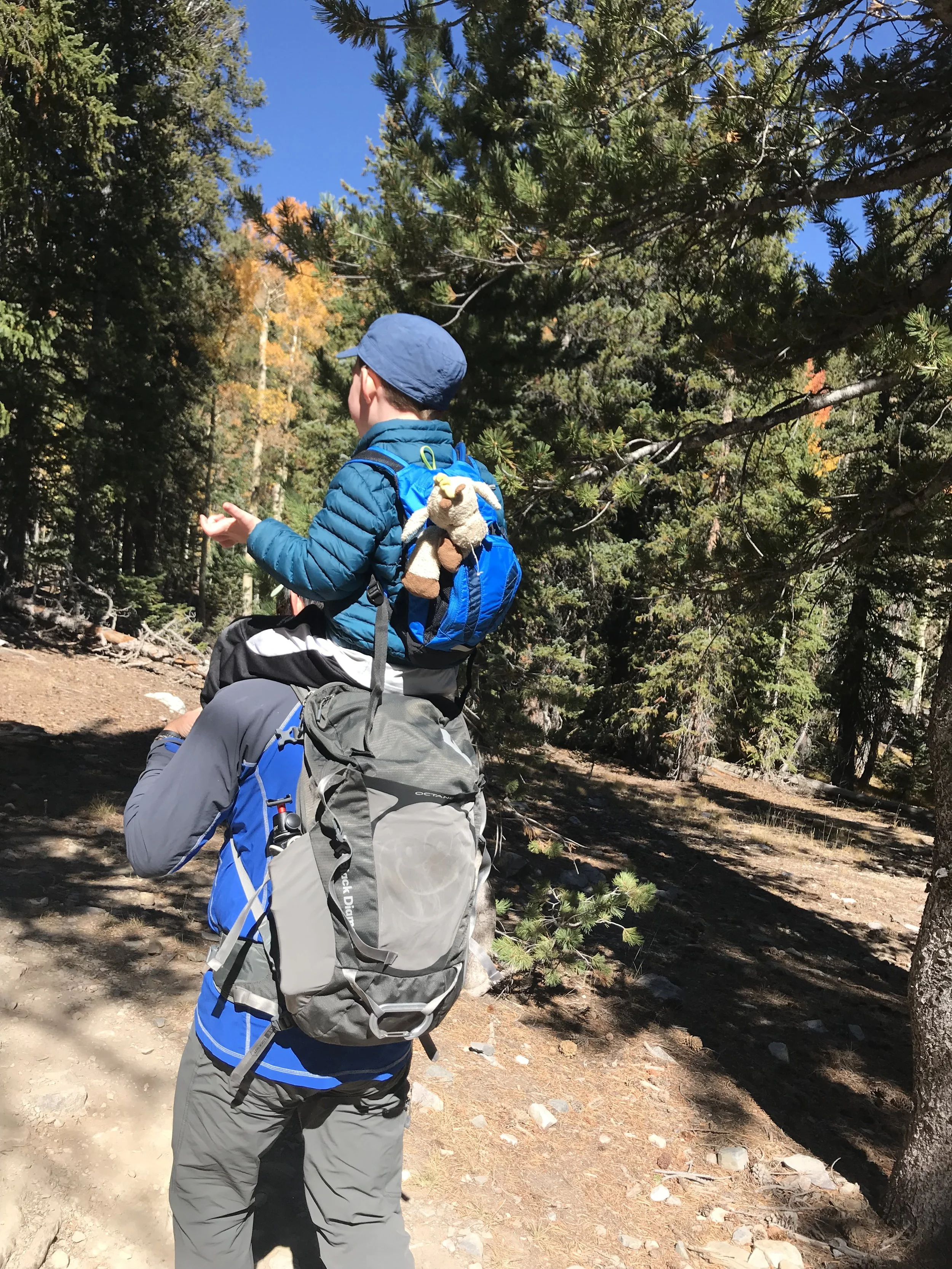
Traveling light is subjective!
Your First Hike, On Your Terms: A Guide for Overwhelm-Prone Beginners
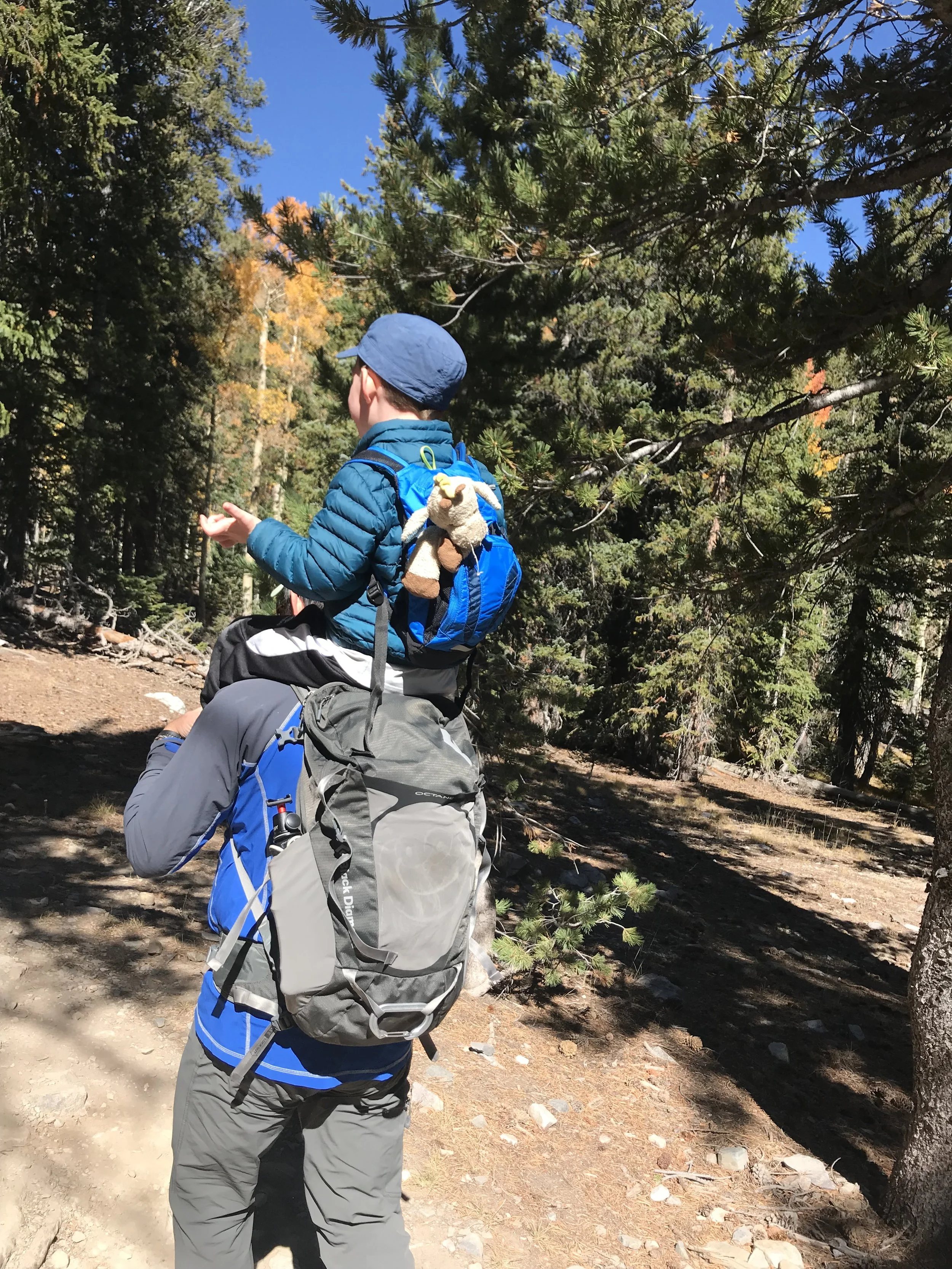
Our first hikes with The Dude started with him either in a baby sling or a kid carrier backpack (like the Osprey or Deuter versions that we reviewed). Starting at a really young age made hiking feel like a natural part of our family’s activity and the carrier backpacks were a cushy way for him to ride through the world in comfort and with snacks.
That said, we also know that many people start hiking later than we did and that brings up a different way of easing in to a new activity. Frankly, even with a now-teenager, we sometimes have to coax the willingness to come along out of him!
Hiking is the gentlest doorway into the outdoors, which is exactly why it’s the best place to start when new experiences feel like a lot. There’s no engine, flexible timing, and no equipment we have to trust with our lives - just us and a trail. But “gentle” isn’t the same as effortless, and a first hike can still go haywire when the sensory load sneaks up on us. Here’s how to make that first hike an enjoyable activity that allows beginners to want to join in again.
This is part of our inclusive first-timer series, and each guide is built on the same five questions: what will this feel like, is the gear comfortable, how do we handle the unknowns, what’s the smallest first outing, and how will we know when to pause? Here’s how those play out on the trail.
What a Hike Actually Feels Like
The trail delivers a steady drip of sensory input rather than any one big cascade. Uneven ground underfoot that keeps changing. Weather we don’t control (sun, wind, temperature). Bugs. The weight and shift of a pack across the shoulders or sitting on hips. Long stretches of very similar input, which can be soothing for some of us and monotonous (bordering on agitating) for others.
The two that catch families off guard are temperature and friction. Many sensory-sensitive kids have a hard time reading their own body temperature. They won’t say “I’m too hot” - they’ll simply melt down once they’re already cooked. And nothing ends a hike faster than a sock seam across the toes or a pack strap sawing at a shoulder.
Get the Gear Comfortable First
Friction and temperature should be solved as best as possible before ever leaving the house.
Seamless socks are the single highest-leverage item in the bag. Toe seams are a top trigger, and moisture-wicking seamless pairs prevent both meltdowns and blisters in one go.
Layers that come off fast matter just as much. Not one thick layer, but several thin ones we can shed the instant someone starts to overheat. This is a regulation tool every bit as much as a warmth one.
A pack that actually fits needs padded, wide straps, and a hip belt can take a lot of the weight off the shoulders and back. It should be worn and adjusted at home first, fully loaded. For younger kids, unless they really want to carry their own smaller backpack, let them be packless.
And if brightness or glare is a sensory factor, test the hat and sunglasses ahead of time for brim and band comfort. (Our sensory-friendly clothing guide has specific brands for all of this.)
Handle the Unknowns Out Loud
Talk through the hike and what to expect before we’re standing at the trailhead. Roughly how long will the hike be (length/time)? Is it a loop or an out-and-back? Do we have break spots in mind already and what is the destination we’re aiming for? For a kid, previewing photos of the trail or even the parking lot removes a whole category of surprise. Name the what-ifs - what if I get tired, what if I don’t like it - and give each one a plan. Predictability is the calming ingredient here.
Design the Smallest Possible First Hike
We’re aiming for a win, not a view. The perfect first hike is short and flat, on a well-maintained, gentle loop or an out-and-back we can cut off anywhere. Skip the payoff vista on day one - a summit someone got dragged to in tears isn’t a win. Choose something nearby and familiar over a destination we’ve built up in our heads, and keep it close to the car with no committing terrain and no point of no return.
Ten happy minutes that end with “that was fun, let’s go home” will beat an hour of misery every single time. We’re building an association, and we want it to be a good one. We used to go on regular “teeny tiny flower walks” on our local greenways trails in the spring and early summer: looking at all the different kinds of flowers that popped up as the weather warmed and seeing how they slowly changed with every hike through the season.
Read the Signs, and Keep the Exit Shame-Free
Learn the early tells of overload. For a lot of kids, that’s well before the full meltdown, when they get quieter, more rigid, or more irritable. A tense body or stumbling, clumsier-than-usual movements are a sign of needing a break, or simply to finish. Treat turning around early as a success rather than a failure. “We can head back any time, no big deal” has to be genuinely true, or the whole trust structure collapses. When we needed to lift the feeling on the return trip (or even get into the action as we started the hike), we would play “touch the tree,” where we would take a moment to touch the trees we liked next to the trail, just to ground the physical feeling of barks under our hands. An adventure that ends on a good note is one we’ll willingly repeat, and repetition is the entire goal.
Hiking asks less of a nervous system than almost anything else outdoors, which is what makes it such a good proving ground. Sort the socks and the layers, keep that first one short and close to the car, narrate what’s coming, and let “we can stop” mean exactly what it says. Do that, and a first hike quietly becomes a second one - and the kid who “doesn’t do hiking” becomes a kid who does.

Leave No Trace Principles for Your Family
Leave No Trace is a set of 7 principles of outdoor stewardship and ethics for your enjoyment in nature and for future generations’ continued appreciation of natural places. Here’s a quick overview for your family to learn the basics!

Leave No Trace for your enjoyment and for future generations.
I'm a Leave No Trace Trainer, and this ethic shows up in nearly everything we write here, usually in passing, or just as a given. Maybe we mention “packing it out,” staying on trail, or camping on intended, established sites. I've never actually given a formal overview, so here it is: the seven principles as I would tell them to a family new to this!
1. Plan Ahead and Prepare
This is the strategy and logistics that help us build a solid foundation to avoid or prevent most of the other problems. Know the regulations and special concerns for the location you’re visiting, check weather, pack appropriately, and travel in small groups when possible. A well-prepared trip creates less impact almost automatically, because prepared people make fewer panicked, high-impact decisions.
2. Travel and Camp on Durable Surfaces
Stick to established trails and designated campsites. Walking around a mud puddle instead of through it seems considerate, but it widens the trail over time and damages surrounding vegetation. In truly pristine backcountry areas (bushwhacking), spread out to avoid creating new social trails. In popular areas, concentrate use on already-established paths. The rule flips depending on how developed the area already is, which surprises people the first time they hear it. Remember: your boots were made to be muddy and they’ll recover if that’s the trail condition that day.
3. Dispose of Waste Properly
Pack it in, pack it out… including things like fruit peels, which are not native compostables everywhere and take much longer to break down than people assume. Seriously. That orange peel will be there for months. For human waste in the backcountry, that means either using a cathole dug 6-8 inches deep and at least 200 feet from water, trails, and campsites, or packing it out entirely where required (yes, this is a real requirement in some heavily used areas, and it's not as bad as it sounds with the right kit). Plan to pack out toilet paper regardless: a Ziploc bag in a non-see-through dry-bag, sealed up and clipped on the outside of a backpack is the way to go. Throw away the Ziploc when you get back to civilization.
4. Leave What You Find
Rocks, plants, artifacts, antlers: it can be hard, but leave them where they are. This one carries extra weight in places like Bears Ears, Mesa Verde, and Grand Staircase-Escalante, where "what you find" can include genuinely irreplaceable cultural artifacts and rock art that belong to the ongoing story of Indigenous nations, not to whoever picks them up first. And because of the Migratory Bird Act, you’re better off leaving those feathers alone, too - it’s a federal offense if the feather comes from a bird that’s protected.
5. Minimize Campfire Impact
Use existing fire rings rather than building new ones, keep fires small, burn only small sticks that can be broken by hand, and make sure a fire is completely, coldly out before leaving it (drown it). Check fire restriction and burn bans everywhere you go. In many increasingly fire-prone regions, a camp stove is simply the better choice over an open fire, and it's worth checking current fire restrictions before assuming a campfire is even an option. Anymore, so many places across the US are experiencing drought conditions, we forego any fire if we’re not in an established campground and, even then, we’re going to use something like a Solo Stove.
6. Respect Wildlife
Observe from a distance, never feed wild animals, store food securely, and control pets at all times. Feeding wildlife, even accidentally through careless food storage, changes animal behavior in ways that often end badly for the animal, not just the person. This is the principle we lean on most in our injured wildlife guide: distance and restraint protect animals better than direct interaction almost every time.
7. Be Considerate of Other Visitors
Yield appropriately on trail, keep noise levels reasonable, and let nature's sounds be the soundtrack rather than a speaker. This one seems minor compared to the others, but it's a huge part of why shared public land actually stays enjoyable and welcoming for everyone using it.
Why this matters more than a rulebook
None of these principles are really about rules for their own sake. They're about a mindset: that the outdoors isn't a resource to consume, it's a shared space to move through gently, whether you're there once or every weekend. Teaching kids these seven principles early (even in simplified form, even just in a backyard) builds the instinct before it ever needs to be a rule they're told to follow.
If you only remember one thing from this whole list: leave a place as good as or better than you found it, and you'll naturally be doing most of this right already.
Overcoming Challenges to Getting Outdoors
The mindset and gear that get you past the “what ifs” — planning and navigation backups, dressing for a 20-degree swing, why quality synthetics and merino beat cotton, and how to fuel (and bribe) the whole crew.
Overcome the obstacles and tackle those goals!
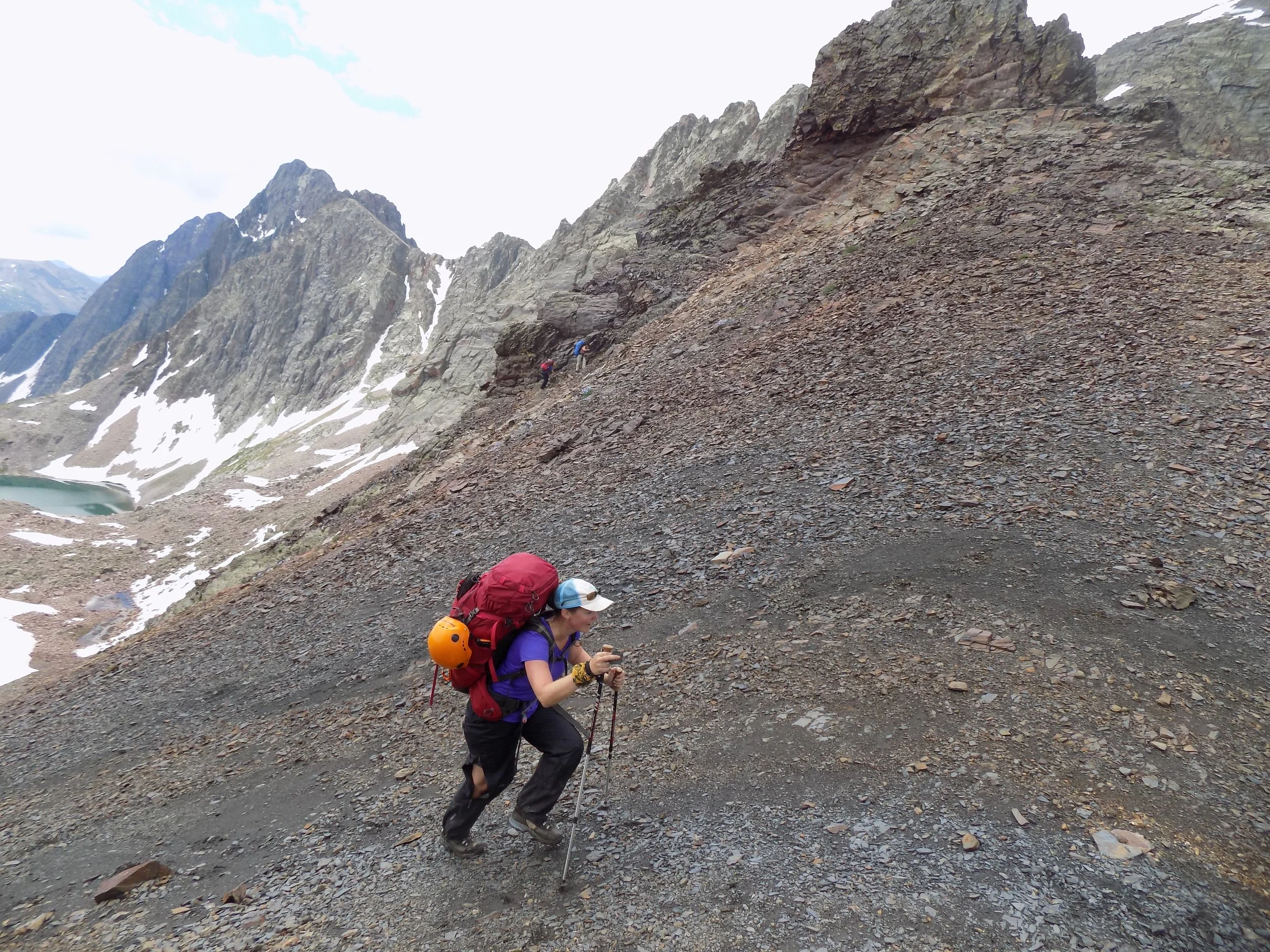
One of the biggest obstacles we hear about when people dream and scheme about their adventures is simply how to get started. “What ifs” can quickly morph manageable challenges into exhausting barriers before the bag is even packed. Adaptation and perspective make the difference. Here we talk about getting started and dealing with the unexpected.
Some of the questions that come to mind: how to handle weather changes, equipment failures, fitness challenges, financial limits, time constraints, and general life balance.
Small steps toward big plans. The best answer is planning, plus proper equipment and clothing. Part of planning is learning about where you’re going and what you’d like to do. You might say, “but I want a spontaneous adventure.” That’s fine — but a fun spontaneous adventure is better for your group or family than one where everyone’s less than enthused about the next time out. The foundation is food, shelter, proper clothing, and an understanding of what you might find on your trip. We’re here to help.
Where are you going, and are you hiking, biking, kayaking, or sailing? We regularly head into the unknown, but we go with a map, a smartphone, and even a compass. Yes, your phone has many of these tools, but a few basic backups can be invaluable. Did you know your phone has a native GPS that works even without signal? Great apps like AllTrails and Trailforks really help when you’re hiking, and on the water, apps like Navionics can be lifesavers. They work even when your phone signal doesn’t, helping you explore — or just get home.
Good planning lets your group build fitness and confidence as you go, so you can be more adventurous in the future. But be prepared for the unexpected. Some say the adventure begins when the plan ends, and coaching yourself to embrace and adapt to challenges goes a long way. The mental side of adventure matters as much as the planning: adaptability to change — weather, or even turning back for some reason — lets you set a goal of going farther next time.
The gear for the conditions. Weather can be monitored easily with today’s technology, but as we all know, it can change in an instant — or just be plain wrong. Weather apps help, but nothing beats paying attention to conditions as they actually happen, especially at sea or in the mountains. Plan well and bring a packable jacket; plan for the temperature to swing 20 degrees. On a day forecast to be 75 and sunny that ends up 45 and raining, your jacket becomes essential gear. If it hits 95 instead, someone will be very glad for the added sun protection. Which brings us to clothing.
There’s a saying in the outdoors, often credited to Alfred Wainwright: “there’s no such thing as bad weather, only unsuitable clothing.” In short, if your gear is up to the task, you can have a good time in almost any condition with the right attitude. A set of waterproof rain gear for each person in your party is essential — getting cold and wet is one of the leading causes of “I am never doing that again,” and it can even lead to injury.
The body loses heat astonishingly fast when wet, and good rain gear easily prevents it. Lots of companies make great stuff; the key is finding something that matches what you’re trying to do. If the material doesn’t breathe, you can get just as wet and cold from your own sweat as from the rain. GORE-TEX is a brand name for a line of waterproof membranes that manufacturers use to make clothing waterproof and breathable. Quality waterproof products seal the seams and joints, cover the zippers, and keep Mother Nature out while still letting your body breathe and expel moisture.
Not all companies make the same quality of gear — that could be an entire post on its own. Attention to detail and materials can drive up the price of a garment, but they can also cut weight, add durability, and expand its range of use. Quality rain gear may cost more, but it can also last for many, many years, and in a lot of cases can be restored through the company’s warranty service or repair facilities if it gets damaged. That keeps the gear performing for a very long time.
Good gear is an investment, and that’s why we spend so much time on this topic — it can save your life in some situations, and the more you go out and enjoy using it, the better its value. Here’s an example: I once had a boss who said the most expensive shirt he ever bought was a $30 cotton t-shirt he wore only once a year. His best value was a $90 merino wool shirt he wore almost every day for three months while backpacking. It didn’t stink, didn’t hold moisture, reflected the sun on hot days, and became his base layer on cold ones. Compared by number of days worn, the pricier merino shirt was by far the better value.
Buy gear you can use in normal life and out on the trail or at sea, and you’ll make an investment with real value. Rant done. Wait — no: leave cotton at home. Really. It absorbs and holds moisture, stinks, dries very slowly, and can be a genuine pain. Synthetics and merino wool are your friends, from socks and undergarments to top layers and outerwear. You’ll pack less, stink less, and smile more.
Fuel the adventure. Food is where I allow the most flexibility, because it’s to taste (get it?). Really, eat to fuel the adventure: before hiking, carb-load on breads and pasta; during hikes, reach for power bars and gels; afterward, protein is your friend as you rebuild muscle. Comfort food at the end of a hike or ride — tacos, say — is something to look forward to and doubles as a rewarding time to relive the adventure you just shared.
And if you’re on the trail with kids, for the love of Pete, bring snacks! Kids burn through way more food than we ever realize, so snacks that keep them going are essential. Trail mix, gummy bears, suckers, granola bars, raisins — bring it. If you feed them, they’ll have more fun. Anytime you’re trying to create memories, adding another enjoyable sensation like food helps imprint that happy feeling and makes it stick. There you go — I’ve now taught you to hack your kid’s brain (and this works on your significant other, too). You’re welcome.
Why Leave No Trace Matters
Why small choices outdoors add up — a plain-language walk through the 7 Principles of Leave No Trace and how they double as smart adventure prep, so the places we love stay healthy for the next generation.
No matter where you are or what you’re doing, humans have the power to impact the world around us in all sorts of ways. A small impact may seem insignificant on its own, but it can add up over the long term for the flora and fauna of a place.
Whether it’s a river, ocean, desert, forest, peak, or local park, Leave No Trace is a practice of making minimal impact for maximum preservation. Nobody wants to show up at a park or trail to find leftover trash from the people who came before. And there are few things more passively destructive than people walking around mud puddles on a trail, creating ever-widening paths that trample the plants beside them.
The 7 Principles of Leave No Trace are the foundational framework of the concept. These principles are the steps we can take to care for the environments we love to play in — and they’re also great for our own adventure preparation. They really go hand in hand.
Plan ahead and prepare. This minimizes the need for extra impacts while also making your adventure go more smoothly.
Travel and camp on durable surfaces. Minimal impact — and more safety for you and your campsite, too. This goes for biking and driving on trails as well. The desert may look tough, but the surface is delicate, and your tire tracks will likely be there for decades just because you wanted to take a shortcut.
Dispose of waste properly. Pack it in, pack it out, and leave it better than you found it. This also keeps wildlife from becoming a nuisance — or a danger — and can save animals’ lives. If human waste is a question, find out what the area you’re visiting requires or requests before you head out, so you have a plan and the right supplies.
Leave what you find. Take only pictures. We know this one can be tough when you spot a cool flower or a perfectly heart-shaped rock, but it’s important — and it matters even more now, with more people heading outdoors than ever.
Minimize fire impacts. On a large scale, we’ve seen the devastating impact of human-caused fires gone rogue as Western wildfires have grown over recent years. On a small scale — say, your local campsite — keeping that footprint small (or nonexistent) makes a difference. Keep fires in a fire ring, use only dead-and-down wood (or buy it from the campground), or use your own contained device.
Respect wildlife. This one goes without saying. Wildlife isn’t there for our entertainment or an epic social-media shot. They’re wild, even if they seem used to human presence. Respect their space and their habitat, and your adventure will be much more enjoyable.
Be considerate of other visitors. Trail etiquette, loud music, quiet hours, engines and generators, and more. There’s a time and place for most of that, but empathy and kindness go a long way toward helping everyone enjoy their time outdoors and feel comfortable there.
Leave No Trace is really an exercise in building good habits into our outdoor recreation. These practices keep the places we love healthy and enjoyable for generations to come — especially as more people than ever head outside. Let’s work together to make a difference.
(Podcast) Season 3, Episode 9 - Layering Basics: An Interview with Lawson Glidden of Minus33
Join us as we interview Lawson Glidden of Minus33, makers of soft, warm wool products of all kinds, as we talk about their business and the art of layering for cold weather.
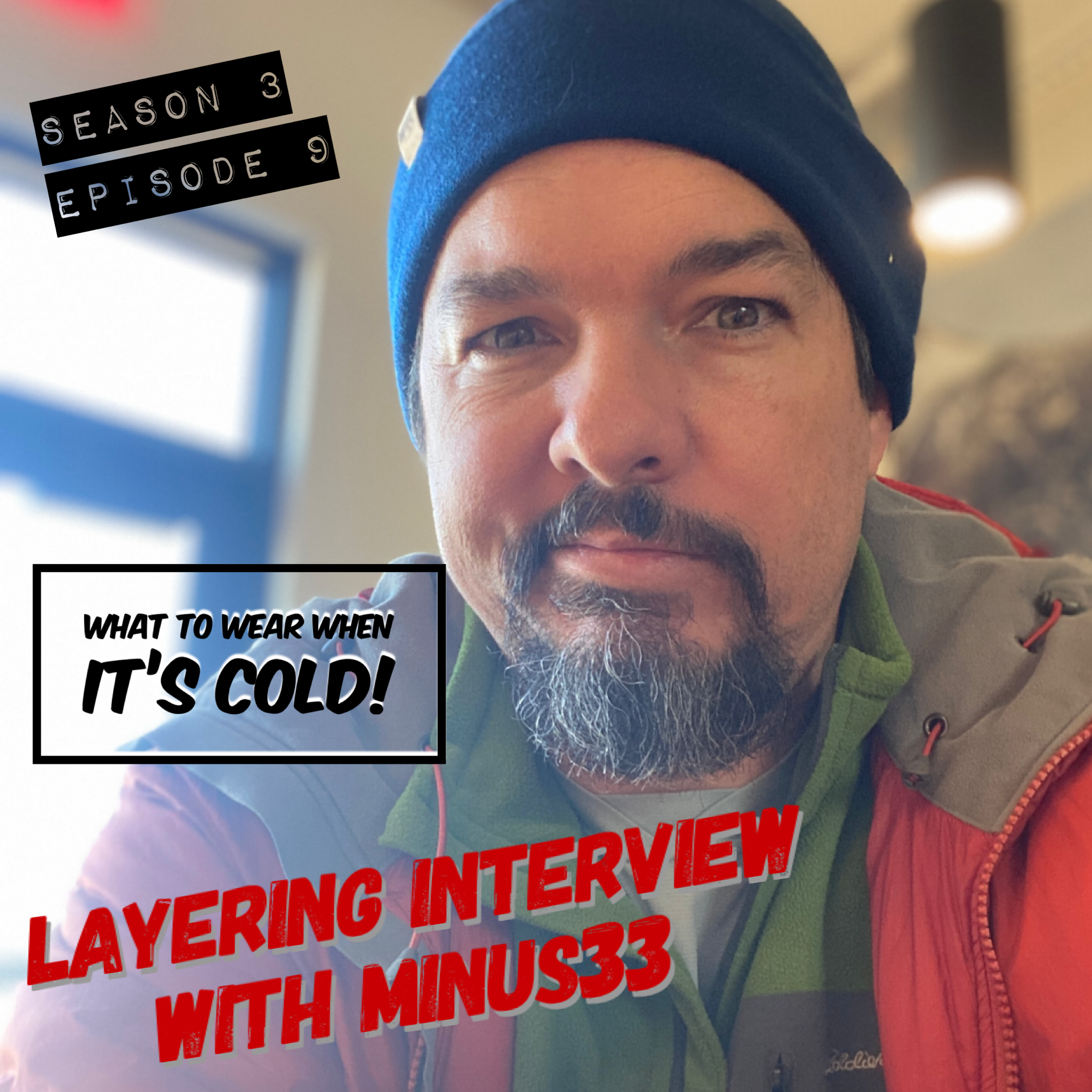
Season 3, Episode 9. We've got a guest! Lawson Glidden — President of Minus33 Merino Wool — joins us for a deep dive into the world of layering. Minus33 is a family business out of New Hampshire with over a hundred years of textile history behind them, and Lawson knows his stuff. He walks us through why merino wool is such a game-changer as a base layer — it wicks moisture, regulates temperature, and (here's the big one) doesn't stink after a few days on the trail. We talk through their full product range — socks, base layers, mid-layers, shirts, hats — and Cristen and I share our own layering wins and fails over the years. This was actually Minus33's very first podcast appearance, which is pretty cool. Full disclosure: we're affiliates (not sponsored), so if you grab something through our links, we earn a small commission — but we genuinely love the gear.
(Podcast) Season 3, Episode 8 - Campsite Cooking for Every Type of Chef
Cooking at the campsite for every kind of chef! What’s on your menu and how are you going to make it?
Season 3, Episode 8. Time to eat! This episode covers campsite cooking from one end of the spectrum to the other — we're talking everything from boiling water over a fire to full-on propane pizza ovens and gourmet meals under the stars. Cristen and I break it down by skill level, so whether you're the person who burns instant oatmeal (no judgment) or the one showing up with a cast iron skillet and a spice kit, there's something here for you. We swap some pretty good stories about campfire mishaps along the way — let's just say fire and cooking don't always cooperate the way you'd hope. We also get into the practical side: what setups make sense for car camping versus what you'd actually want to haul into the backcountry. Spoiler — the pizza oven stays at the car.